Gaming●Mid
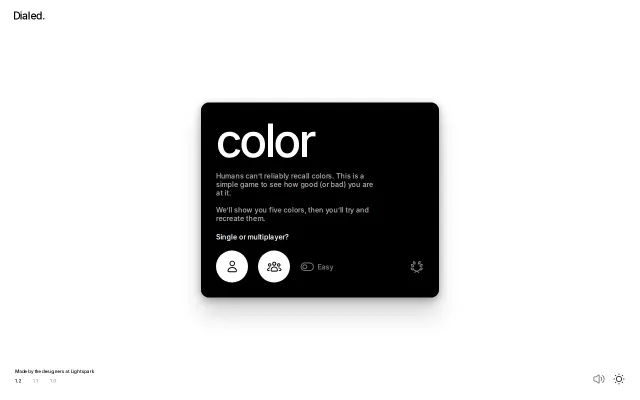
How well can you remember these colors?
Color memory game with multiplayer, but the mechanic is one gimmick.
Eye Candy
sss111
505mo ago

Memorystorm forces you to remember shapes and pitches instead of 'the red one' — that design choice actually changes the cognitive challenge in a neat, non-trivial way. The use of a seeded PRNG to give every player the exact same sequence (plus weekly resets) turns this into a pure-skill race rather than a luck contest. The only real friction is the visible ad/watch-for-ad payoff, which undercuts the otherwise tight competitive UX.
Casual and competitive gamers, memory-game fans, speedrunners and leaderboard chasers
It's Simon Says, but panels use geometric patterns (solid, hollow, grid, stripes, diamonds, dots) instead of colors. All monochrome. You can't shortcut it by remembering "the red one" — you have to remember shapes. Each panel also has a distinct audio pitch for multi-sensory memory.
Difficulty is layered: 4 of 6 panels are active initially. The 5th unlocks at round 8, the 6th at round 15. Speed only ramps after all 6 are in play. Early rounds build familiarity, late rounds destroy it.
Same rule as the other four games (typing, aim, rhythm, bullet-hell dodge): every player faces the exact same deterministic sequence (seeded PRNG). You race against the leader's ghost replay on the identical challenge. Leaderboards are pure skill.
Weekly season resets — Season 3 boards are empty across all five games. Free, no account, browser-based.
Color memory game with multiplayer, but the mechanic is one gimmick.
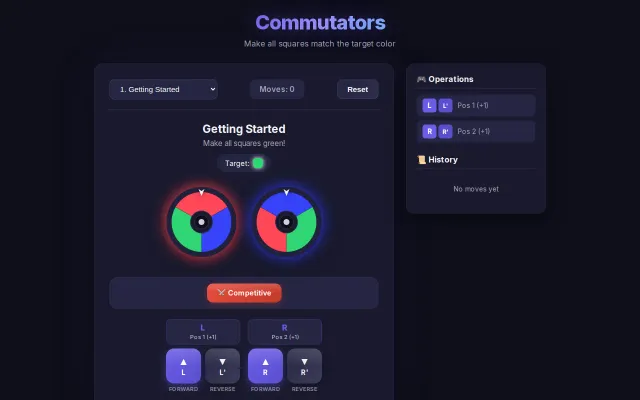
Math-hard puzzle game auto-generates thousands of levels from group theory.
Another daily puzzle clone when Wordle, Quordle, and Octordle already dominate.
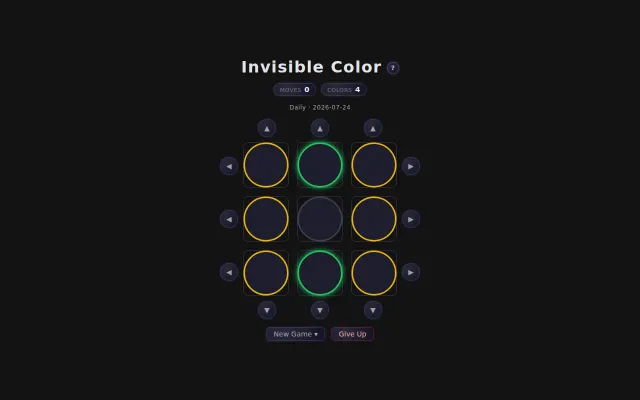
Cute daily color challenge, but lacks the viral hook of Wordle or infinite replayability.
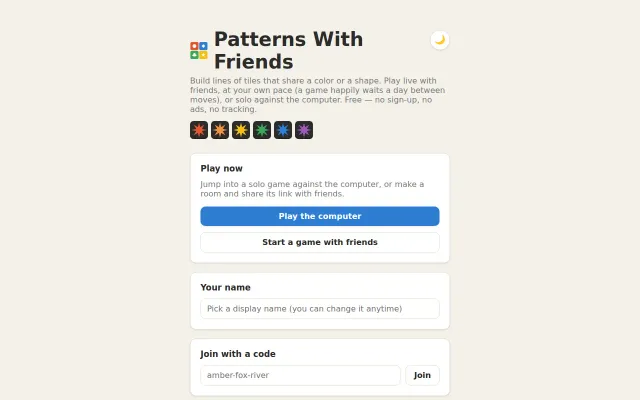
Zero-friction async multiplayer via shareable links, but Qwirkle mechanics aren't original.
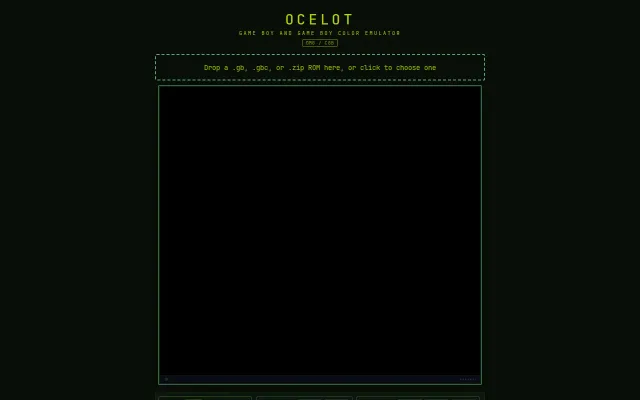
Game Boy emulator in Haskell is a rare stack choice that actually works in the browser.