Productivity●●●Banger
Our calendar is political, not mathematical – explore alternatives
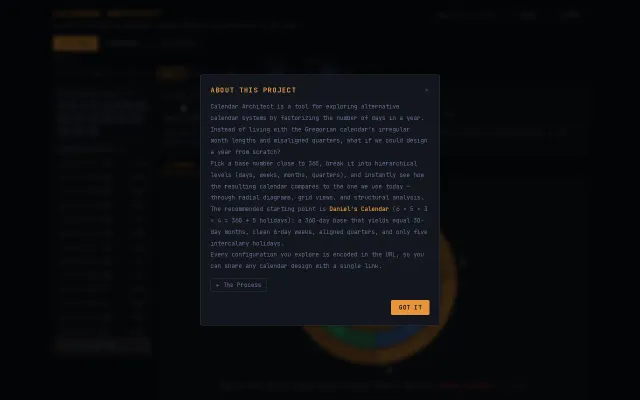
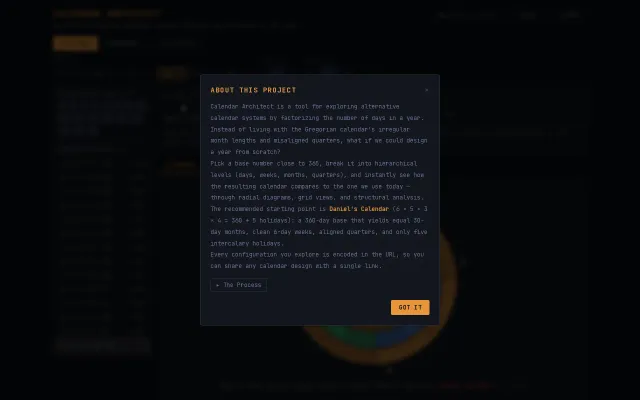
Factorize 365 into clean calendar systems; instantly visualize 24 ways to redesign the year.
Big BrainRabbit HoleNiche Gem
szemy2
103mo ago
The core insight — treating a year as a product of divisors and surfacing neat factorizations like a 360-base 'Daniel's Calendar' — is genuinely clever and immediately eye-opening. The site ships useful features: radial and grid visualizations, Gregorian comparison, historical calendars, and shareable URL-encoded configurations, which makes exploring variants addictive; it could be even more useful with export/sync features for real calendars but as an exploratory tool it's a delight.
Calendar enthusiasts, UX/visual designers, historians, educators, and hobbyist data/visualization tinkerers
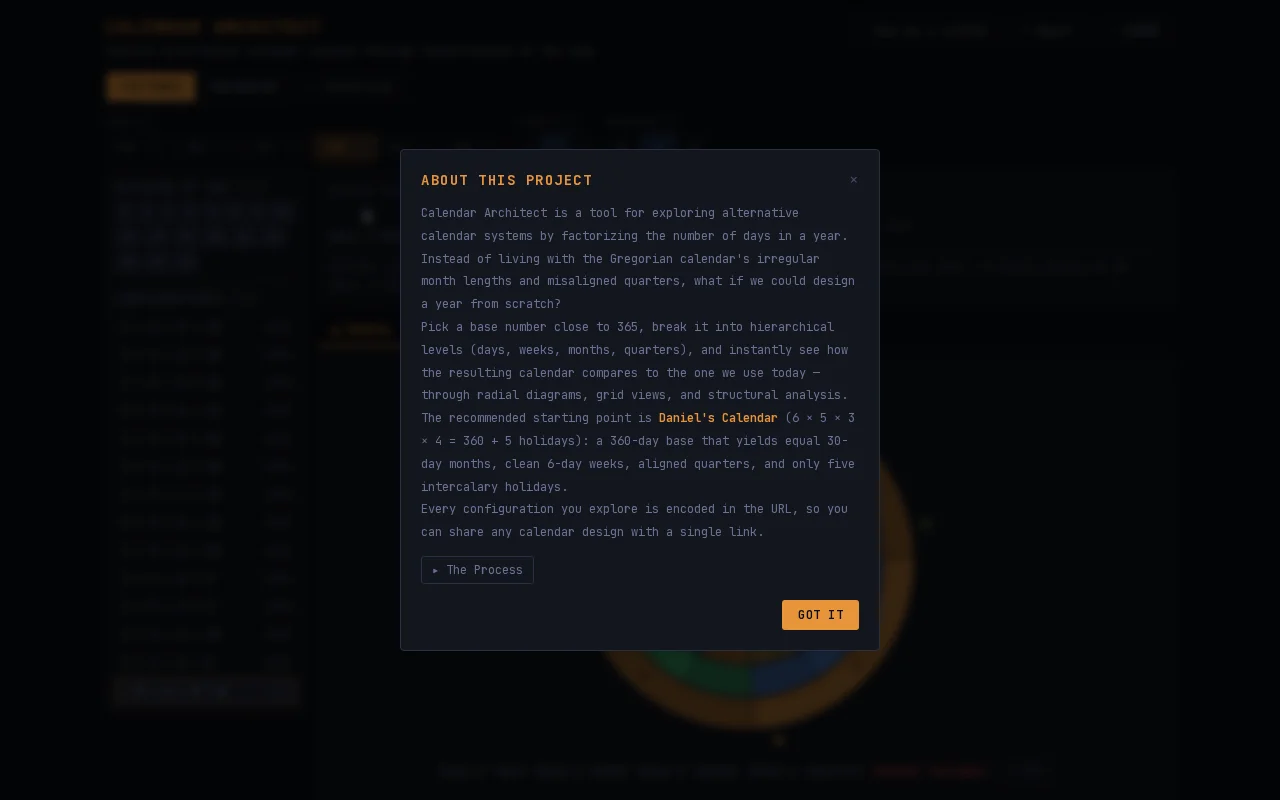
365 is nearly prime (5×73), which is why our months are such a mess. But 360 has 24 divisors; enough to build clean hierarchies like 6-day weeks, 5-week months, 3-month quarters, 4 quarters/year + 5 holidays (6 on leap years). Every month identical, every date always the same weekday.
Built a small tool to explore all valid factorizations across different bases (336, 350, 354, 360, 364, 365), with a Gregorian comparison view that really highlights how arbitrary the current system is. Radial year visualization, work/rest analysis, season alignment, etc.
I've also added historical calendars, like the French Revolutionary calendar that was created in a similar sentiment.
Code facilitated by Claude Opus 4.6
Let me know what I should add, or if you catch a bug/mistaken logic!
Factorize 365 into clean calendar systems; instantly visualize 24 ways to redesign the year.
Factorizing 365 days into clean calendar math is genuinely clever.
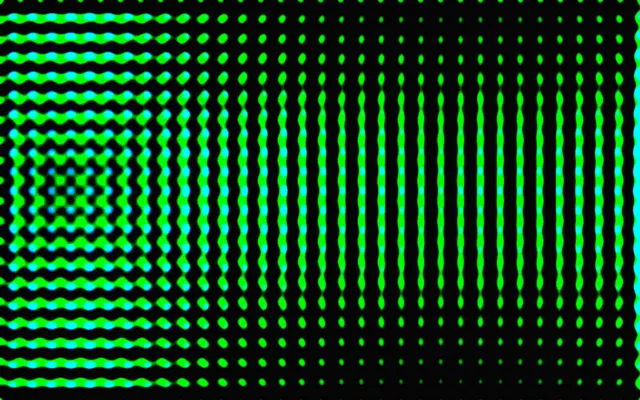
The interaction is dead-simple — click or drag the top layer and double-click to tweak patterns, colors and effects — but the neat part is the blur→posterize post-process that turns tiny interference ripples into organic blobs. Exporting state as a URL-encoded preset is a smart, lightweight sharing hack that makes it easy to swap wild configurations without a backend.
Google Calendar in your terminal, but Calcurse and existing TUI apps already do this.
Eight years of research but it's content, not a tool — Atlas Obscura already does this.
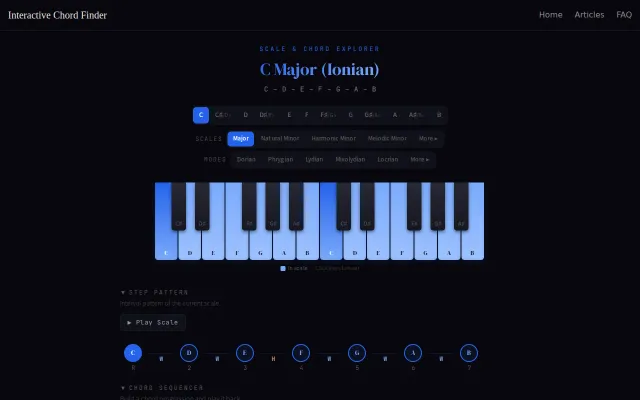
Music theory explorer with sequencer; removes DAW switching friction.