Infrastructure●●Solid
Hardened OpenClaw on AWS with Terraform
Replaces curl-pipe-sh defaults with Cognito MFA and proper AWS security patterns.
Solve My Problem
aleks2
1033mo ago
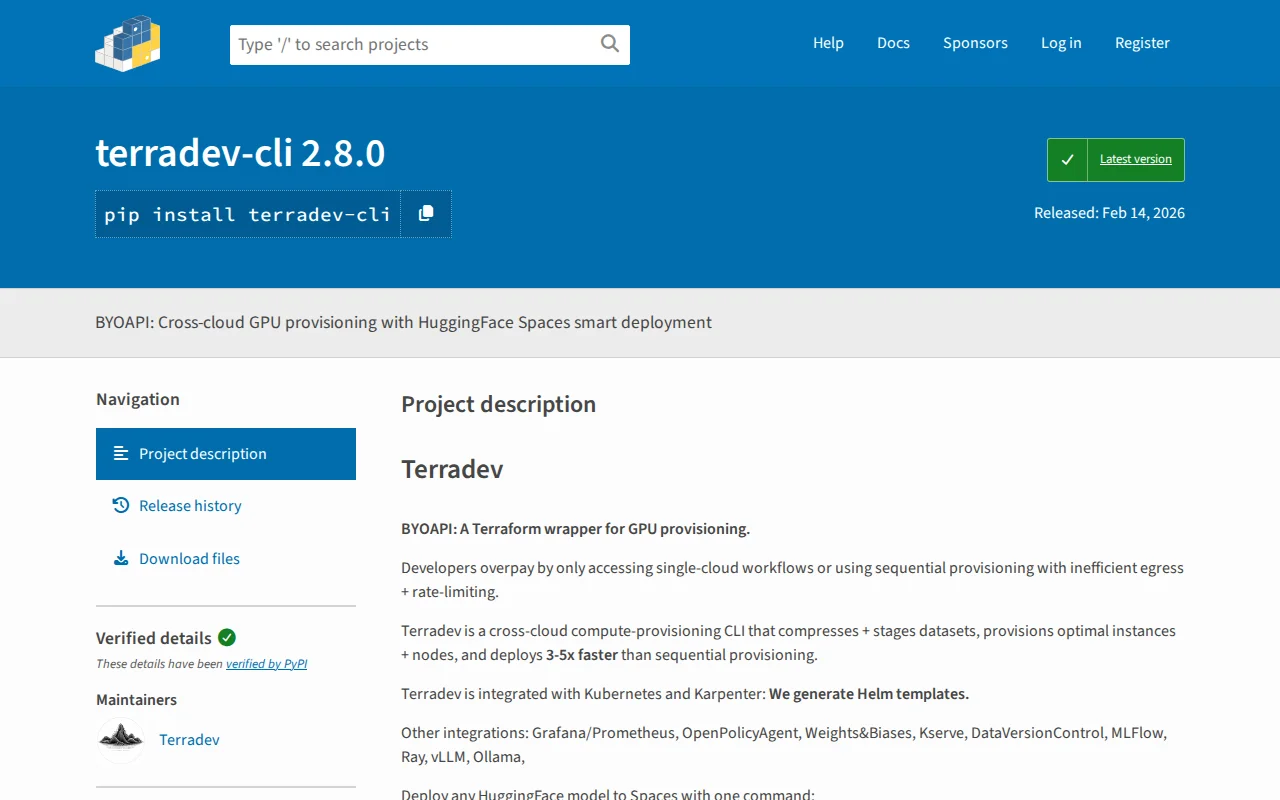
Wraps a lot of nasty multi-cloud choreography into a single CLI: parallel provisioning across providers, staging/compressing datasets, and plumbing nodes from different clouds into one Kubernetes cluster with generated Helm templates and Karpenter hooks. The Hugging Face Spaces one-command deploy and built-in telemetry/ML integrations are smart touches, but the page leans heavy on integration laundry-listing — I want concrete guarantees around networking/egress, cost arbitration logic, and auth/billing boundaries before trusting it for production budgets.
ML engineers, MLOps/devops teams, researchers who need multi‑cloud GPU capacity and cost‑optimized model deployment
pip install terradev-cli
terradev k8s create demo --gpu A100 --count 8 --multi-cloud
A100s may be $3.20/hr on AWS, vs $2.40/hr on Vast.ai, but getting quotes across providers takes hours, there’s heavy tooling required between providers, and the nodes can’t be actively managed as pricing and demand changes day-to-day…
Terradev is a cross-cloud compute-provisioning CLI that works in parallel to quickly spin up optimal instances and pool them in Kubernetes clusters 3-5x faster than sequential workflows.
Nodes from different providers can pool in the same cluster, optimizing for latency, with workloads scheduling across all of them…
Built-in hooks: HF Spaces, Karpenter, vLLM, Ollama, Ray, MLFlow, W&B
Replaces curl-pipe-sh defaults with Cognito MFA and proper AWS security patterns.
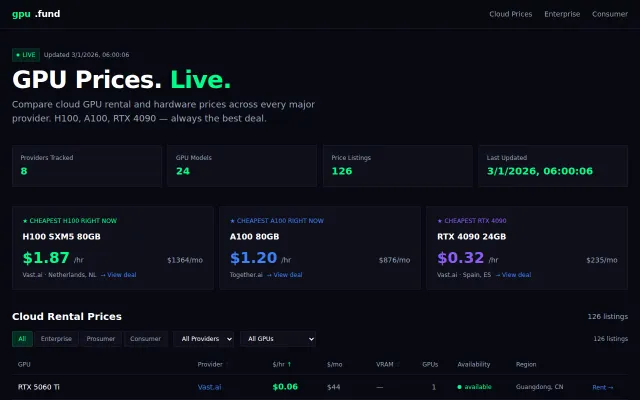
Real-time GPU pricing comparison table, but Vast.ai's own UI does this natively.
LocalStack went proprietary—this AGPL binary fills the gap with 54k test variants.
Correlates AWS findings into attack chains with Terraform fix scripts.
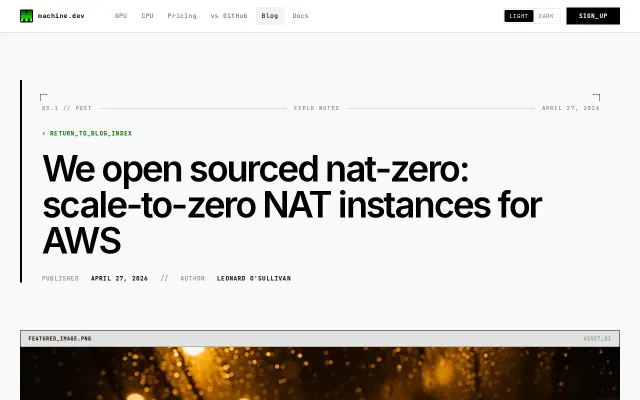
Lambda reconciliation loop scales NAT to zero, saving costs versus NAT Gateway for sporadic workloads.
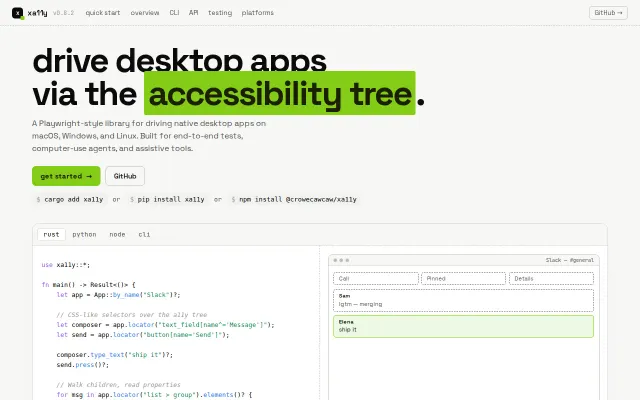
Accessibility trees beat vision-based automation—no OCR, no pixel coordinates, works cross-platform.