SaaS●Mid

I turn scattered feedback into a prioritized roadmap in 5 min
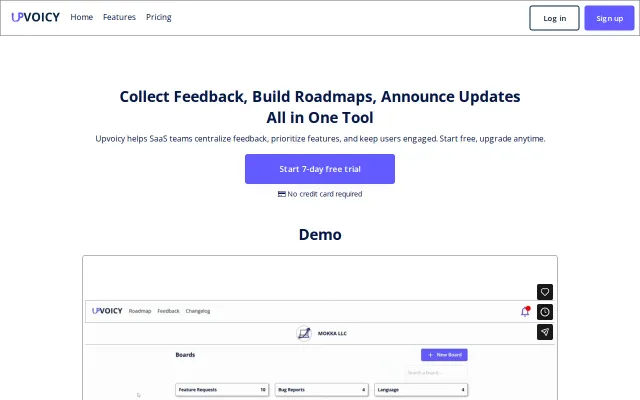
AI duplicate detection for feedback, but Canny and Uservoice already solved this problem better.
Solve My ProblemShip It
superproton
215mo ago
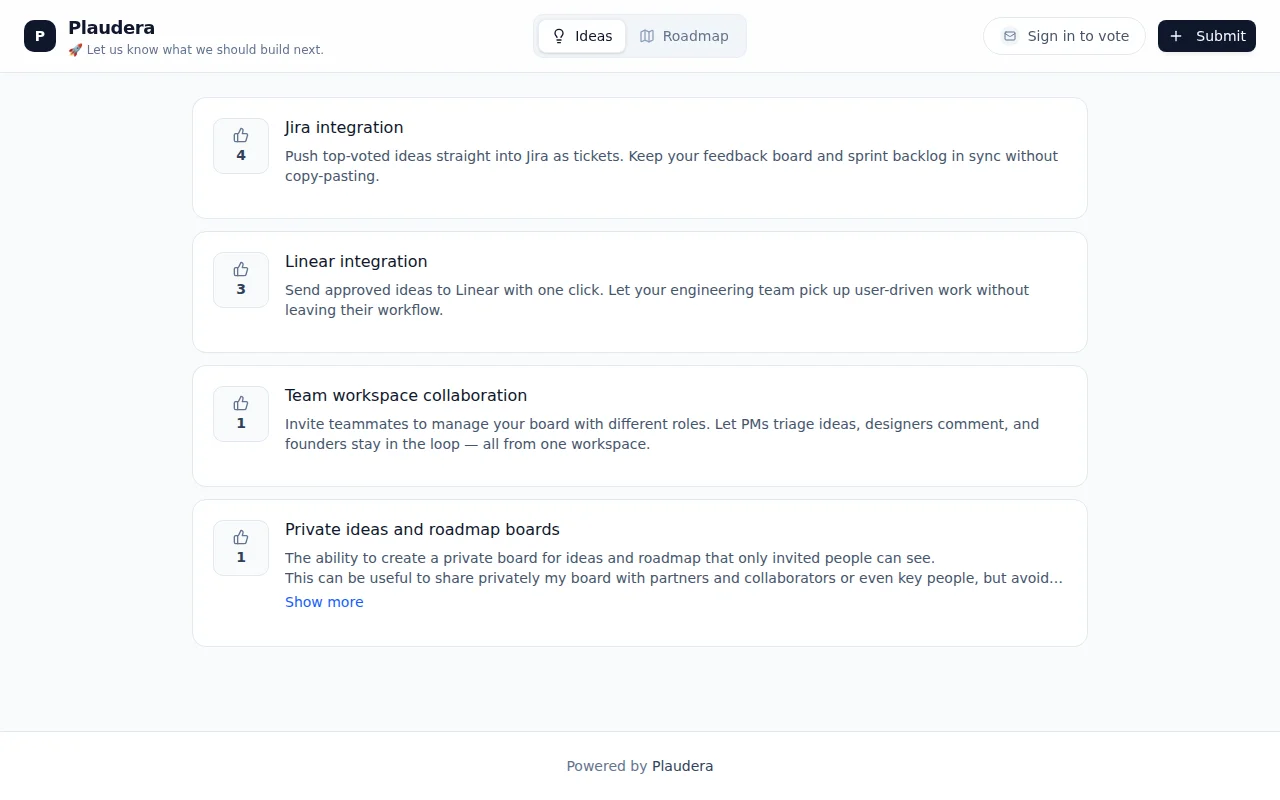
Pretty spare and focused: a public voting board, straightforward idea cards and roadmap/privates boards, plus integrations called out (Jira, Linear). That's useful if you just want a single canonical place to point users. But it's solving a very crowded problem — the UI looks tidy, but there's no obvious differentiator like advanced prioritization, analytics, or unique workflows that beat GitHub Issues/Canny for teams that already have a stack.
Indie makers, product managers, small SaaS teams and community-driven projects
No single place to point users to when they say "I have an idea" No way to let users signal what actually matters to them I forget half the requests within a week Zero visibility for users on whether their feedback was even heard
I got frustrated enough to build something. It's called Plaudera – a dead simple public feedback board with voting. I'm literally using it to collect feedback on itself right now:
But honestly I'm more curious about what's worked for others. Do you just live in GitHub Issues? Is there a workflow I'm missing? For those running small teams or solo projects – how do you decide what to build next?
AI duplicate detection for feedback, but Canny and Uservoice already solved this problem better.
Yet another startup directory competing with Product Hunt and Indie Hackers.
gRPC-based reverse tunnel, but ngrok/Cloudflare Tunnel already own this.
Feedback voting with AI dedup and RICE scoring—Canny and ProductBoard already do this.
Lightweight feedback board—Canny, Frill, and ProductBoard do this at scale already.
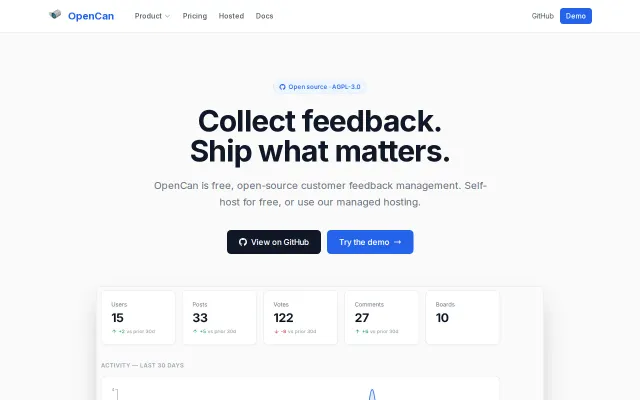
Self-hosted Canny alternative with JWT auth and webhook integrations included.