Security●●●Banger
ClawShield – Open-source firewall for agent-to-agent AI communication
Agent firewall with 16+ injection patterns, sandboxed skill scanning, detects real OpenClaw CVE exposure.
WizardrySolve My Problem
Joe_DNAI
103mo ago
This feels like the first serious attempt to treat agent-to-agent chatter as a network security problem: 16+ prompt-injection signatures (with recursive base64 decoding), AST static analysis of skills via acorn/estree, and sandboxed dynamic checks are concrete, non-trivial defenses. The repo shows real engineering (Docker, CI, security scans, 181 tests) — the missing piece is real-world performance and adoption, but if you run agent fleets this is worth poking at.
Security engineers, ML/Ops and SREs running multi-agent AI deployments (OpenClaw/AutoGPT), backend engineers concerned about prompt-injection and inter-agent threats
I built ClawShield after discovering 40,214 OpenClaw instances exposed with critical CVE-2026-25253 (CVSS 8.8).
The problem: AI agents communicate with each other at scale, but there's NO firewall between them. A compromised agent can inject prompts, exfiltrate data, and hijack WebSocket sessions.
ClawShield sits between agents and blocks: - Prompt injection (16+ patterns) - Malicious skills/plugins (AST + sandbox) - Credential leaks (regex + entropy) - Unauthorized agent-to-agent comms - WebSocket hijacking
Built it last night. 181 tests. Production-ready. Open source (AGPL-3.0).
GitHub: https://github.com/DEFNOISE-AI/ClawShield Demo: [coming soon]
Compatible with OpenClaw, AutoGPT, or any agent protocol.
Free tier for personal use, paid for teams/enterprise.
Would love your feedback!
Agent firewall with 16+ injection patterns, sandboxed skill scanning, detects real OpenClaw CVE exposure.
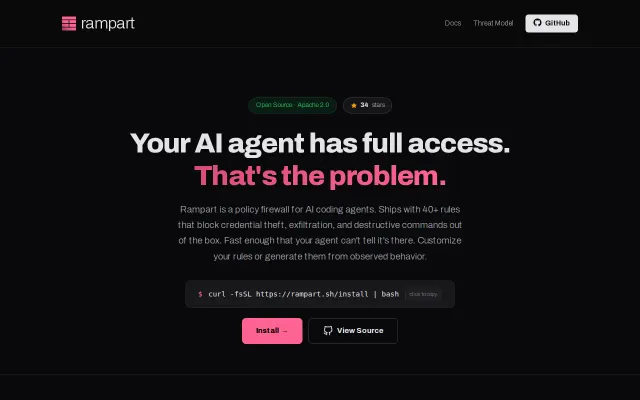
Blocks credential leaks in agent output, not just dangerous input commands.
Multi-surface HTTP inspection (CLI, TUI, MCP, API) with project-scoped isolation is thoughtful.
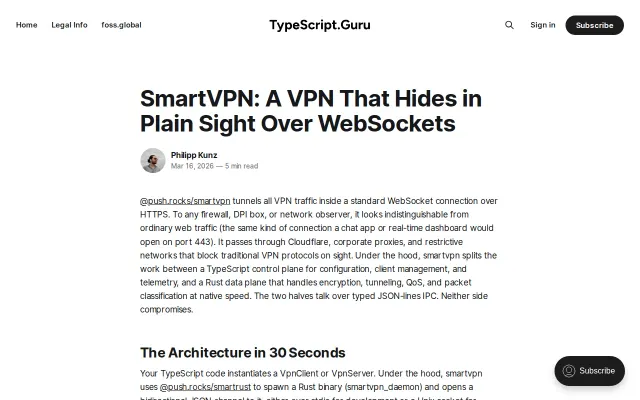
WebSocket tunneling bypasses firewalls that block WireGuard, backed by a Rust data plane.
Wire-protocol parsing gates agent actions before they hit production—no LLM gateway does this.
Local firewall blocks agent credential leaks before they leave your machine.