SaaS●Mid
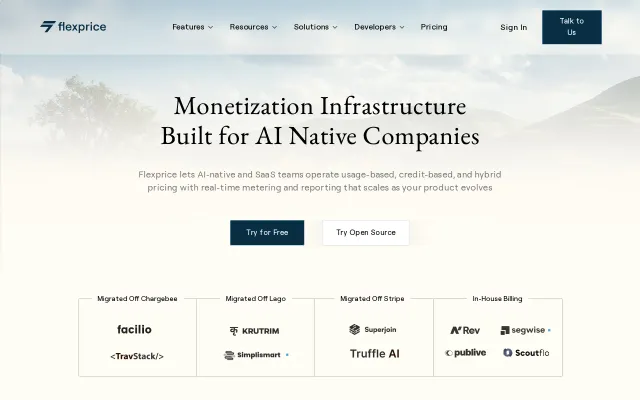
Managed S3 exports for billing data (no AWS setup required)
Removes S3 setup friction, but Stripe Billing, Lago, and Chargebee already own this space.
Solve My Problem
manishfp
303mo ago
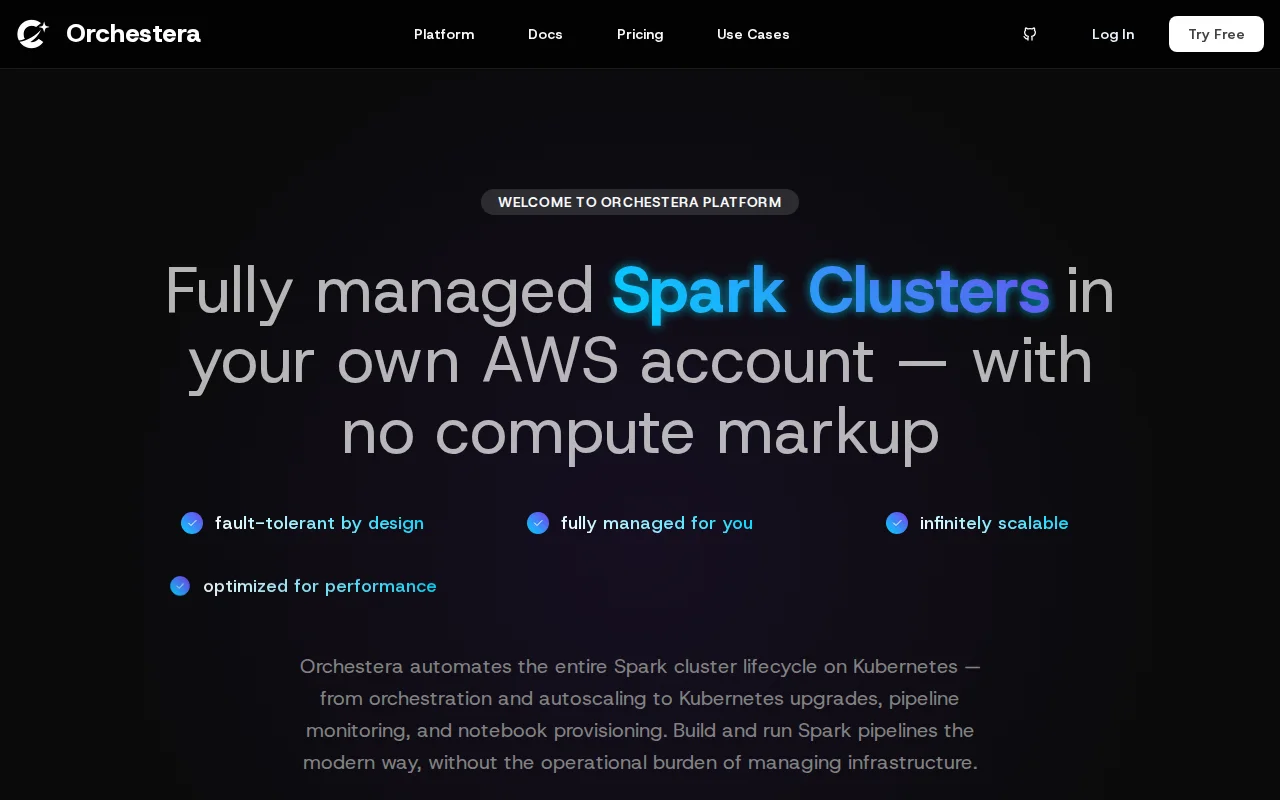
Spark without Databricks markup, but Kubernetes management is still ops work.
Data engineers and ML practitioners using Apache Spark; teams wanting to avoid Databricks/EMR markup.
Databricks · AWS EMR · Apache Spark on Kubernetes (self-managed)
I built this because I was tired of the compute markup that products like AWS EMR and Databricks charge for the convenience of using Apache Spark via their platforms. One can argue that Databricks is a superior product with a lot of additional value in their offering but I don't see that with AWS EMR Apache Spark at all (given my personal experience working with it).
My motivation to build this was to be able to create your own Apache Spark cluster without needing any understanding of the underlying data infrastructure engineering and quickly get to the point of writing Spark pipelines, whether as Python applications or Jupyter notebook.
It took me almost an year to build it with a day job and of course I used AI for frontend design and video narrations, the infrastructue engineering that goes behind it comes with quite a bit of experience in the industrly. The backend that orchestrates the cluster is written with the following:
- Django and DRF for API - Temporal for async workers - Pulumi that is run via Temporal workers to orchestrate the cluster - Karpenter for node auto-scaling based on Spark executor workloads and requests - Librechat for Spark History server and MCP based debugging for Spark pipeline run analysis
There are currently no caps on the CPU limits so you can try this out today in your own personal AWS accounts for free.
Also looking for feedback on HN.
Removes S3 setup friction, but Stripe Billing, Lago, and Chargebee already own this space.
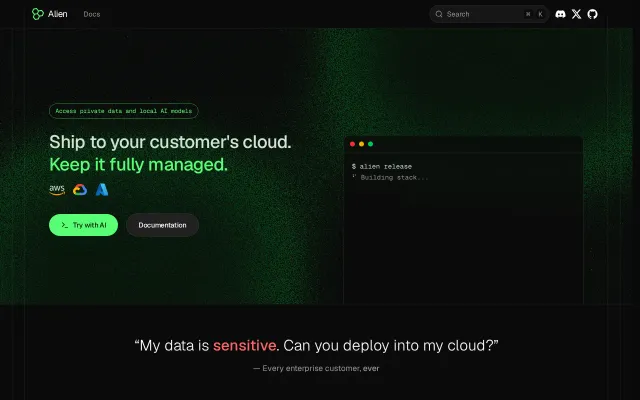
Solves the enterprise 'deploy to our VPC' objection without losing managed control.
ByteBuddy injects trace context into Spark tasks; sees executor-level details no competitor offers.
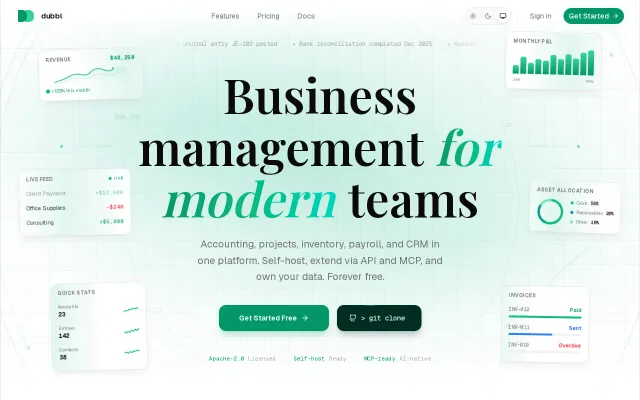
Open-source QuickBooks alternative with MCP integration, but bank feeds aren't ready yet.
Transition-aware TFT model tracks market hazard before scaling Spot node pools.
Unifies LocalStack, Moto, and real AWS into one dashboard; official tools are limited.