Developer Tools●●Solid
Two tools to make Claude Code more autonomous
Phone-based approval for Claude Code permission prompts; plan review via rival AI models.
Solve My ProblemDark Horse
yuu1ch13
634mo ago
Approve Claude Code permission requests from your phone via ntfy
Phone-based approval for Claude Code without abandoning the dev loop entirely.
Claude Code users who work remotely or away from their terminal
Setup:
npm install -g claude-remote-approver claude-remote-approver setup
Then scan the QR code with the ntfy app on your phone and start a new Claude Code session.How it works: The hook POSTs the permission request to an ntfy topic, then subscribes to a response topic via SSE. When you tap a button on your phone, ntfy delivers the response back. The hook writes {"behavior":"allow"} or {"behavior":"deny"} to stdout and exits.
The topic name is generated with crypto.randomBytes(16) (128 bits), config file is 0600, and unanswered requests auto-deny after 120 seconds.
If you don't want requests going through the public ntfy.sh server, you can self-host ntfy and point the config at your own instance.
Github: https://github.com/yuuichieguchi/claude-remote-approver
Phone-based approval for Claude Code permission prompts; plan review via rival AI models.
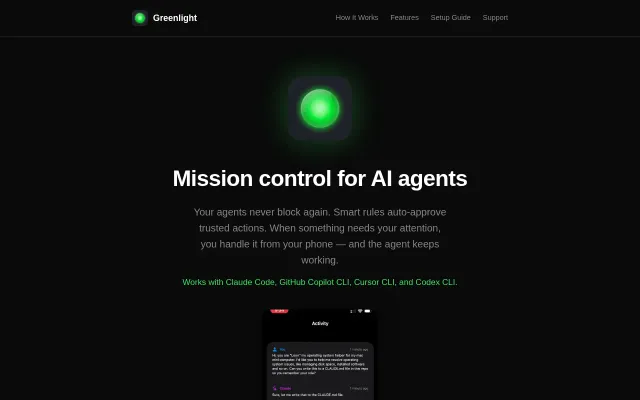
Agent-agnostic remote control for Claude Code, Cursor, and Copilot CLI sessions.
Runs the agent locally and pushes live streams to a browser tab or your phone using WebSockets + the Web Push API, so approvals no longer block when you step away from the terminal. The PIN-based web auth, per-worktree session model, and direct use of Anthropic's Agent SDK are pragmatic choices that keep everything on-device while solving a very specific, annoying UX gap.
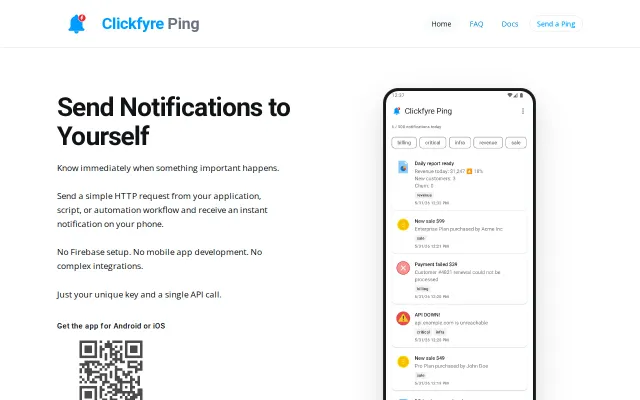
Yet another notification service competing with ntfy.sh and Pushover.
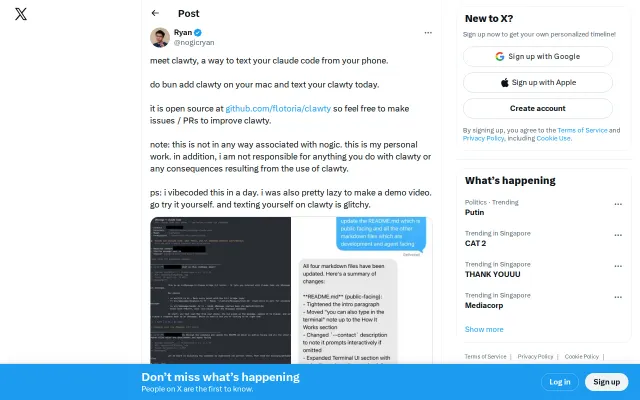
A one-day MVP with a very specific charm: install via bun, text your 'clawty' from your phone, and get work done without leaving the bed. It's a clever ergonomics hack for Claude users and the repo-first approach is pleasant, but the UX sounds fragile (author warns texting is "glitchy") and there's no demo or clear delivery/auth model, so it's useful if you have the exact problem but not a must-install for everyone.
Smart notification filter that uses LLM context to decide which Telegram messages actually matter.