Developer Tools●●●Banger
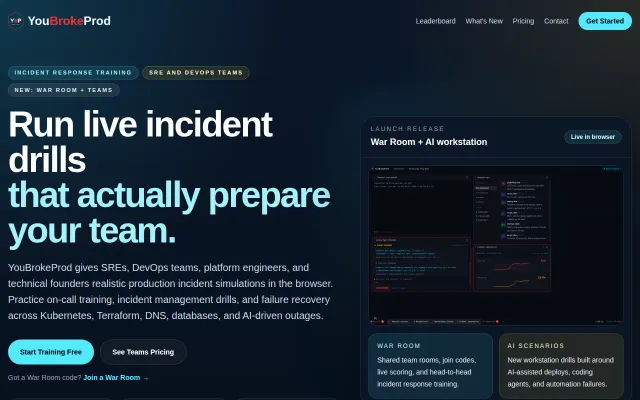
Real War Room incident simulations for teams
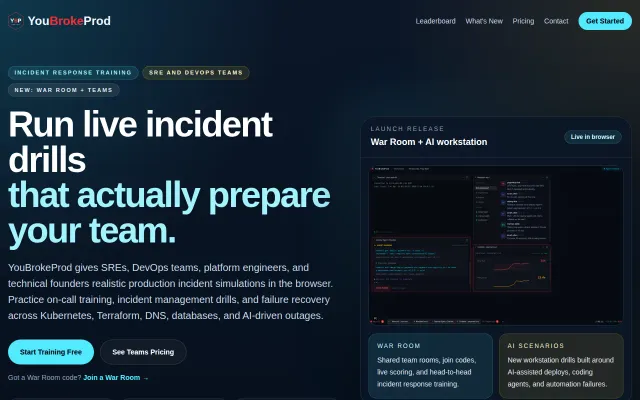
Multiplayer War Room turns incident response training into a competitive team sport instead of solo labs.
Niche GemShip It
cdnsteve
111mo ago
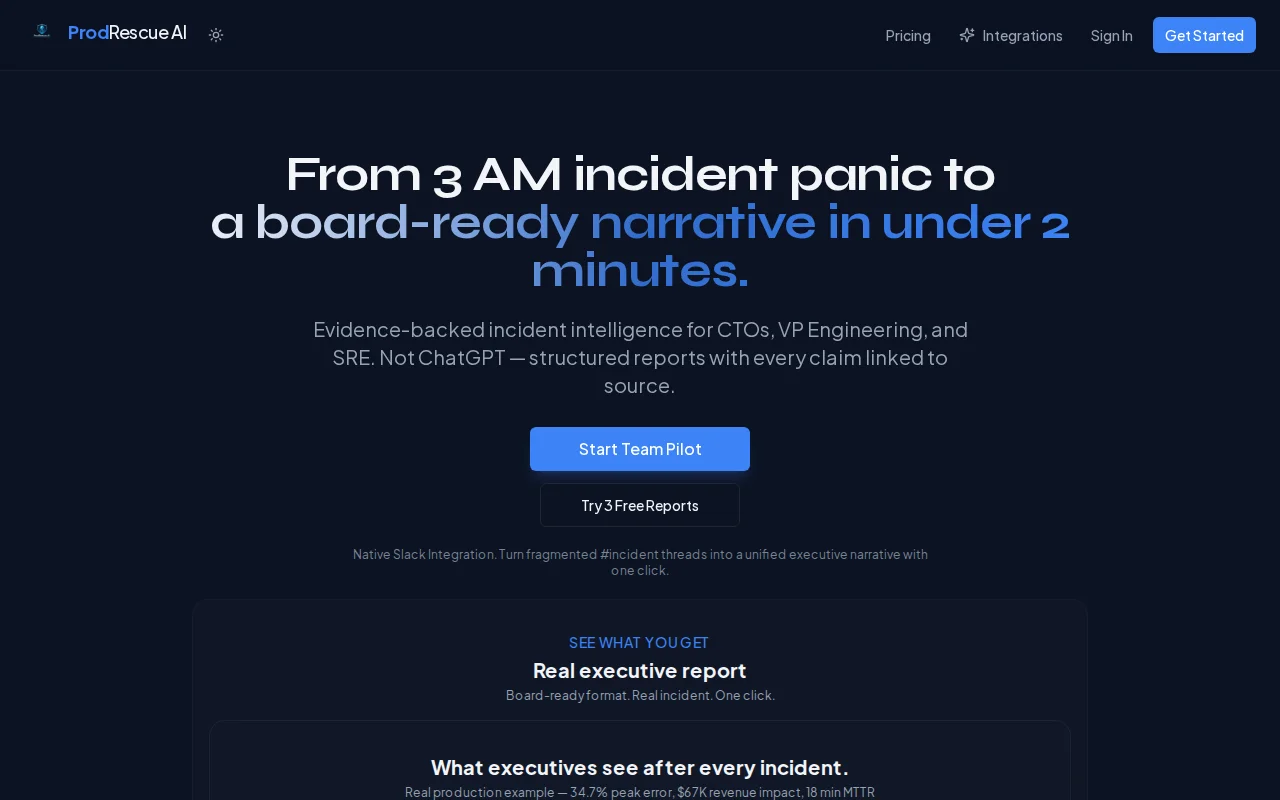
Slack + logs → board-ready incident report with sourced evidence claims.
CTOs, VP Engineering, SRE teams managing production incidents
PagerDuty Incident Response · Atlassian Opsgenie · Datadog Incident Management
Most of us have been there: It’s 3 AM, there’s an outage, and the #incident channel is exploding with 200+ messages. Once the fix is deployed, the real pain begins—spending 4 hours reconstructing the timeline for the post-mortem.
I built ProdRescue AI to automate this. It’s an incident intelligence engine that correlates technical logs with human context from Slack.
How it works:
Native Slack Integration: Connect via OAuth 2.0. We only access channels you explicitly invite the bot to.
Contextual Correlation: It maps Slack timestamps to log events, identifying not just what failed, but who made which decision and why.
4-Layer Intelligence: We use a pipeline to Sanitize (mask PII), Correlate (logs + chat), Infer (RCA), and Verify (link every claim to a source log line).
Security: We use ephemeral processing. No log retention, no training on your data.
I’m really interested in your thoughts on the "Evidence-Backed" approach. Instead of just generating a narrative, we link every finding to a specific evidence tag ([1], [2], etc.) to eliminate AI hallucinations.
Check it out here: https://prodrescueai.com
Would love to hear your feedback on the Slack-to-Timeline flow!
Multiplayer War Room turns incident response training into a competitive team sport instead of solo labs.
Browser-based K8s incident drills with War Rooms avoid painful sandbox cluster setup.
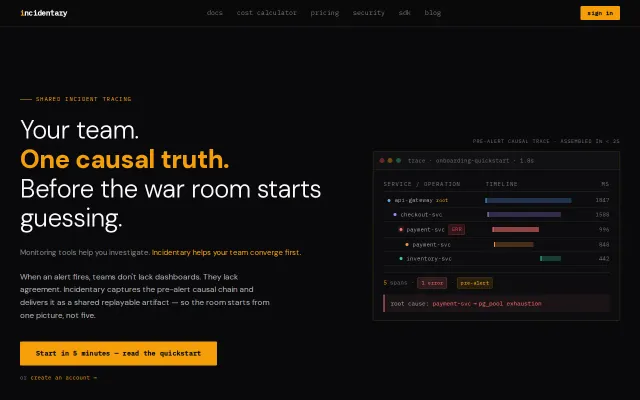
Pre-alert causal traces mean war rooms start with answers instead of guesses.
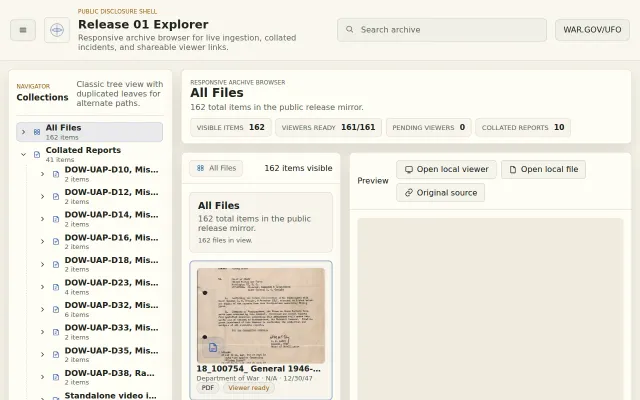
Collated incident folders merge duplicates across 162 declassified files better than raw Archive.org dumps.
Turns failing agent runs into a self-contained, inspectable package: report.html for human review and compare-report.json for automatic CI decisions. The evidence manifest + integrity checks and the option to apply redaction before artifacts are written are smart, practical details that make offline handoff and automated gating actually usable for teams building agents.
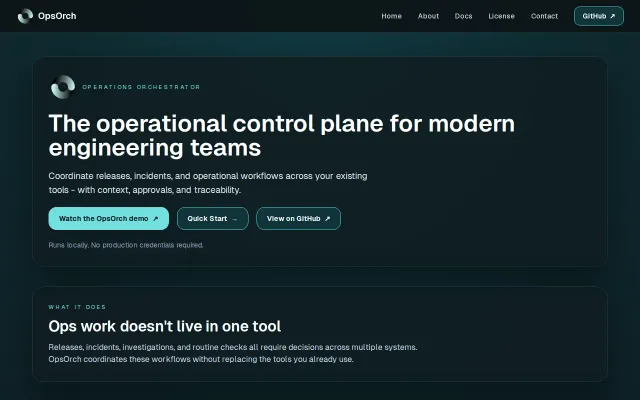
Unified ops schema is useful but Backstage already does this with more adoption.