Infrastructure●Mid
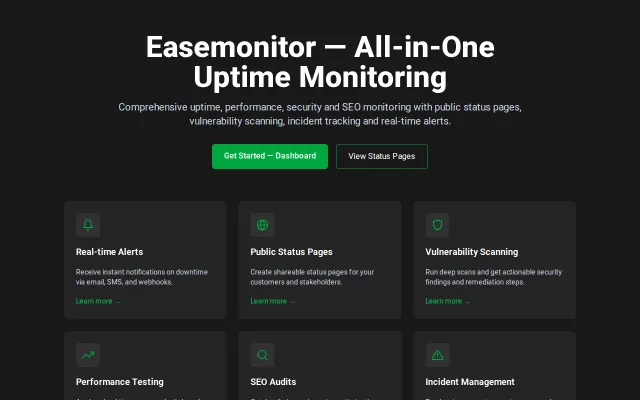
Easemonitor – self‑hosted uptime and performance monitoring
Self-hosted Uptime Robot alternative, but Uptime Robot, Betteruptime, Checkly, and Zabbix already solved this.
Ship It
mabsrencode
314mo ago
Config-as-code uptime monitoring beats dashboard vendor lock-in with git-driven workflows.
Backend developers, DevOps engineers, teams preferring infrastructure-as-code patterns
Uptime Robot · Betterstack · Grafana Cloud
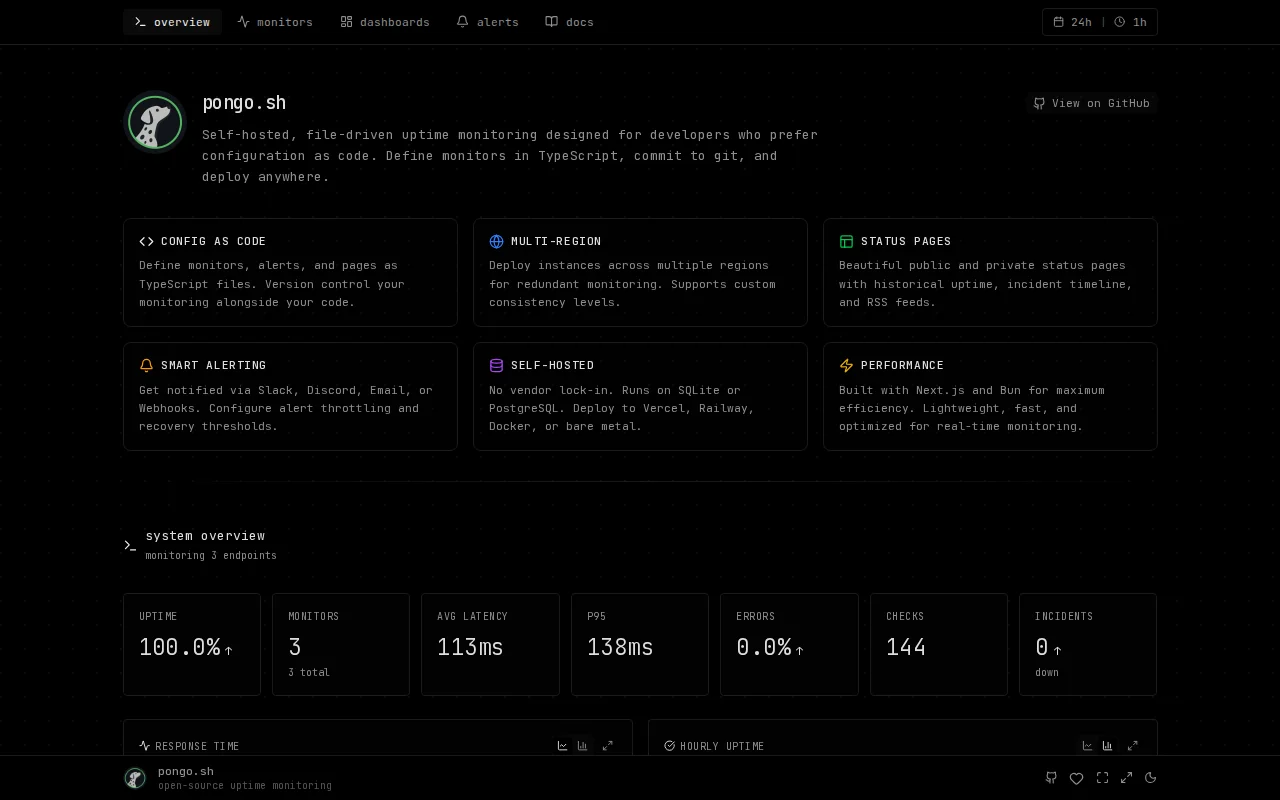
self-hosted uptime monitoring, configured entirely in TypeScript and built on NextJS and Bun.
No UI forms. No vendor lock-in. Just code in your repo.
Monitors, dashboards, alerts, incidents, and status pages — all defined as TypeScript files and Markdown, version-controlled alongside your application.
You can one-click deploy it to Vercel or anywhere you can run node/bun/docker.
Your monitoring config lives in your repo like everything else.
Want to know what's monitored and why? Read the code.
Need to review a change? It's in the PR. Need to roll back a bad alert? Git revert.
No more clicking through dashboards wondering who changed what and when.
Built with Next.js, Drizzle ORM, and Bun. Runs with SQLite for simplicity or PostgreSQL for production.
Fully open source and ready to use today.
Would love to hear what you think and what features you'd want to see next, leave a star on GitHub
Self-hosted Uptime Robot alternative, but Uptime Robot, Betteruptime, Checkly, and Zabbix already solved this.
Yet another deployment wrapper, but Invoice Ninja lacks official CLI tooling.
Single Go binary beats Uptime Kuma for CLI-first teams who hate containers.
Yet another uptime monitor, but $3/month undercuts Pingdom and UptimeRobot significantly.
MCP server integration lets Claude create monitors without leaving the chat.
K8s auto-discovery + internal monitoring without inbound ports beats Datadog costs.