Security●●●Banger
Copy-fail-C – portable C port of CVE-2026-31431, with a checker
Porting a complex page-cache mutation exploit to pure portable C with zero assembly is impressive constraint craft.
WizardryBig Brain
tgies
401mo ago
Unverified exploit claims with zero public confirmation; likely fabricated.
iOS security researchers, incident responders, forensic analysts
US Device 1 → 83.116.114.97 (EU/US) US Device 2 → 101.99.111.110 (CN)
The rogue dyld_shared_cache slice triggers overflow via malformed `mappings_count`, executes shellcode (BL #0x15cd), and applies an AMFI bypass (`DYLD_AMFI_FAKE`) enabling unsigned code persistence. Apple PSIRT + CISA were notified; public disclosure follows.
Sample: https://drive.google.com/file/d/1rYNGtKBMb34FQT4zLExI51sdAYR... SHA256 artifact: ac746508938646c0cfae3f1d33f15bae718efbc7f0972426c41555e02e6f9770
Usage: `python3 zombie_auditor.py sysdiagnose_xxx.tar.gz` (Needs capstone)
Reproducible PoC confirms CVE‑2026‑20700 bypass, AMFI neutralization, and live C2 connectivity in production iOS 26.3.
Porting a complex page-cache mutation exploit to pure portable C with zero assembly is impressive constraint craft.
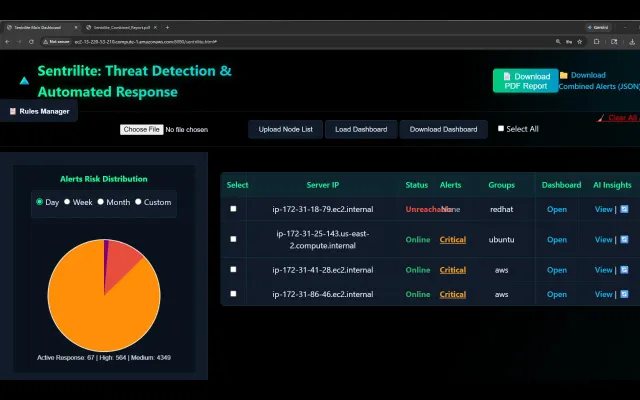
Runtime behavior blocking for zero-days, but does it beat Falco or eBPF-based tools?
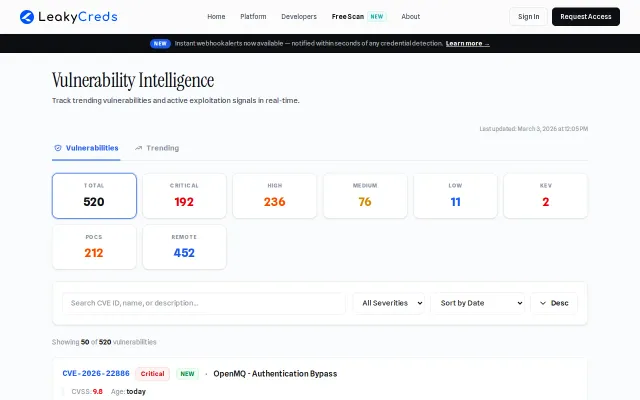
Trending CVE dashboard exists, but NVD, CISA KEV, Shodan, and security feeds already do this.
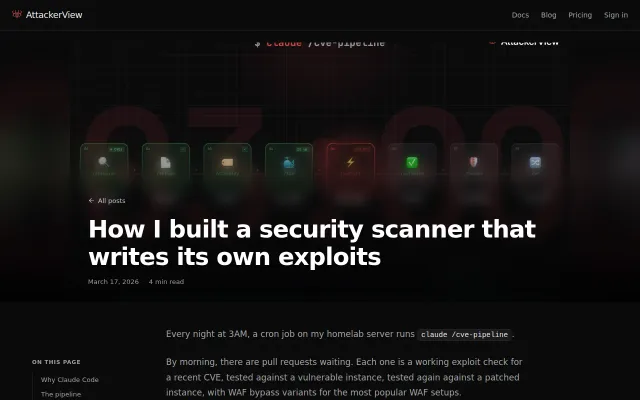
Dual-container testing validates exploits against vulnerable and patched instances before deployment.
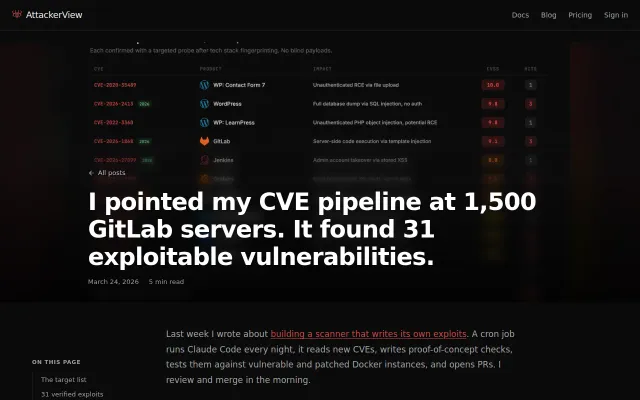
AI writes and validates its own CVE exploits nightly, finding 31 verified vulnerabilities.
First public SAST benchmark for Go and Rust with adversarial evasion test cases.