Data●●Solid
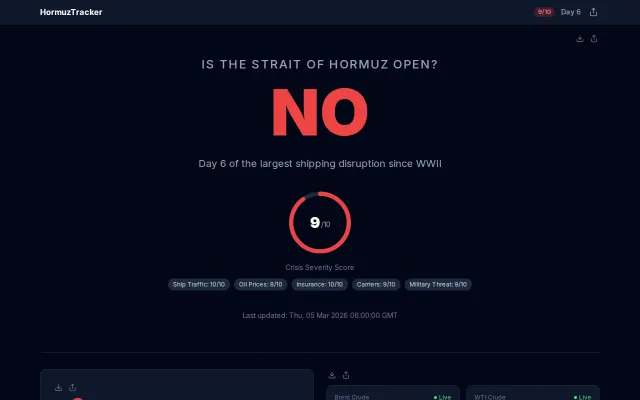
Hormuz Crisis Dashboard Real-time shipping disruption tracker
Live Hormuz shipping crisis tracker built in 4 hours without coding; timely + useful.
Solve My ProblemEye Candy
MrNekked
3233mo ago
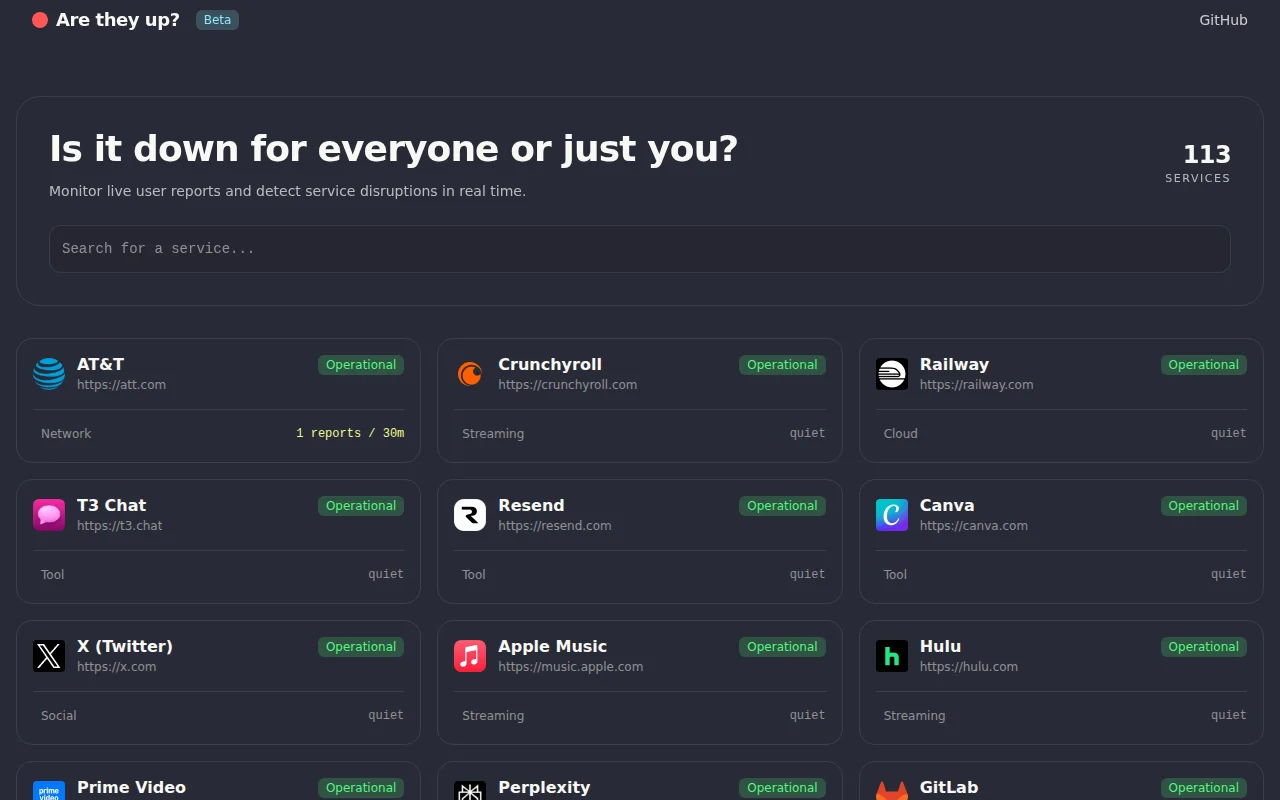
Downdetector alternative with 113 services, but lacks real-time incident confidence.
Developers, DevOps teams, anyone monitoring service reliability
Downdetector · StatusPage.io · PagerDuty
Live Hormuz shipping crisis tracker built in 4 hours without coding; timely + useful.
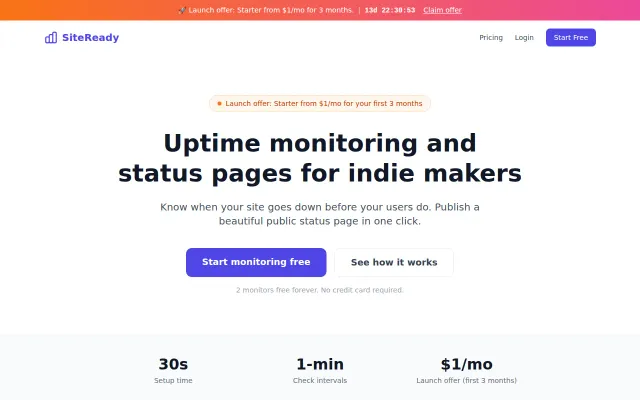
Clean, focused product: email alerts, response-time tracking, and instant public status pages with a forever-free 2-monitor tier make it easy to get started. It isn't reinventing monitoring, but the stripped-down pricing and one-click status publishing feel deliberately built for solo founders — missing advanced alerting (SMS/pager/on-call tooling) and broader integrations keeps it squarely aimed at small shops.
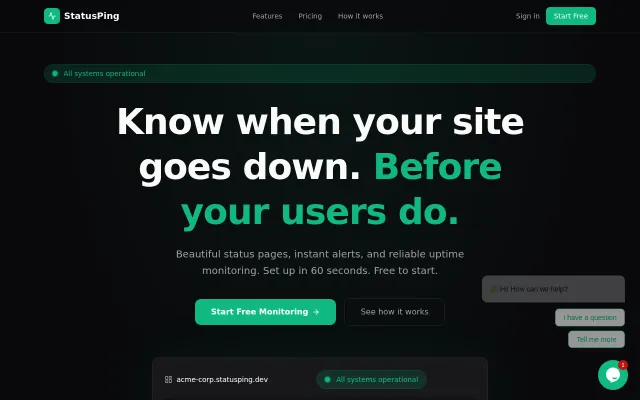
This is a clean, no-nonsense uptime monitor: 1‑minute checks, Slack/Discord/webhook alerts, custom-domain status pages and a usable free tier (3 monitors) — everything you actually expect from a monitoring starter kit. Nicely executed UX and sensible pricing make it an easy switch from UptimeRobot or Better Uptime, but the product doesn’t show a clear technical edge or novel feature to make it stand out in a crowded category.
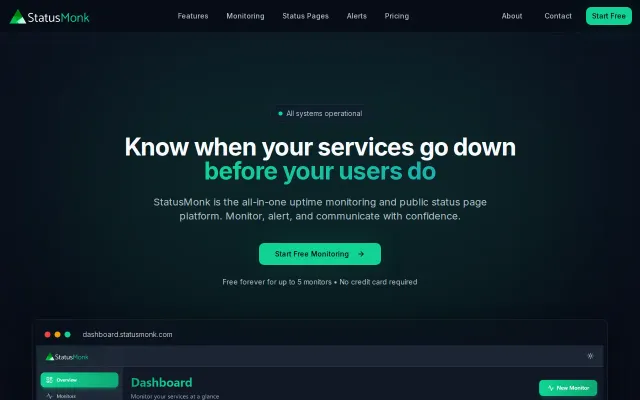
Combines 1-minute uptime checks, SSL/domain/DNS monitoring, heartbeat (cron) checks and automatic incident + recovery notifications with public status pages and Slack/email/webhook alerts — all under a free starter tier. The product doesn't reinvent the category, but the feature bundle and friction-free signup (no card, 5 monitors) make it a pragmatic choice for small teams; I'd like to see clearer technical differentiators or integrations spelled out on the page.
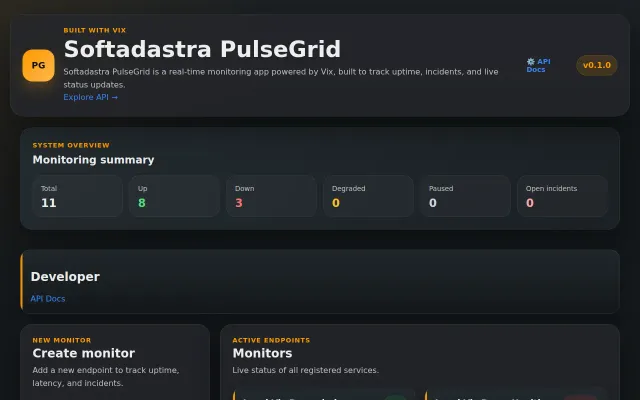
C++ uptime monitor when UptimeRobot and Better Uptime already solve this better.
Cross-session visibility Claude Code should have built in.