Data●●Solid
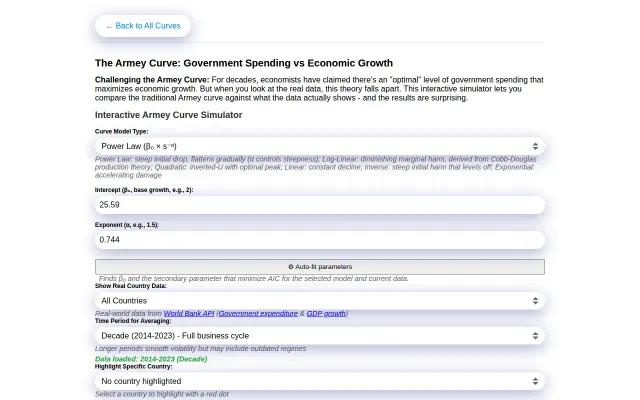
Interactive Simulator of Government Spending vs. Economic Growth
Challenges the Armey Curve theory using live World Bank data and client-side AIC fitting.
Niche GemBig Brain
julienreszka
202mo ago
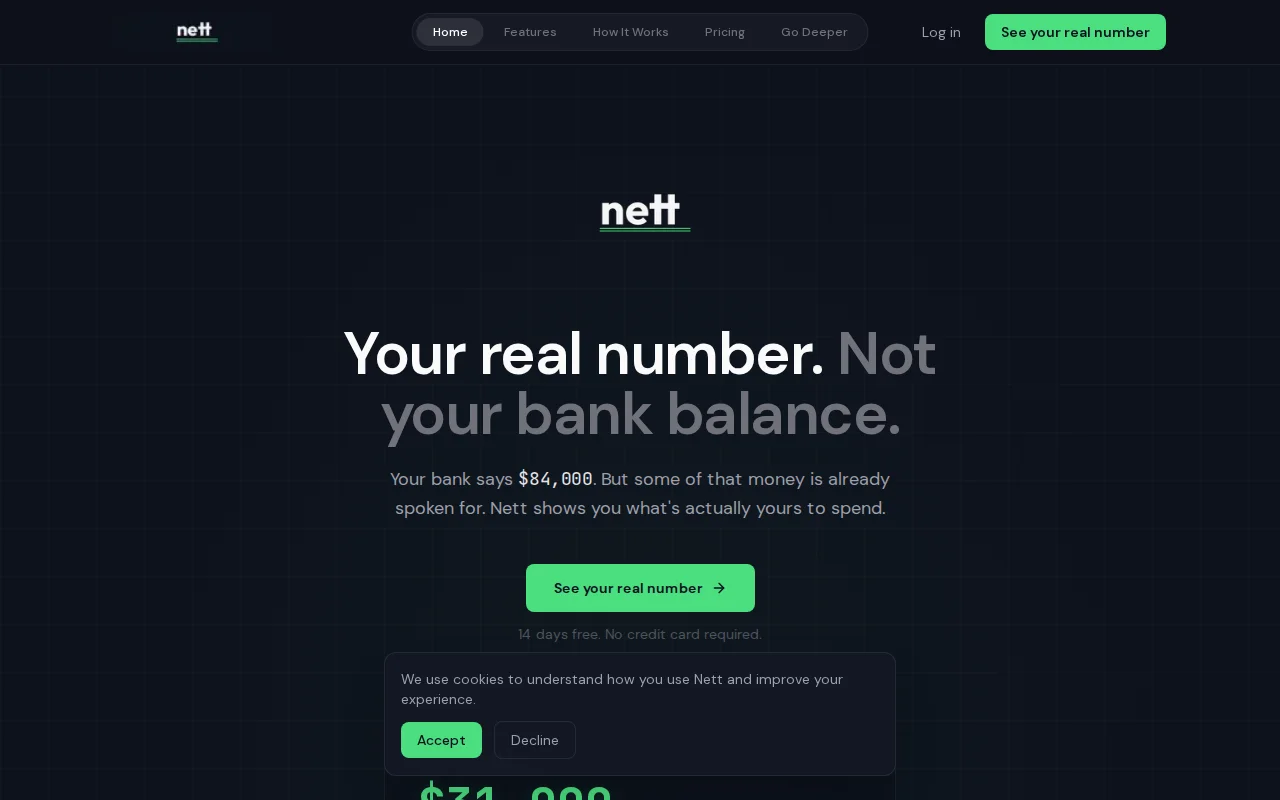
Founder accounting reality check: reveals actual spend vs. bank balance math.
Bootstrapped founders and SaaS operators managing cash runway.
Baremetrics · ChartMogul · Runway.com
I'm an accountant and bootstrapped SaaS founder, and I built Nett (https://nett.fyi) because I kept watching the same mistake — including my own.
Founders check their bank balance, see $84K, and feel fine. As an accountant, I can tell you that number is fiction:
- $18K was deferred revenue from annual customers (money I'd already been paid but hadn't earned yet) - $21K should have been set aside for taxes - $8K in commitments I'd said yes to but hadn't hit the books - $6K in recurring costs coming due in 30 days
My real number was $31K. The gap between what my bank said and what was actually mine to spend was $53K. I didn't know that until I built this.
Nett connects to Stripe (read-only), you enter your bank balance and recurring costs, and it calculates a single number: Safe-to-Spend. It's your bank balance minus everything that's already spoken for.
It also gives you a conservative runway clock (assumes zero revenue growth — the honest version), hidden commitment tracking for the verbal yeses that don't show up anywhere, and what-if scenarios for the 2am anxiety questions ("what if I lose my biggest customer?").
The whole thing is built with Next.js, Supabase, and Stripe Connect. Dark theme, opinionated UI, no complex configuration. Setup takes under 5 minutes.
Free calculator at https://nett.fyi/calculator if you want to see the gap without signing up.
I'd love feedback on the approach. Is the "one honest number" framing useful, or do founders actually want more flexibility in how they model their finances?
Challenges the Armey Curve theory using live World Bank data and client-side AIC fitting.
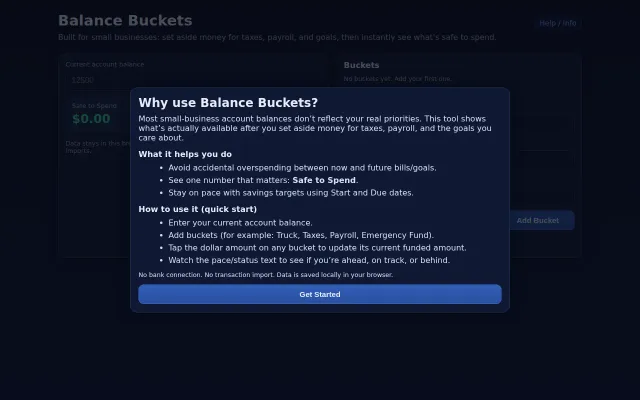
Envelope budgeting for small biz owners, but YNAB and Copilot Money exist.
District-level framing makes USAspending.gov data actually relatable for citizens.
Human Follow-up rate metric proves if AI code actually ships or creates rework.
It does one thing and does it cleanly: inject a compact statusline that shows tokens → dollar estimate, context usage coloring, 5h/7d limit progress, and a rolling period total (with optional ccclub rank). The zero-config behavior — silently omitting integrations you don't have, auto-reading OAuth from the macOS keychain, and writing safe hooks into ~/.claude/settings.json — is smart and pragmatic. This is narrowly useful (only Claude Code users), but the UX decisions (color thresholds, single-line density, cache strategy) show real attention to terminal workflows.
Reads local JSONL logs, zero API calls, shows MCP status—faster than ccusage for Claude Code users.