Security●●Solid
Permit MCP Gateway – Fine-Grained Authorization and IGA for MCP
Enterprise auth for MCP when the protocol itself has no security layer built in.
Solve My ProblemSlick
gemanor
212mo ago
MCP permission proxy solves real AI agent over-permissioning—88% of orgs hit this problem.
Enterprise AI teams, developers running autonomous agents with access to sensitive data (Google, Slack, Notion)
BeyondTrust privilege gateway · HashiCorp Vault · Traditional OAuth reverse proxies
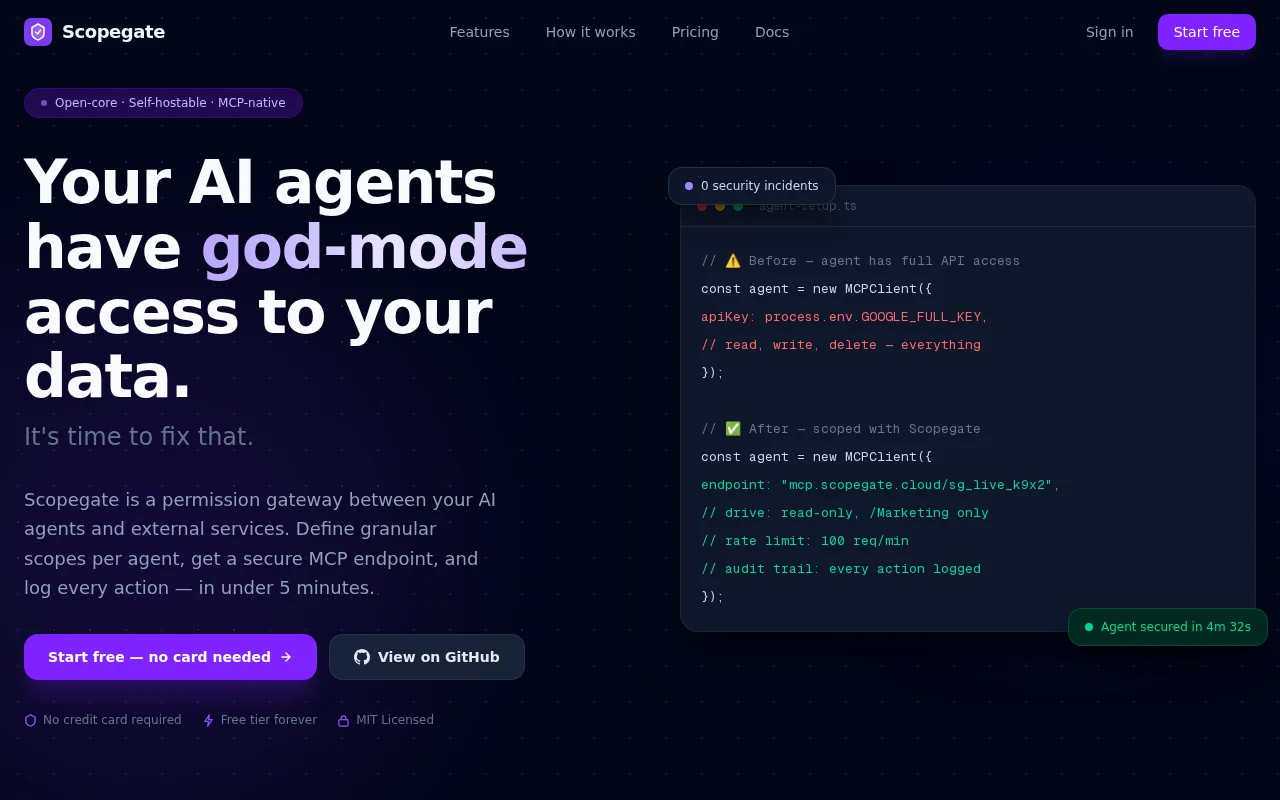
After reading about the GitHub MCP exploit I got tired of cobbling together OAuth + custom middleware + prayer. ScopeGate is a permission proxy that sits between your AI agents and external services (Google Drive, Gmail, Calendar, etc).
You connect a service via OAuth, define granular scopes per agent (read-only, specific folders, rate limits), and get a unique MCP endpoint. Agent A can read one Drive folder but not write. Agent B can send email but not read inbox. One click revokes access across all services instantly.
Open-core, self-hostable — same features on cloud and self-hosted.
Enterprise auth for MCP when the protocol itself has no security layer built in.
Parameter-level approval prevents agents from changing approved values after you authorize.
Unix chmod for AI agents—same push_files tool allowed on feature branches, denied on main.
MCP gateway governing AI agent credential access with YAML policies and blake3 audit chains—fills real enterprise gap.
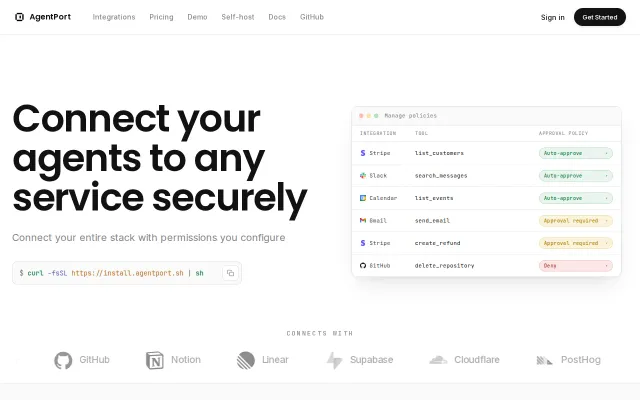
Approval gates for agent tool calls prevent accidental production deletes.
Electron automation OS with permission engine—competes on control, not smarter bots.