Developer Tools●Mid
Git-Shitstorm: How to Make Any Developer Lose Their Mind
Silent Git corruption is a terrifying prank, but but `rm -rf` jokes are older than Git itself.
Dark Horse
Einenlum
121mo ago
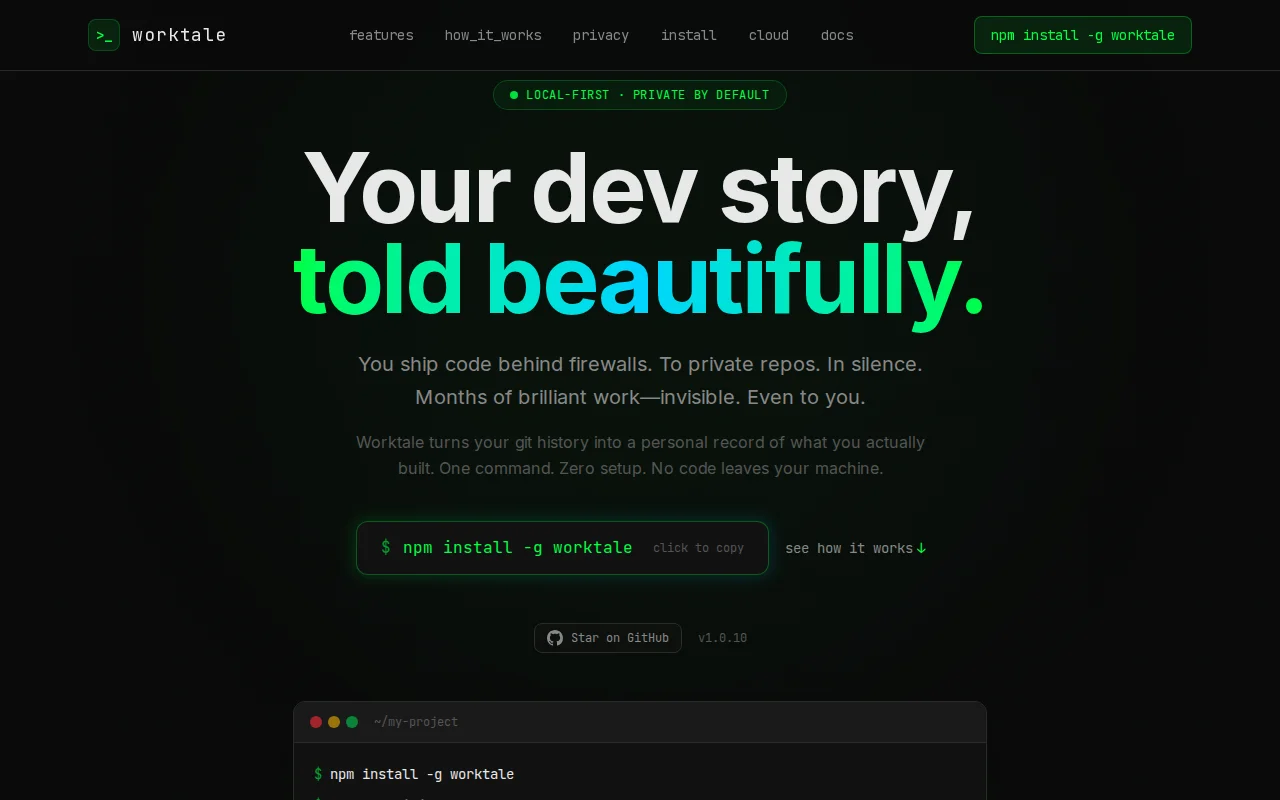
Silent post-commit hook auto-captures work for performance reviews without cloud sync.
Developers in corporate environments with private repos
Wakatime · GitHistory · ActivityWatch
I built Worktale because I couldn't remember what to say at my last performance review: "What did you ship this quarter?"
I'd spent months debugging race conditions, redesigning a reporting pipelines, shipping a major migration — all behind a corporate firewall in private repos. None of it was visible. Not on GitHub. Not on my resume. Not even to me.
So I built a CLI that reads your local git history and turns it into a personal record of what you actually built. No account, no cloud, no code leaves your machine.
How it works:
npm i -g worktale cd my-project worktale init # scans full git history, installs a silent post-commit hook worktale # opens a TUI dashboard — overview, daily log, heatmap worktale digest # generates a daily summary (template or local Ollama AI)
After 'init', every git commit silently captures metadata (message, lines changed, timestamps) into a local SQLite database. That's it. No network requests, no telemetry.
If you don't want hooks in your repos--fair point, for those with a fear of commitment:
cd ~/projects worktale batch --since 3m # scans all repos recursively, imports history, installs nothing worktale hook install # opt-in to live tracking per repo later
Technical details for the curious:
- TypeScript, compiled to ESM with tsup - TUI built with Ink 5 (React 18 for terminals) - SQLite via better-sqlite3 in WAL mode - Historical analysis runs in worker threads (batches of 500 commits) - Bash + PowerShell git hooks for cross-platform support - 385 tests across 28 test files - MIT licensed
What it is not:- Not a time tracker (it estimates from commit timestamps, but that's a side effect) - Not a replacement for GitHub contributions (this is your private journal) - Not a team tool (yet — cloud with shareable profiles is on the roadmap)
The whole thing runs locally. The only optional network call is if you use Ollama for AI-generated digests, and that's localhost.Source: https://github.com/worktale/worktale-cli Site: https://worktale.org
npm: npm i -g worktale
Happy to answer questions about the architecture, the SQLite schema, or why I parse git log --format instead of using a library.
Silent Git corruption is a terrifying prank, but but `rm -rf` jokes are older than Git itself.
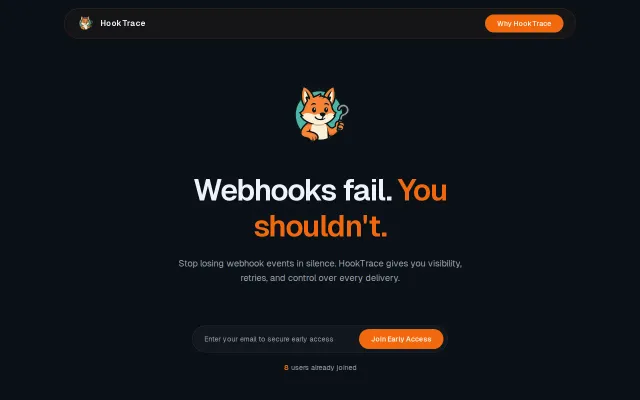
HookTrace zeroes in on a real nuisance: silent webhook failures. It promises per-delivery logs, full payload history and retry visibility so you can stop guessing which event died in transit. The landing page is tidy and focused, but the site doesn't yet show the integrations, dedupe/backoff controls or analytics that would make it stand out from existing players like Hookdeck or Pipedream.
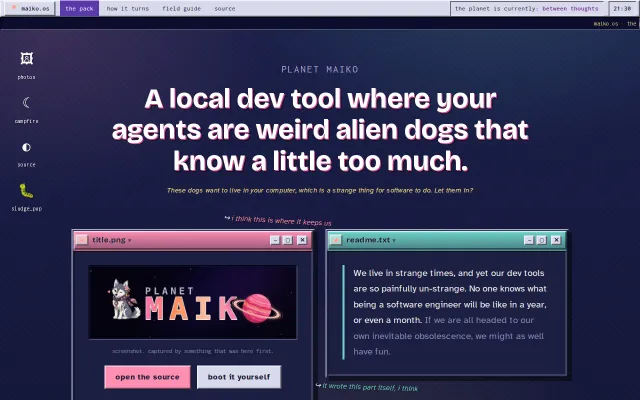
Retro GUI for AI agents is charming, but it's just a themed wrapper around existing orchestration patterns.
Agents remember *why* code exists, all local git-native, no cloud lock-in.
Wraps a persistent Claude Code instance in Telegram and actually gives it real tools: streaming replies, workspace-scoped file and git access, webhooks with HMAC validation, plus voice in/out via whisper.cpp and Piper. The workspace base restriction and signed webhooks show practical attention to security and attack surface. Not groundbreaking as a concept, but it's a tidy, feature-complete punchline for anyone who wants a controllable, phone-accessible dev assistant.
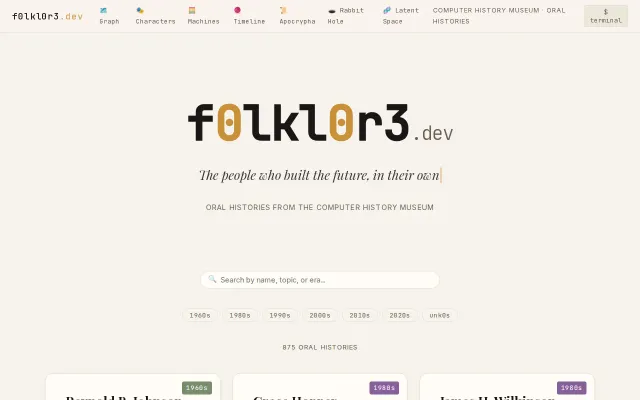
AI-extracted entity graph makes 875 oral histories actually explorable.