Developer Tools●●Solid
Pglite-oxide – embedded Postgres for Rust and Tauri apps
SQLx-compatible URI mode means zero code changes to existing Rust database code.
Niche GemShip It
f0rr0
511mo ago
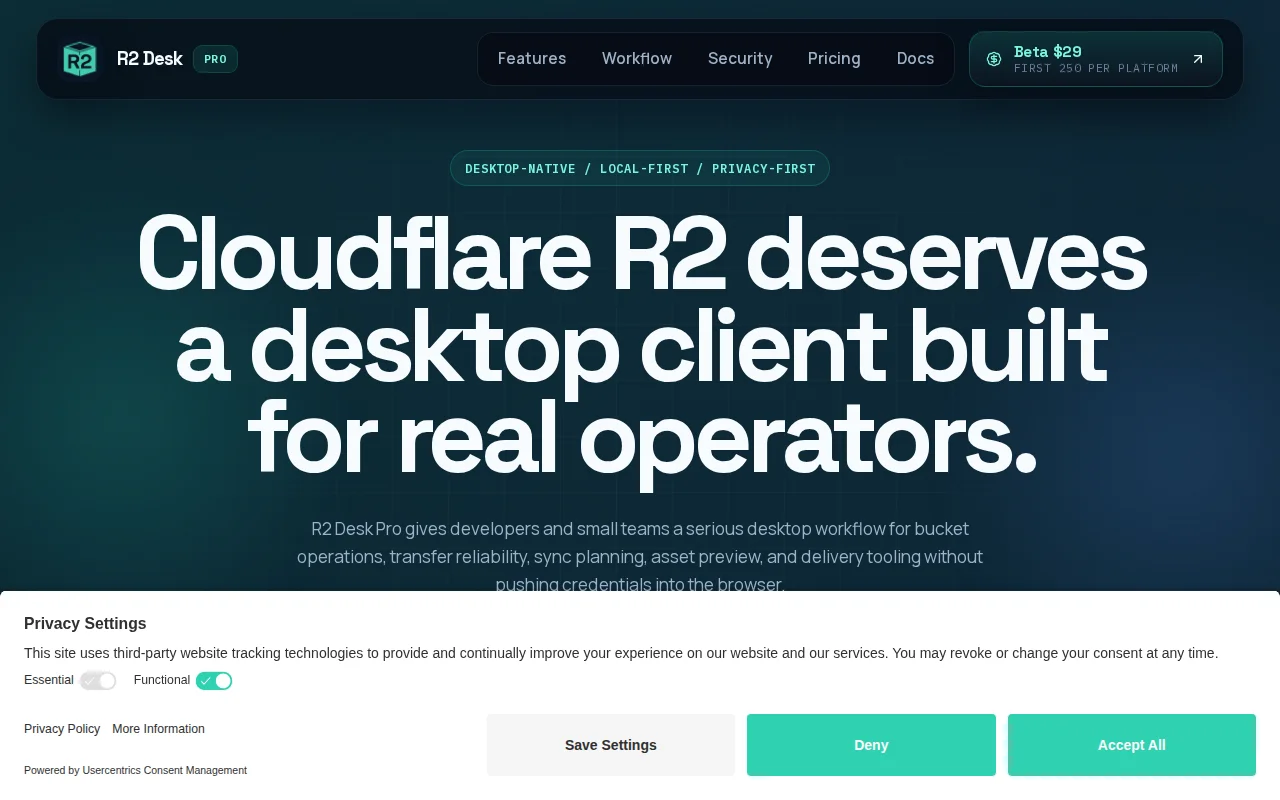
Vault-gated R2 client with sync planning — Cloudflare Dashboard doesn't do this.
Developers and operators managing Cloudflare R2 buckets
Cyberduck · Transmit · Cloudflare Dashboard
It runs on Windows, macOS, and Linux. Built with Tauri v2 and Rust.
A few things I focused on for the security model: - Vault-gated access with Argon2id passphrase — no unlock, no R2 operations - Credentials stored exclusively in the OS keychain, never in app settings - All R2 requests execute in the Rust backend so secrets never sit in browser code paths - License validated via Lemon Squeezy on activation, then cached locally with an offline grace period
On the feature side beyond the basics: - Resumable multipart uploads with session persistence - Sync engine with dry-run planning before any destructive operation - Bucket administration: CORS, lifecycle rules, custom domains, event notifications, jurisdiction - Cost analysis with per-bucket and per-prefix breakdowns - Live R2 metrics via Cloudflare GraphQL - Signed URL generation for GET, HEAD, PUT, DELETE - Cloudflare cache purge from the desktop workflow
Private beta is live at $29. First 100 customers get 25% off with code R2CONTROL (valid until March 15 23:59 UTC). 250 seats per platform.
Happy to answer questions about the Tauri/Rust architecture, the security model, or any of the R2-specific implementation details.
SQLx-compatible URI mode means zero code changes to existing Rust database code.
Another Pomodoro timer, but this one forces you to stop working.
O(1) anti-hoarding with atomic CAS beats glibc 26% on packet processing, 9x less fragmentation.
Atomic saves with fsync+rename and sha256 content-addressed images show real craft.
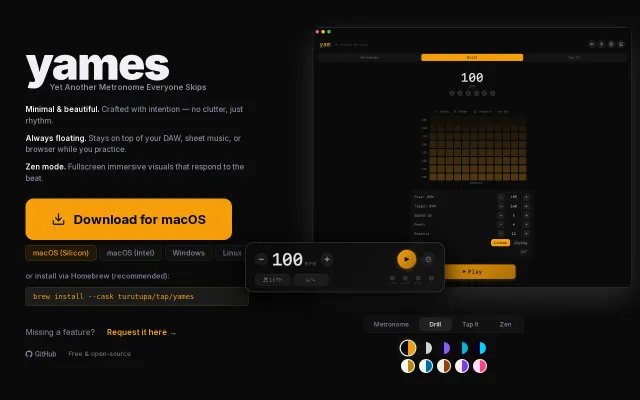
Zen mode visuals are genuinely stunning, but GarageBand already has a metronome.
The idea of inserting a deterministic 'gate' between proposed tool calls and execution is smart and practical: precomputed classification plus an agent-unreachable vault means destructive operations become reversible by default. The README calls out clear mechanics (envelope checks, vault backup, tiered responses and structured denials) which suggests this is more than a thought experiment — it's a focused infra piece for teams that actually let agents touch production.