Developer Tools●Mid
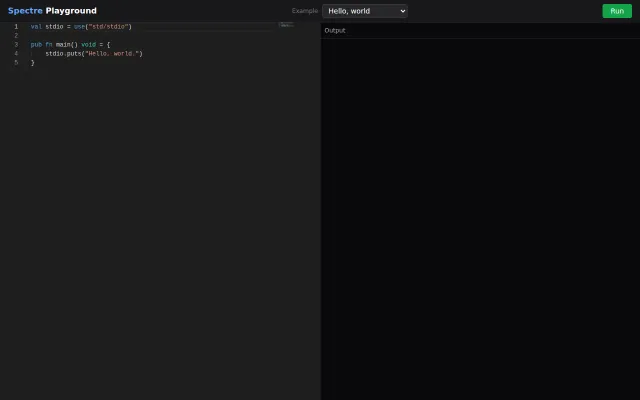
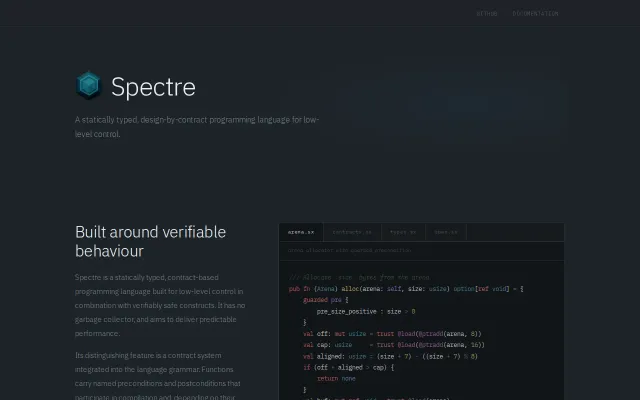
Playground for the Spectre Programming Language
Design by contract is a nice touch, but the language lacks a clear edge over Rust or Zig.
Ship It
pizza_man
532mo ago
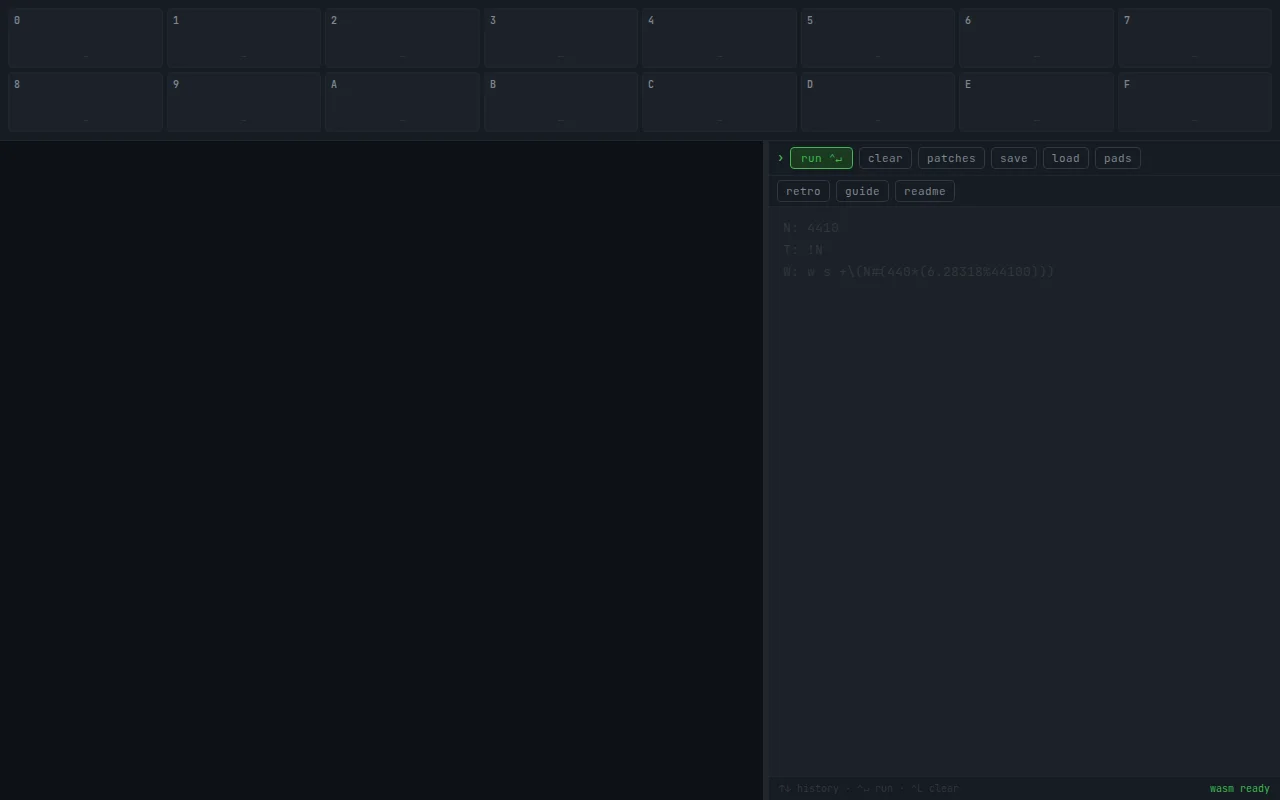
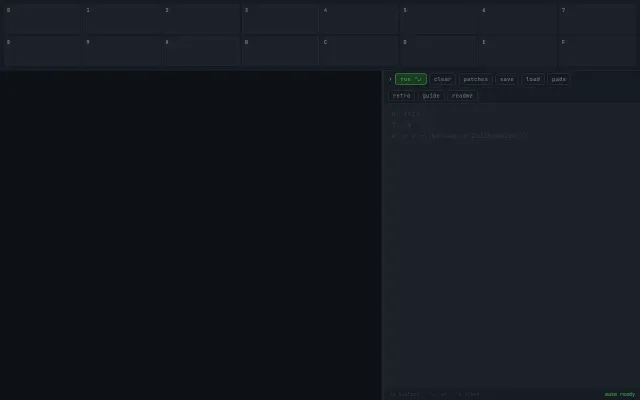
K-inspired array language for audio synthesis running entirely in your browser.
Audio programmers and synth enthusiasts
SuperCollider · TidalCycles · K
Live Toolkit: https://octetta.github.io/k-synth/
If you visit the page, here is a quick path to an audio payoff:
- Click "patches" and choose dm-bell.ks.
- Click "run"—the notebook area will update. Click the waveform to hear the result.
- Click the "->0" button below the waveform to copy it into slot 0 at the top (slots are also clickable).
- Click "pads" in the entry area to show a performance grid.
- Click "melodic" to play slot 0's sample at different intervals across the grid.
The 'Weird' Stack:
- The Language: A simplified, right-associative array language (e.g., s for sine, p for pi).
- The Web Toolkit: Built using WASM and Web Audio for live-coding samples.
- AI Pair-Programming: I used AI agents to bootstrap the parser and web boilerplate, which let me vet the language design in weeks rather than months.
The Goal: This isn't meant to replace a DAW. It’s a compact way to generate samples for larger projects. It’s currently in a "will-it-blend" state. I’m looking for feedback from the array language and DSP communities—specifically on the operator choices and the right-to-left evaluation logic.
Source (MIT): https://github.com/octetta/k-synth
Design by contract is a nice touch, but the language lacks a clear edge over Rust or Zig.
APL-style syntax generates waveforms in-browser when Sonic Pi and SuperCollider require installation.
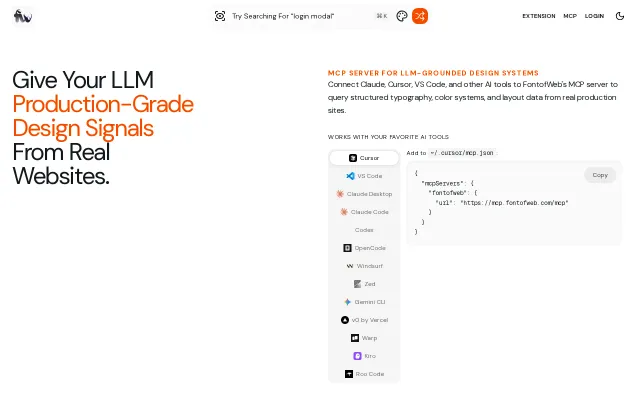
It turns real production sites into compact design tokens and an llm.txt context so large models don't hallucinate weird UI choices — neat move to reduce token bloat while keeping designs grounded. The MCP endpoints (search_design_inspiration, export_domain_tokens, get_layout_data, display_pin) and direct integrations with tools like Cursor and VS Code make it immediately usable in prompt workflows, but value will hinge on extraction accuracy and coverage of the indexed sites.
90+ languages, fully client-side, MIT licensed—but CodePen, JSFiddle, and Replit already own this space.
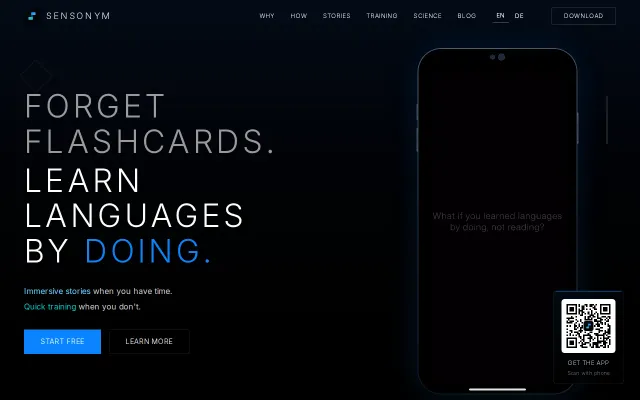
Phone sensors create memory anchors instead of flashcards for language learning.
Design-by-contract baked into grammar for a no-GC systems language.