SaaS●Mid
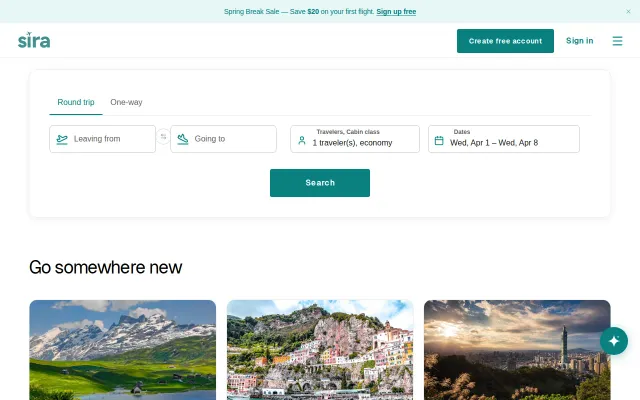
Travelwithsira: Find Cheapest Flights
Hopper and Google Flights already dominate this space with better data.
SlickCrowd Pleaser
malwaregeeeek
302mo ago
Finally answers the wifi question before you book — no more guessing on long flights.
Frequent travelers and business flyers
FlightAware · SeatGuru
If you’ve been lucky enough to be on a flight with Starlink, you understand the hype. It actually works!
However, its availability on flights is patchy and hard to predict. So we built a database of all airlines that have rolled out Starlink (beyond just a trial), and a flight search tool to predict it. Plug in a flight number and date, and we'll estimate the likelihood of Starlink on-board based on aircraft type and tail number.
If you don’t have any trips coming up, you can also look up specific routes to see what flights offer Starlink.
-
I wanted to add a few notes on how this works too. This was a fun data normalization pipeline to build. I used to work on financial data systems and it's interesting how similar this was.
There are three things we check, in order, when we answer a query: - Does this airline have Starlink? - Does this aircraft body have Starlink? - Does this specific aircraft have Starlink?
Only a few airlines at all have Starlink right now: United, Hawaiian, Alaskan, Air France, Qatar, JSX, and a handful of others. So if an aircraft is operated by any other airline, we can issue a blanket no immediately.
Then, we check the actual body that's flying on the plane. Airlines usually publish equipment assignments in advance, and they're also rolling out Starlink body-by-body. So we know, for instance, that all JSX E145s have Starlink and that none of Air France's A320s have Starlink. (You can see a summary of our data at https://stardrift.ai/starlink/fleet-summary, though the live logic has a few rules not encoded there.)
If there's a complete match at the body type level, we can confidently tell you your flight will have Starlink. However, in most cases, the airline has only rolled out a partial upgrade to that aircraft type. In that case, we need to drill down a little more and figure out exactly which plane is flying on your route.
We can do this by looking up the 'tail number' (think of it as a license plate for the plane). Unfortunately, the tail number is usually only assigned a few days before a flight. So, before that, the best we can do is calculate the probability that your plane will be assigned an aircraft with Starlink enabled.
To do this, we had to build a mapping of aircraft tails to Starlink status. Here, I have to thank online airline enthusiasts who maintain meticulous spreadsheets and forum threads to track this data! As I understand it, they usually get this data from airline staff who are enthusiastic about Starlink rollouts, so it's a reliable, frequently updated source. Most of our work was finding each source, normalizing their formats, building a reliable & responsible system to pull them in, and then tying them together with our other data sources.
-
Starlink itself is also a pretty cool technology. I also wrote a blog post (https://stardrift.ai/blog/why-is-starlink-so-good) on why it's so much better than all the other aircraft wifi options out there. At a high level, it's only possible because rocket launches are so cheap nowadays, which is incredibly cool.
The performance is great, so it's well worth planning your flights around it where possible. Right now, your best bet in the US is on United regional flights and JSX/Hawaiian. Internationally, Qatar is the best option (though obviously not right now), with Air France a distance second. This will change throughout the year as more airlines roll it out though, and we'll keep our database updated!
Hopper and Google Flights already dominate this space with better data.
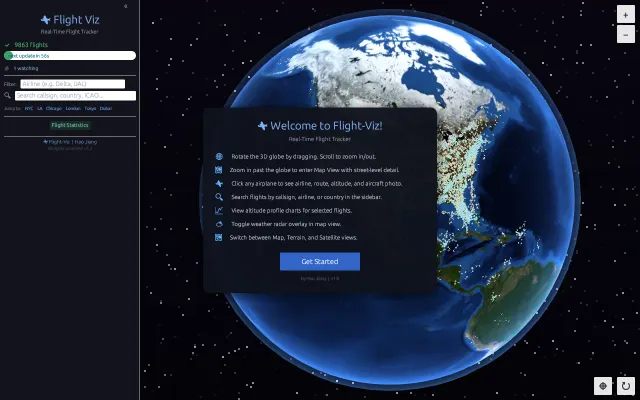
10K flights in 3.5MB WASM bundle is impressive constraint engineering for browser rendering.
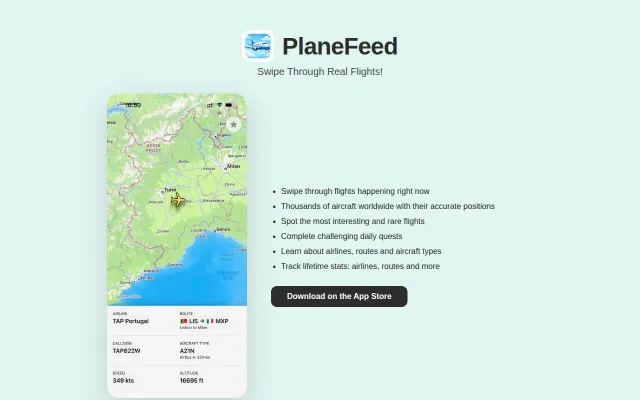
TikTok-style swipe for flights is fun but FlightRadar24 already shows this data.
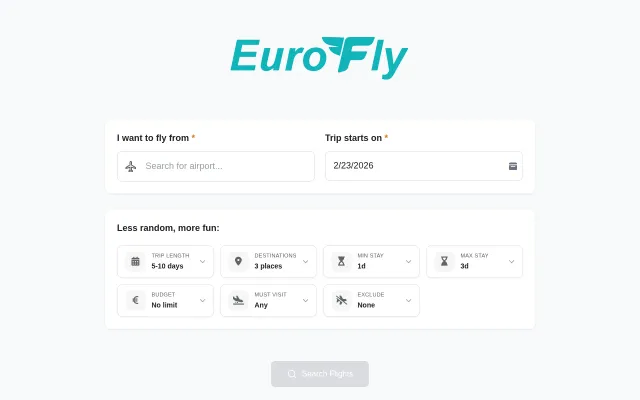
Kayak Explore and Google Flights flex dates already own this space completely.
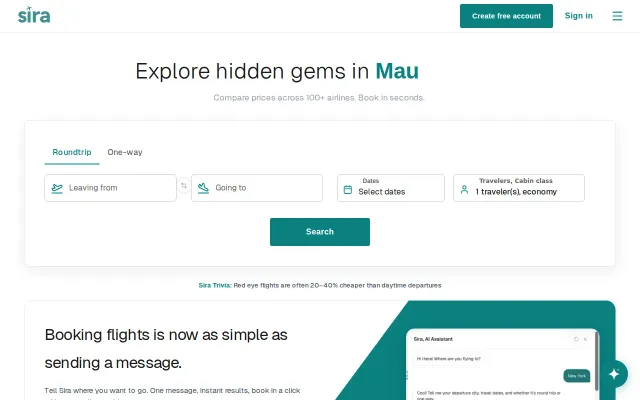
Sira promises a tidy chat-first flow that shows published fares as the final price and even offers 24-hour holds — that no-upsell pitch is refreshing. If the backend truly normalizes GDS/ATPCO data into instant conversational responses, that’s a meaningful engineering feat. Still, the product faces brutal competition from incumbents and the landing page leaves open questions about baggage/seat handling, refunds, and real-time availability.
Gamified flight tracker adds leaderboards and badges to standard trip logging.