Education●Mid
I built a music theory course with games and spaced repetition
Polished music theory app in a category with Hooktheory and musictheory.net.
Cozy
udit99
581mo ago
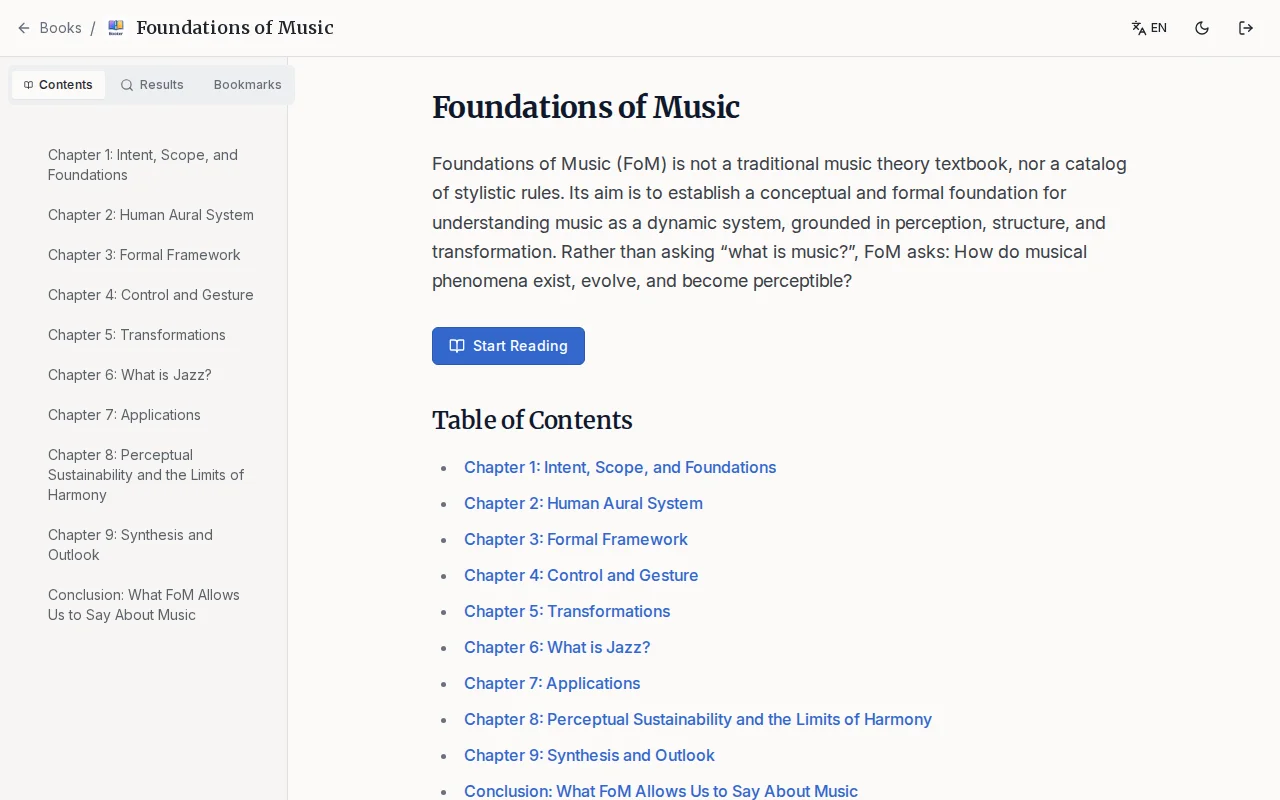
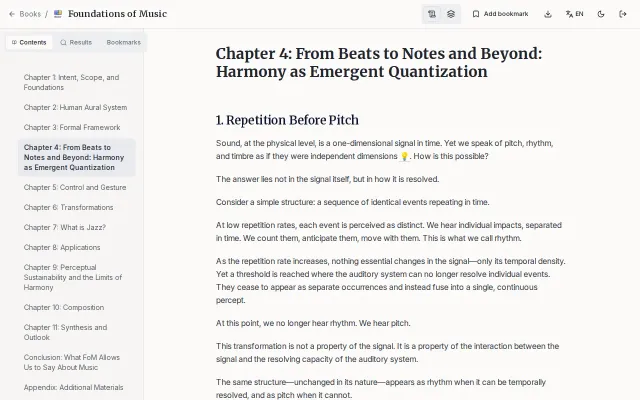
Music theory textbook focusing on perception and dynamic systems rather than rules.
Musicians, music theory students, composers
Musictheory.net · Open Music Theory
Rather than declaring what music is, FoM shows where and how music becomes possible.
It provides simple explanations to complex concepts like vibrato, glissando, and portamento to outsiders.
It enables new vocabulary like jazzing, jazzing aroung, jazzing along, and jazz translation which are mind refreshing, at least to me.
For a sample of translation (Turkish Folk to Blues) you may see: https://www.youtube.com/watch?v=Ml4pEk2hMM8
Proposed perceptual fatigue concept can be found highly controversial, but I think it may be an inspiring food for thought.
In the end, FoM is a work in progress to constitute a stable ground from which new musical questions can be meaningfully explored.
Polished music theory app in a category with Hooktheory and musictheory.net.
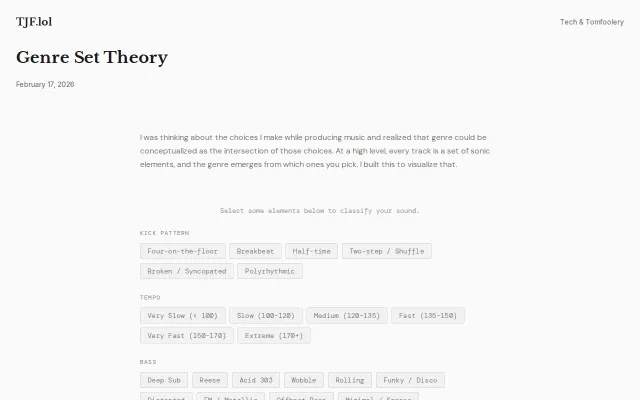
Clickable cards map kick patterns, tempo bands, bass types, leads, mood and texture into 21 base genres and 47 hybrids — a tidy way to treat genre as the intersection of production choices. It’s more of a creative prompt than an analytic product (there’s no audio ingestion, sharing, or export), but it’s useful for brainstorming track direction and naming ideas.
Reframes pitch as just rhythm sped up beyond human temporal resolution.
Floating widget UI for live music lessons when DAWs are too complex for teaching.
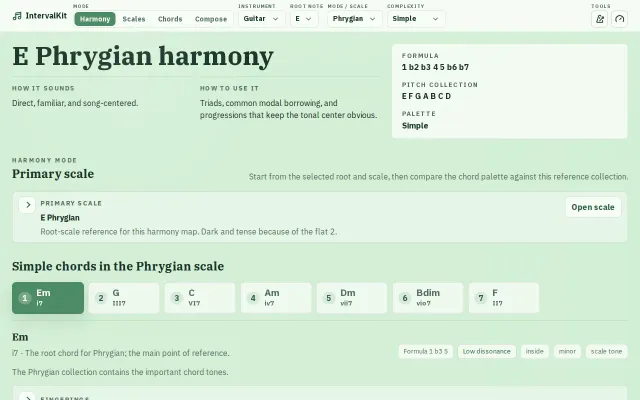
Multi-instrument harmony explorer with complexity toggles from basic to experimental.
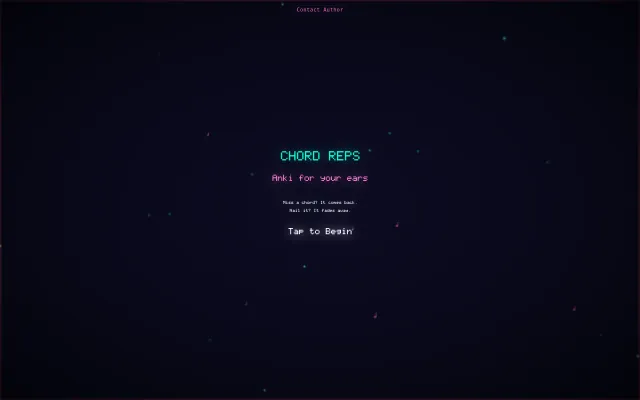
Rust/WebAssembly/WebGL tower for a chord flash-card game—impressive tech, niche audience.