Hardware●●Solid
Answer 9 questions, get a Matter firmware with safe boundaries
Matter firmware from 9 questions, but IoT automation platforms already exist.
Niche GemShip It
Jang-woo
311mo ago
Boundary-first execution prevents unpredictable physical device behavior before it happens.
IoT developers, Matter device builders, home automation enthusiasts
Home Assistant · ESPHome · Matter SDK
But what if a device could be defined just by answering questions?
Instead of writing code, you describe: - what the device should do - under what conditions it is allowed - what should never happen
From those answers, a real Matter device is generated (ESP32-C6).
An action-first system where devices are defined, validated, and then executed.
It’s not just no-code.
Devices are not programmed — they are defined.
GitHub: https://github.com/anna-soft/Nemo-Anna
If you want to try the flow directly: https://anna.software
I’d really appreciate feedback, especially on: - whether this model makes sense - where it breaks in real-world use - how it could work with AI controlling physical devices
Matter firmware from 9 questions, but IoT automation platforms already exist.
On-device Apple Intelligence for terminal workflows without API keys or cloud.
Solves IoT infrastructure friction, but Firebase IoT Core and AWS IoT already own this space.
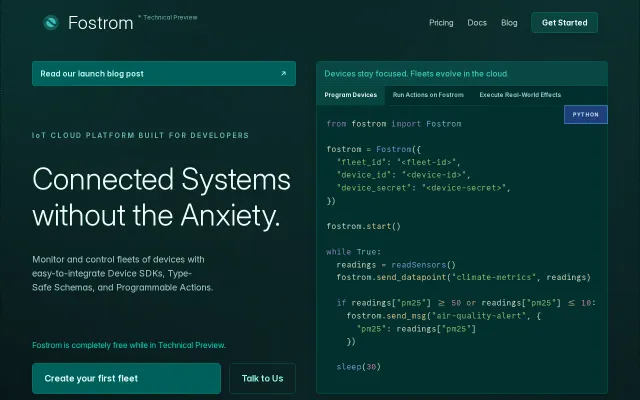
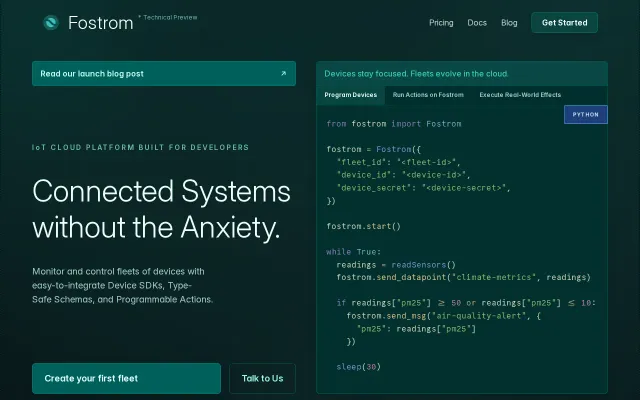
They combined typed payload validation, per-device sequential mailboxes and JS Actions running inside a WASM sandbox — a practical feature set that actually improves predictability for fleet code. The tiny Rust agent plus Python/JS/Elixir SDKs and an Elixir+DuckDB backend signal thoughtful infra choices rather than vaporware. Nice UX on the landing page, but the space is crowded; integrations and real-world scale will determine whether this stands out.
Yet another embedded language competing against Lua, MicroPython, and Rust.
Generic journaling app with server-side encryption, not end-to-end yet.