Developer Tools●Mid
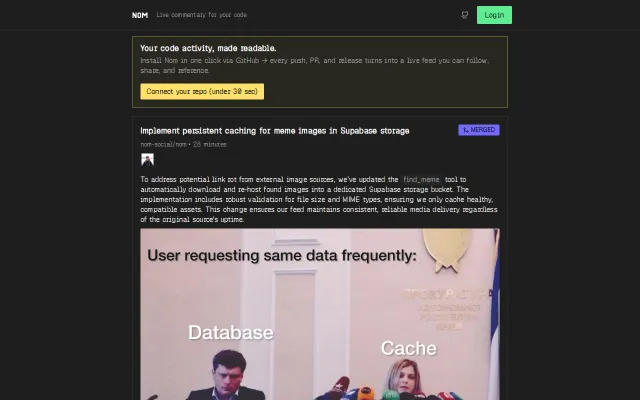
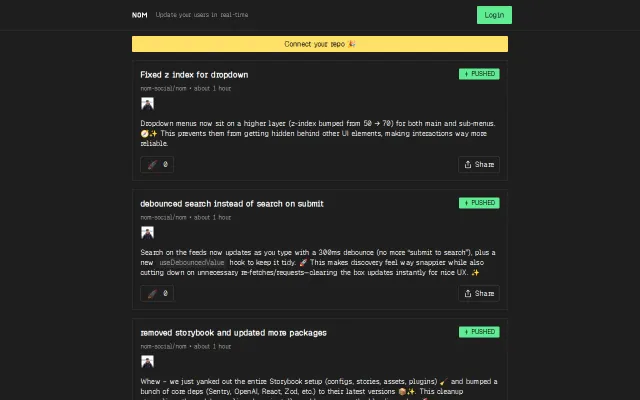
Nom – A public feed of your GitHub activity, auto-summarized
LLM-summarized GitHub activity feed when GitHub's native feed already exists.
Slick
Lws803
113mo ago
Auto-generates narrative arcs from PR history when Changelog.com exists.
Indie hackers, small SaaS teams, open source maintainers
Changelog.com · Statuspage · GitHub Releases
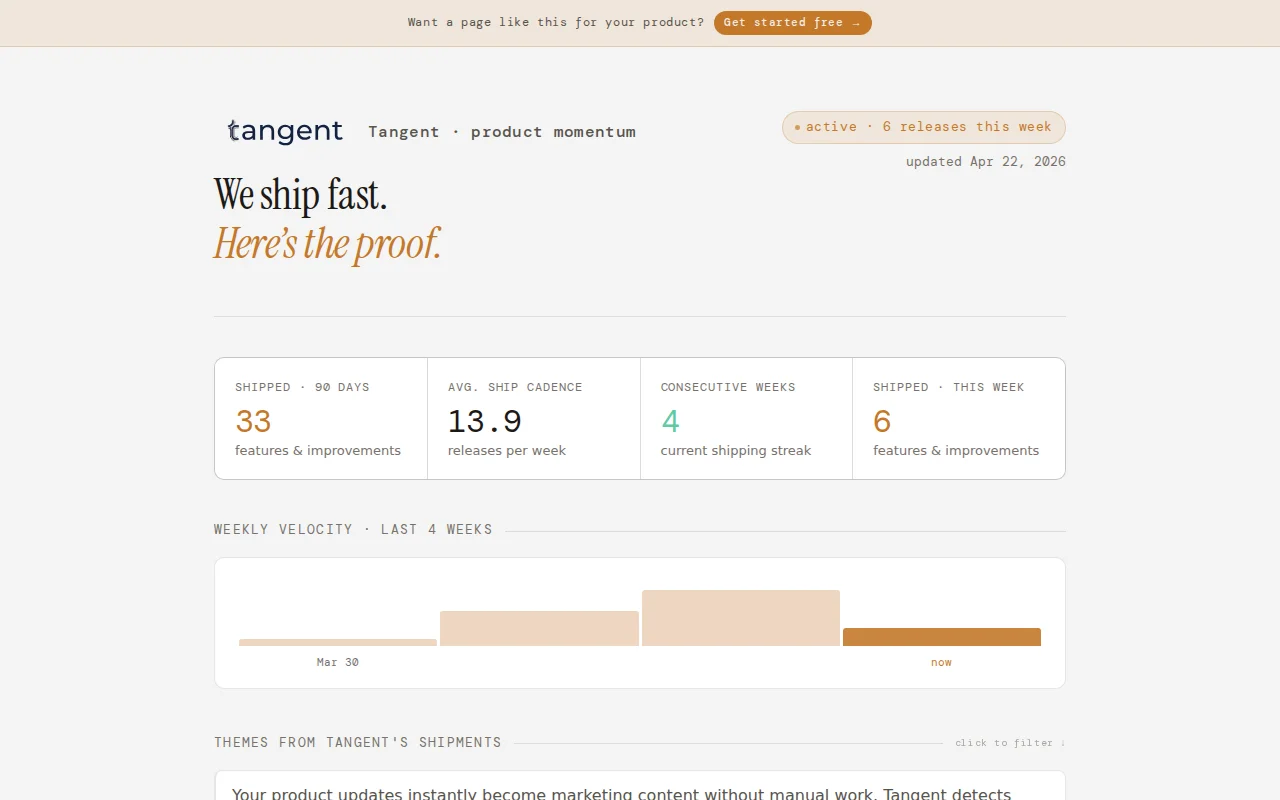
Momentum grabs your PRs (backfilled up to 90 days), generates summaries of each one, calculates relevant statistics, and summarizes the narrative arcs of what's been shipped recently. We also use the project website to grab a logo, colors, and writing style (this can updated in the settings). You can edit PR summaries and narrative arcs as well as add customer quotes. As new PRs get merged to main, it uses a webhook to keep things up to date, creating new summaries and trends.
Here's a few I created from open source projects that I forked:
* https://app.heytangent.com/momentum/pandas * https://app.heytangent.com/momentum/shadcn-ui * https://app.heytangent.com/momentum/kibana
Note that when you sign up, it requests access to your repos so it can access the PRs. It uses each PR to create a summary and only provides a link to the PR if the repo is set to public. Otherwise, only the summary is shown. In the Settings page, you can delete everything and then revoke the Oauth token in GitHub should you choose to.
Let me know if you have feedback or questions!
LLM-summarized GitHub activity feed when GitHub's native feed already exists.
Automates changelog generation from GitHub activity, but changelog tools already exist.
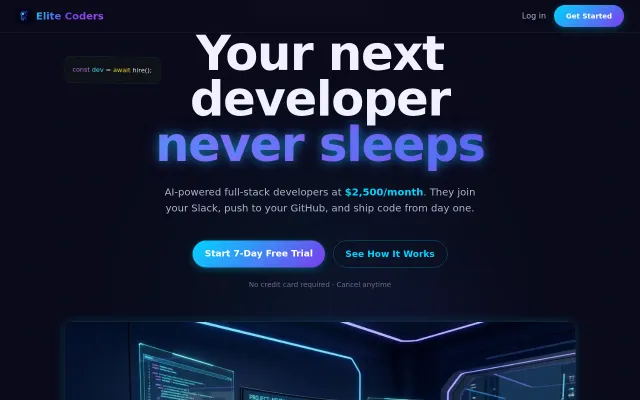
Full-lifecycle AI dev at $2.5k/mo, but context persistence and code quality TBD post-trial.
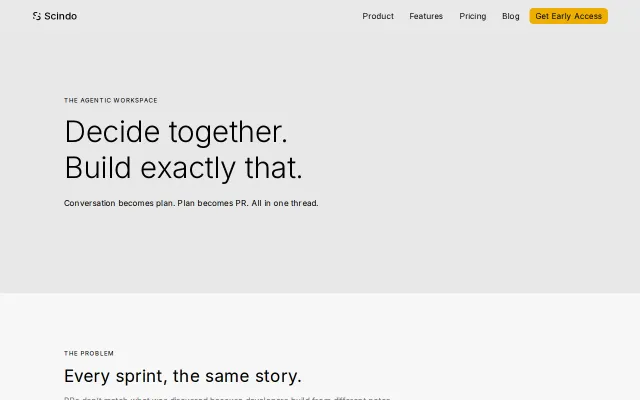
Polished landing page but early access with no working demo to evaluate.
Auto-comments architectural context on PRs via GitHub Actions; solves real institutional knowledge loss.
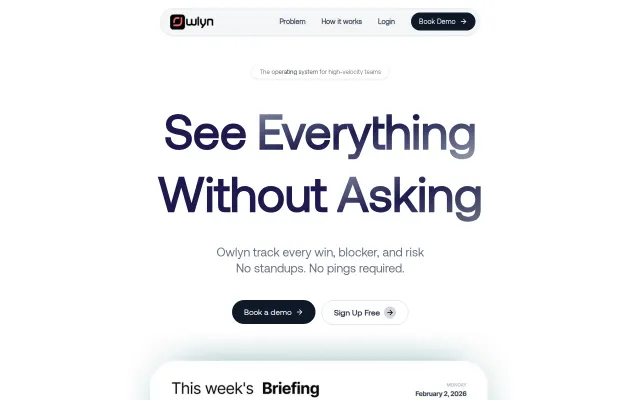
Daily briefings include confidence scores and linked evidence (commits, PRs, messages), which is actually useful — telling me 'why' a risk exists matters more than the label. The hard part is trust: if their blocker/risk detection keeps false positives or misses context, this becomes another noisy digest; I'd want clear controls for signal tuning, data retention, and anonymized examples from real teams before committing.