Developer Tools●Mid
All the Cron Jobs
Curated cron job directory — useful but just YAML files with a CLI wrapper.
Ship It
wonsukchoi97
1012d ago
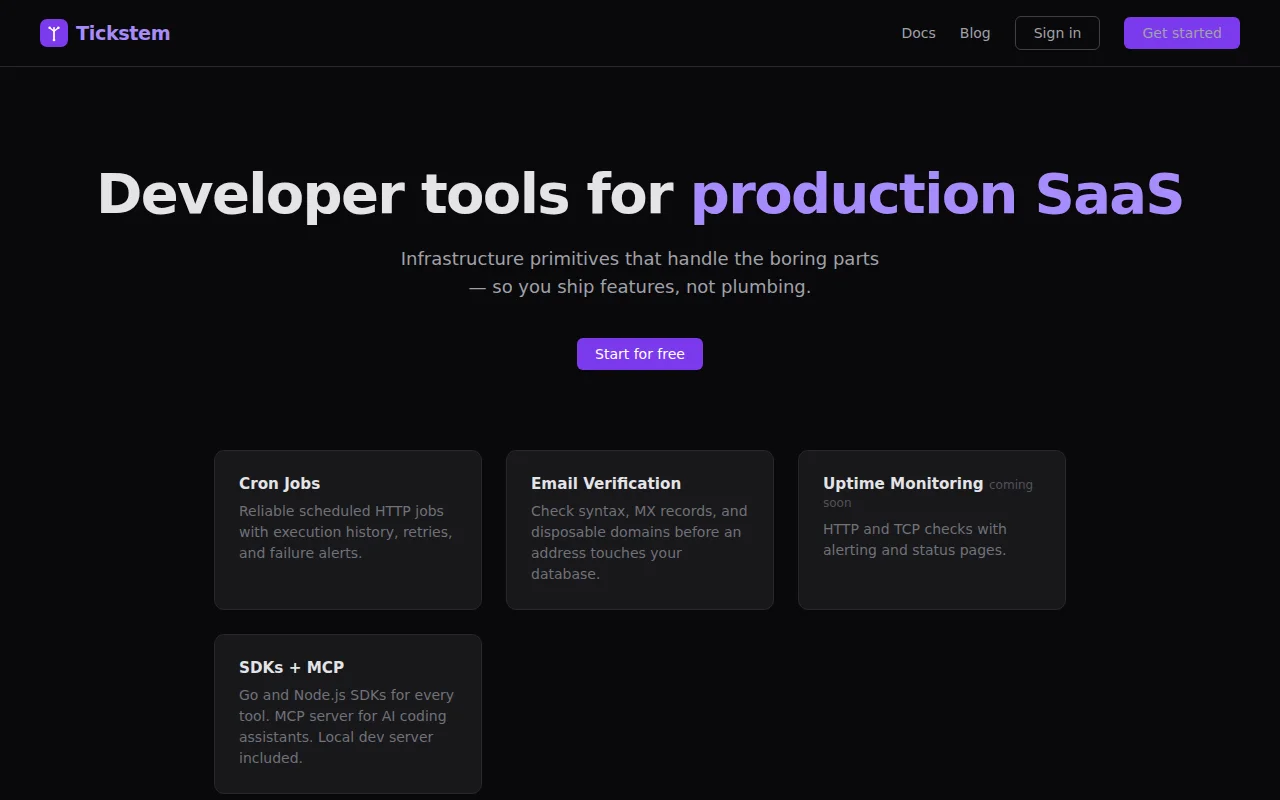
Cron-as-a-service when Cronitor and AWS EventBridge already own this space.
SaaS developers, backend engineers
Cronitor · EasyCron · AWS EventBridge
And especially i wanted to make sure that Go's goroutines can do nicely some fan-out things, for example, getting request, logging, publishing event, without notable performance degradation.
I had quite some experience in AWS, with serverless architecture in particular. And there are basically no other option for scheduling except for EventBridge, which has a handsome free tier though. But what if you are not within the AWS infra, because the infra itself could be costly, especially after they removed the "12-months trial" thingy.
So, i thought something like cron-as-a-service could be good starting point.
Decided to take a straightforward stack: Go API server, Postgres, Redis as both job queue and cache, all running on a single €5/month Hetzner VPS behind Caddy.
I read that it's possible to use Redis as a queue. Thus, wanted to try this out as well — job queue via LPUSH/BRPOP and API key cache with a 5-minute TTL, which cuts out a number of Postgres calls on every authenticated request.
To validate the performance story, I ran a benchmark from within Europe — 10,000 requests, 100 concurrent, against the live API:
Requests/sec: 621 Avg latency: 158ms (network-dominated — server is on Hetzner Germany) p99: 442ms Fastest: 84ms
Most of that latency is the round trip across Europe. The actual server processing time - Go handler + local Postgres query - takes much less. But still - this is for a very basic Hetzner VPS instance.
Would love to get any feedback — especially on the scheduler design and whether the worker pool approach could handle real load.
Curated cron job directory — useful but just YAML files with a CLI wrapper.
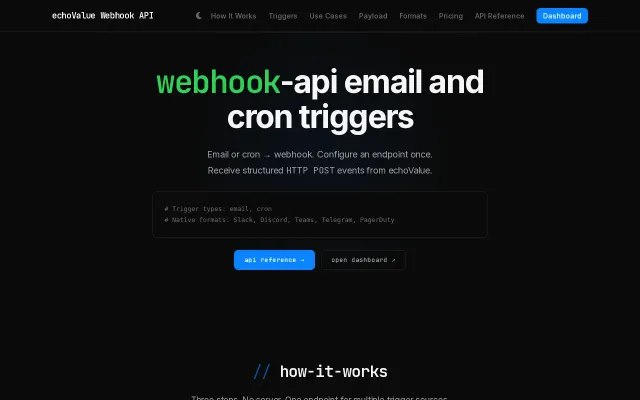
Email-to-JSON webhooks with built-in cron, simpler than configuring Mailgun inbound routes.
Consolidates cron and uptime SDKs, but Cronitor and Healthchecks.io already own this space.
BullMQ API without Redis when you don't need distributed workers.
lazygit for cron with natural language parsing, but cron TUIs already exist.
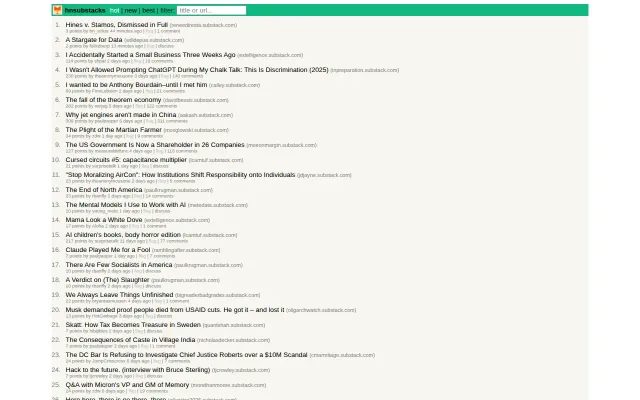
HN filtered for Substacks when you could just search substack.com yourself.