Open Source●●Solid
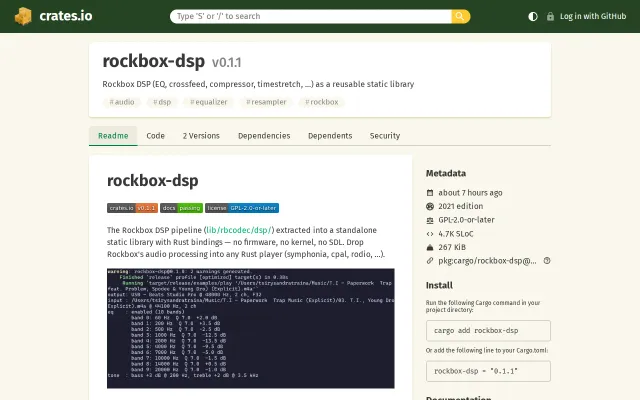
rockbox-dsp – A reusable Rust DSP library extracted from Rockbox
Battle-tested Rockbox DSP extracted for Rust players without firmware dependencies.
Niche GemCozy
tsiry
2015d ago
WebGL2 shaders driven by Web Audio FFT with MIDI mapping in browser.
Music enthusiasts, VJs, developers interested in Web Audio and shaders
Web-based visualizers · TouchDesigner · Resolume
I built a browser VDJ-style demo with fullscreen WebGL2 shaders. It’s something I’ve always wanted to build but never had the time to learn all that was required. Cursor almost feels like the early days of my career, where apps felt like they had unlimited potential and I just wanted to build things. I have never done DSP programming before.
I used Cursor to build the audio pipelines that send data to the shaders and to run FFT in an AudioWorklet. Tone shaping uses native Web Audio biquads: high-pass → five-band EQ → low-pass, then into the limiter/safety chain.
I created specific workflows to allow Cursor to iterate on UI/UX (using Playwright). I also used workflows where Cursor would iterate on performance. I tuned the rendering and audiolet performance directly in Chrome DevTools, passing the profiles directly back into Cursor
Below are are some stats on the project.
Project Timeline: 13 days
Cursor requests: 1,344 Total: 814 on-demand (paid) + 528 subscription-included + 2 errored (no charge)
on-demand spend: $1,146.21
total tokens: 4.37 B (4.20 B input cache reads; 83 M input w/o cache; 62 M w/ cache write; 18.8 M out) input token cache: 96.7% of input were cache reads — long threads, not chopped chats
tree size: ~39.3k LOC (web/ TS+CSS, IaC, audio worklet, various experiments)
long threads: 537 user prompts and 7,025 assistant messages across 9 top-level agent threads
Battle-tested Rockbox DSP extracted for Rust players without firmware dependencies.
REW and Room EQ Wizard already do frequency sweeps with more features and calibration.
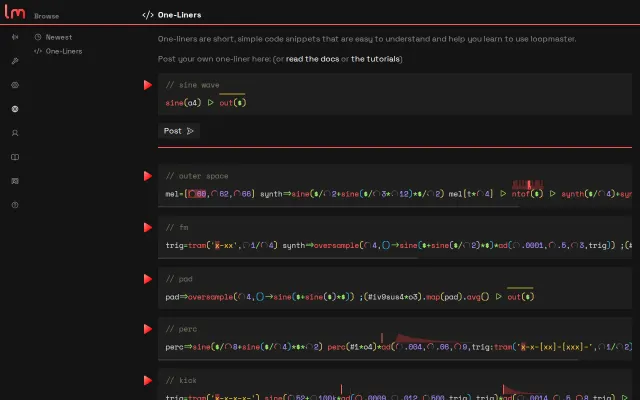
Code snippet collection for DSP learning, but shipping a skeleton with no substance.
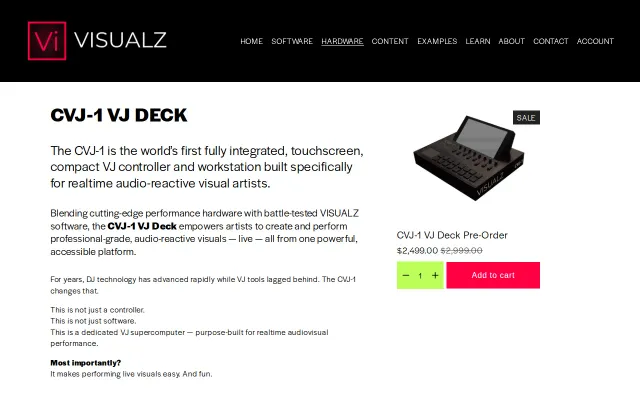
7-year audio-reactive VJ engine now ships as dedicated hardware — real artist demand, real alternative.
Real-time audio DSP in pure Swift, zero allocs in render threads—rare and performant.
Nine thousand pins reacting to FFT data is a fun demo, but it's just another Three.js visualizer.