Productivity●Mid
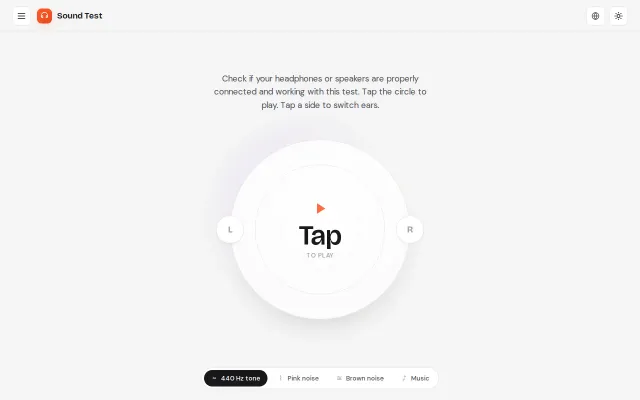
Online Sound Test
Clean UI for frequency sweeps, but browser audio APIs limit precision for pros.
Cozy
artiomyak
3114d ago
A Go-native, single-binary POSIX userland with 100+ tools. Runs as a persistent JSON-RPC daemon or multicall CLI, backed by >98% Busybox test compatibility.
Beating BusyBox at its own game using AI harness engineering is genuinely wild.
Systems programmers, Go developers, container engineers
u-root · toybox · busybox
So I set up to do an experimental project with strict architectural rules, pointed an LLM at it, and fed it the BusyBox test suite as ground truth.
The result: 77 POSIX utilities in pure Go, single static binary (~10MB), and it passes 548 of 552 BusyBox tests.
My Honest take: this project is ~90% wiring the AI to do the heavy lifting, ~10% steering it in the right direction. Took about 3 weeks of "prompts" and plans and all that. "Harness engineering" works when you have a solid test suite to validate against, I know, it is an obvious statement, but I have hard evidence now to prove it.
The test suite is the actual hero here, I cannot stress this enough. Without BusyBox's brutally thorough test suite, this project is just random hallucinated code.
Also, I'm not trying to replace BusyBox. It's an experiment. I'm happy with how it went, cheers!
Repo: github.com/ramayac/goposix (https://github.com/ramayac/goposix)
Clean UI for frequency sweeps, but browser audio APIs limit precision for pros.
Express syntax compiled to native binaries, but Tsonic is unproven and requires .NET SDK.
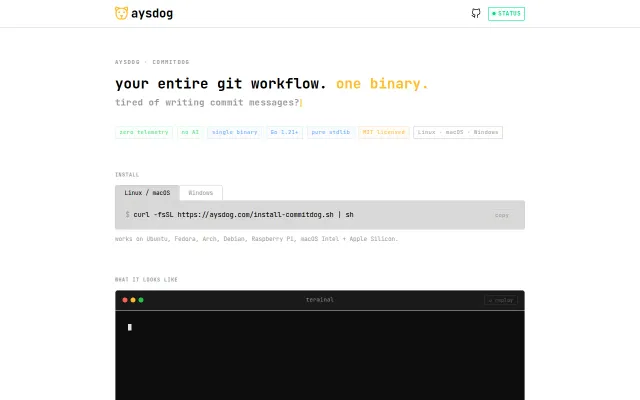
Deterministic commit inference (no AI hallucinations) + GitHub init in one command.
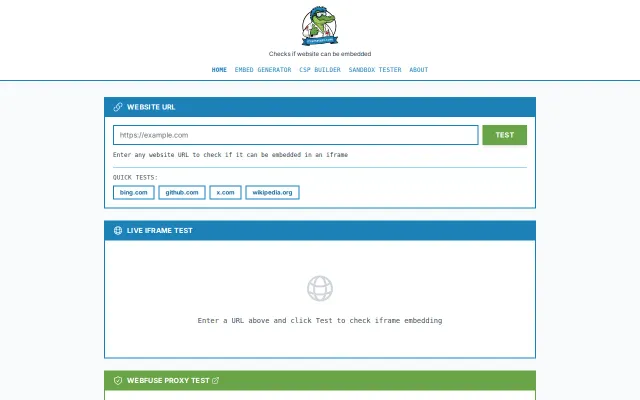
Quick iframe embedding check when browser dev tools feel too heavy.
MinIO for poor machines: 80MB RAM, single binary, built-in dashboard. But MinIO already dominates.
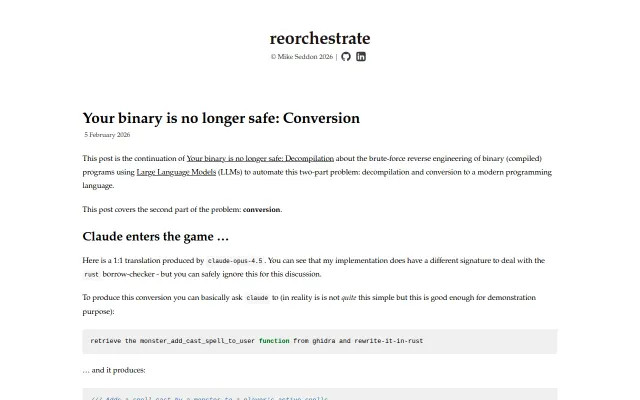
LLM-powered decompilation with differential testing beats guesswork, but verification burden remains.