Education●●●Banger
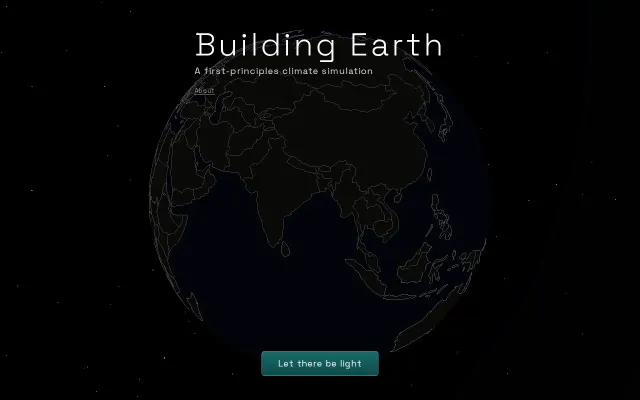
Interactive first-principles climate physics simulation with explainer
Layer-by-layer climate physics you can actually watch unfold in 3D.
Rabbit HoleEye CandyBig Brain
crackalamoo
103mo ago
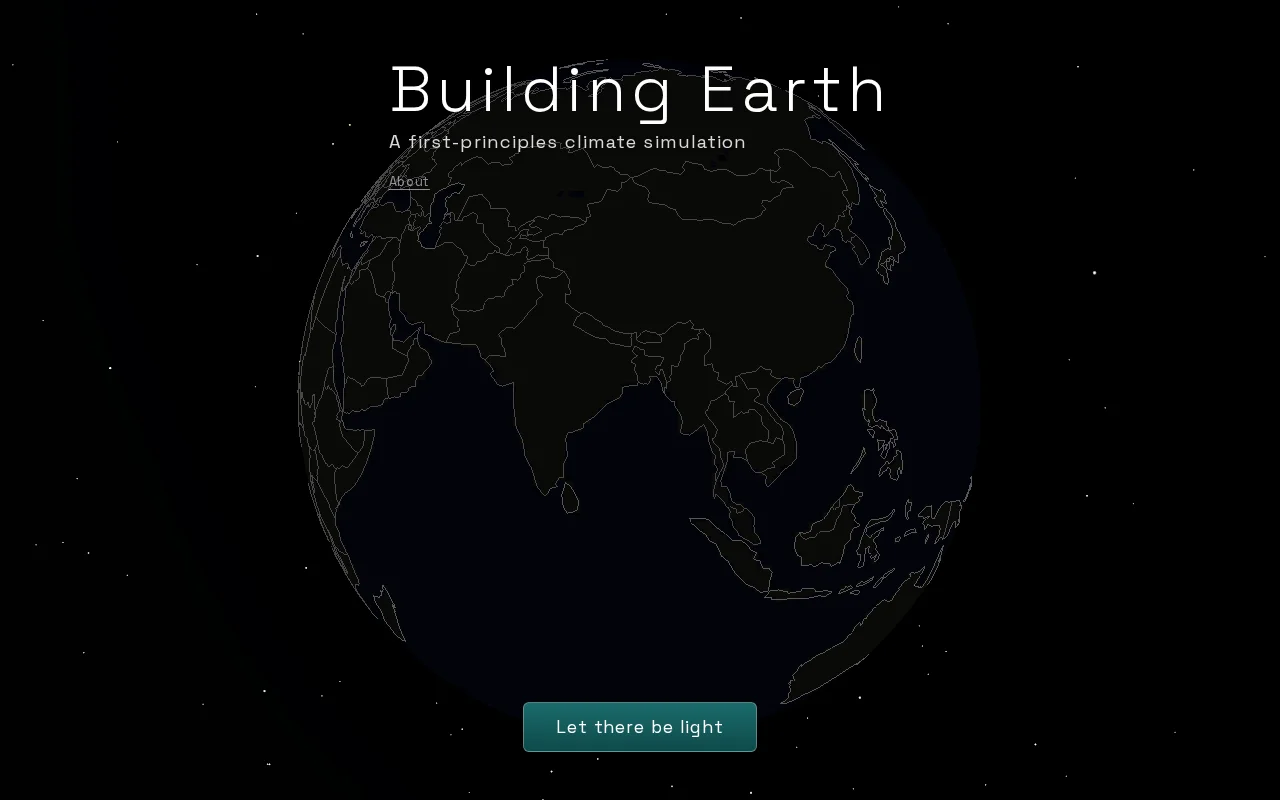
Layer-by-layer physics simulation teaches climate science better than any textbook video.
Students, educators, and curious developers interested in climate science
PhET Simulations · Climate Reanalyzer · NASA Eyes
The models know more about math, physics, and software than I do — but especially on the physics side, they have terrible intuition. Claude can "get the error relative to observations down to 4 °C" just fine, except it'll totally hack and overfit the physics along the way. Subagents to subjectively verify "the physics is sound, no overfitting" didn't really work either. So I had to review the physics code manually.
The entire model is first principles; no machine learning or using observed data at all, except fundamental constants like the radiation of the sun and an elevation map. But after a while, it started to feel like "machine learning in slow motion": instead of an ML model training its parameters, Claude and I were choosing parameters by hand. Some amount of tuning parameters (within a physical range of uncertainty) to match observations is inevitable.
The in-app LLM layer has a tool to evaluate arbitrary math expressions over the simulated data using an AST, which was also pretty fun to build.
Layer-by-layer climate physics you can actually watch unfold in 3D.
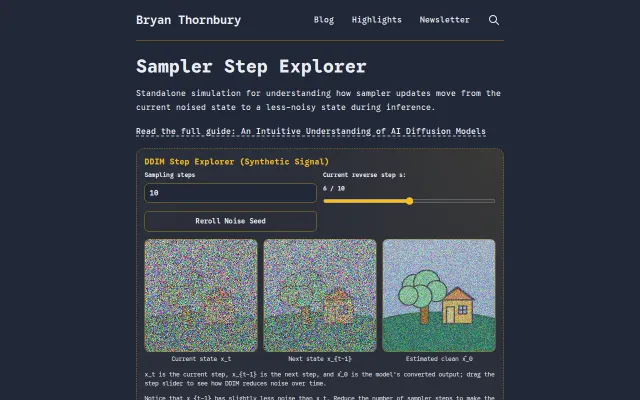
Animated diffusion step explorer—clear pedagogy, but one interactive doesn't make a course.
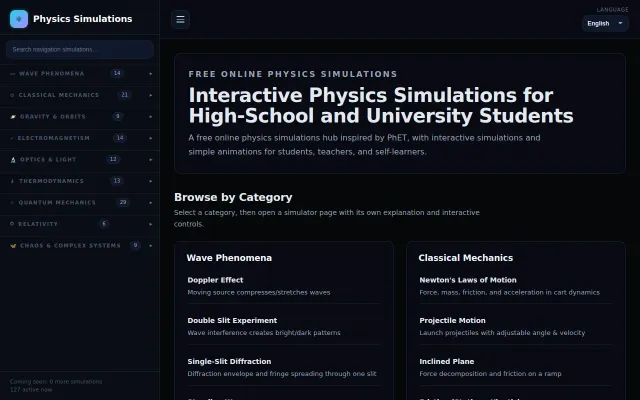
PhET clone with 127 simulations, but no novel pedagogy or technical differentiation.
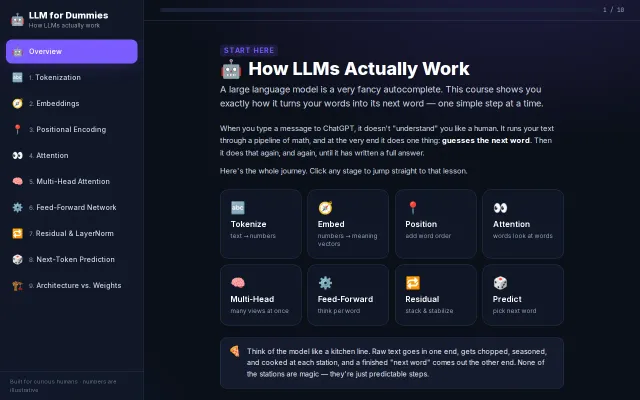
Clean visual course for LLM basics, but many explainers already cover this ground.
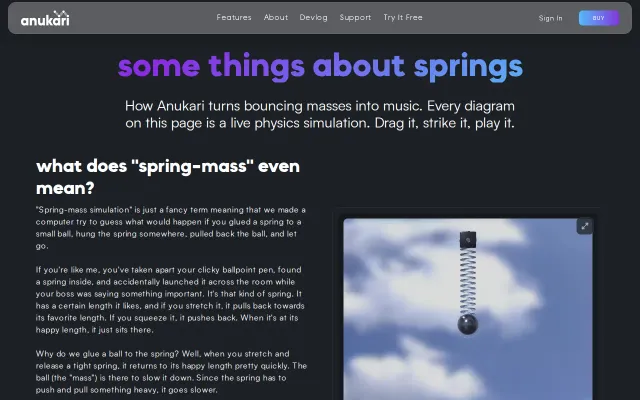
Every single diagram is a live simulation you can drag to hear physics in action.
Chemical engineer built a refinery simulator to explain their job to kids.