Gaming●Mid
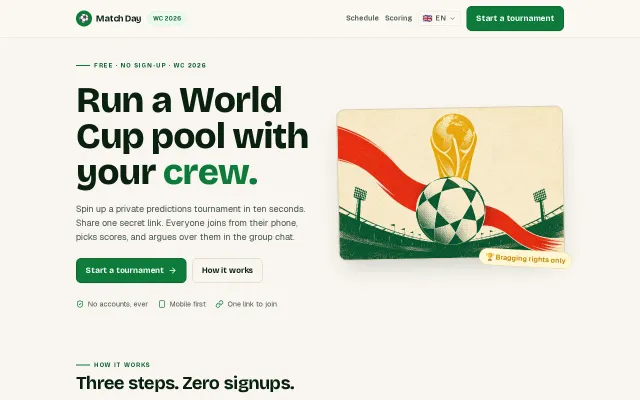
World Cup predictions for friends and family
No-signup prediction pools via secret URLs, but only useful for one tournament.
CozyCrowd Pleaser
belev
201mo ago
Zero-signup tournament links beat the usual email-gate for casual pools.
Friends and family groups organizing casual sports betting pools
OfficePools · Fantasy Premier League · Bracket Challenge
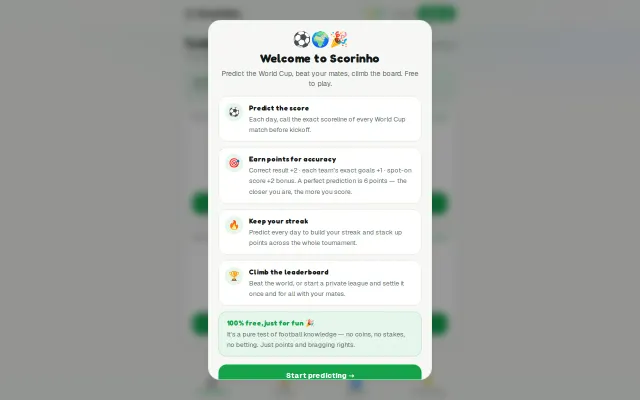
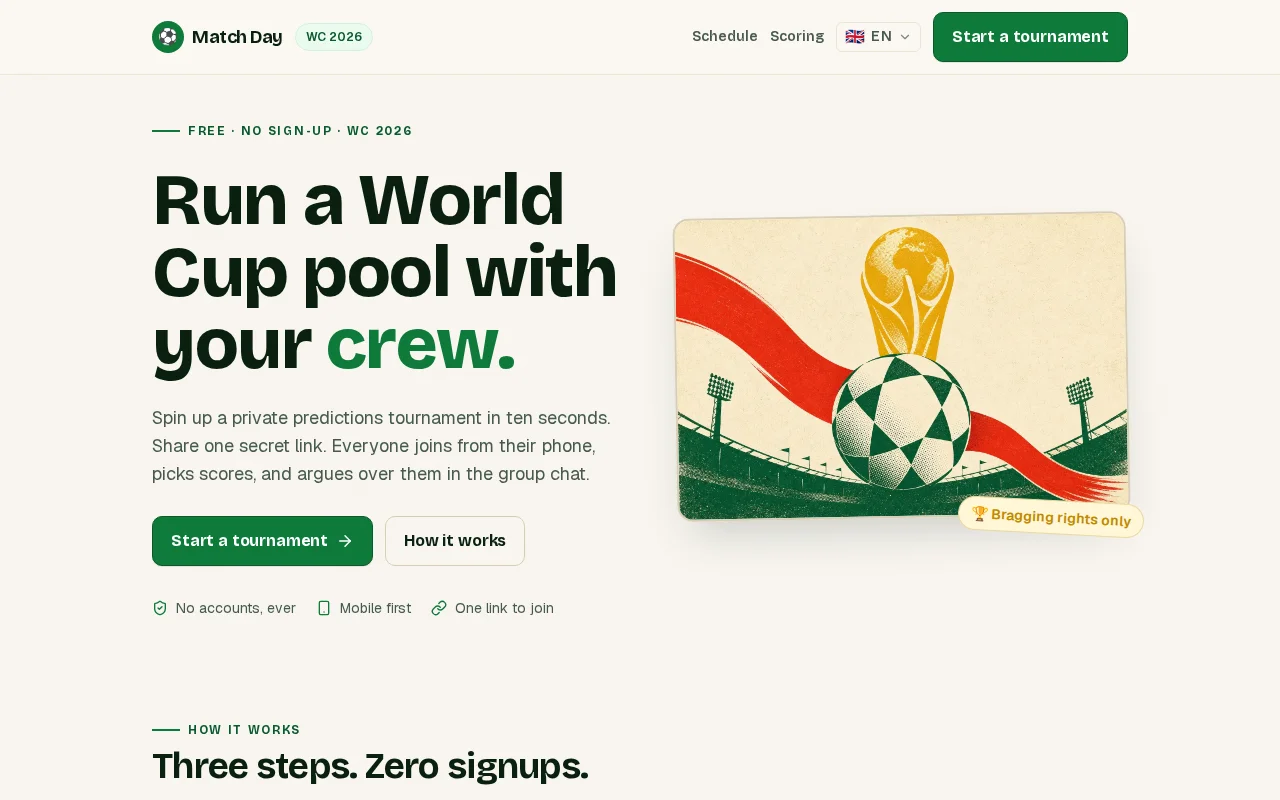
I was testing Cursor for the past week and a half and I decided to build a quick platform for my family and friends to make a little prediction tournament for the World Cup 2026.
My goal was to have the easiest possible setup for elderly relatives, no sign ups, mobile friendly, $0 budget for hosting platform.
I doubt this will get popular but in the odd case of happening just letting you know I'm using free vercel and neon db tiers :D In case you wonder why is slow and/or down.
I'd love to get some feedback on the scoring system, do you think I can improve it and make it more competitive?
Tech stack & development: - vibe coded with mainly Opus 4.7 with Cursor - Neon free tier 0.5 GB db - vercel free tier - github actions - for games - I've loaded the whole tournament and found API - football-data.org cron for pulling the results (free API key for 10 request per min) enough for what we have here
- React - Next.js - translated to 4 languages English/German/Spanish and of course Bulgarian.
Thanks, Anton
No-signup prediction pools via secret URLs, but only useful for one tournament.
Simple World Cup predictions when ESPN and FIFA already have fantasy games.
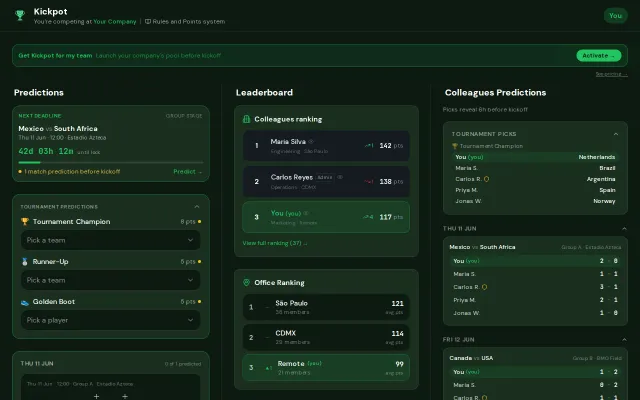
Slack-native World Cup pool, but office brackets already solve this.
Sha256-locked predictions for transparency, but it's essentially a JSON file with scripts.
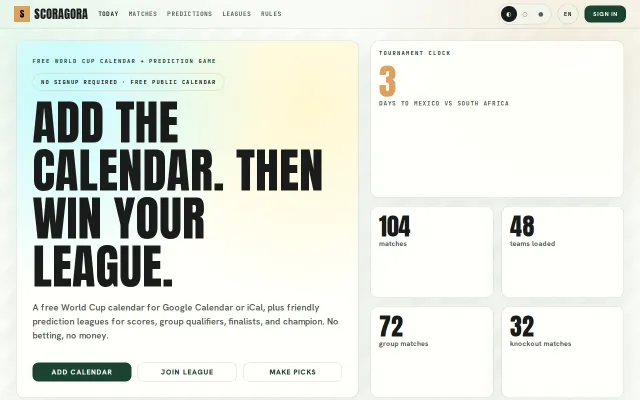
Revived 2014 prediction game with free calendar sync and no betting or ads.
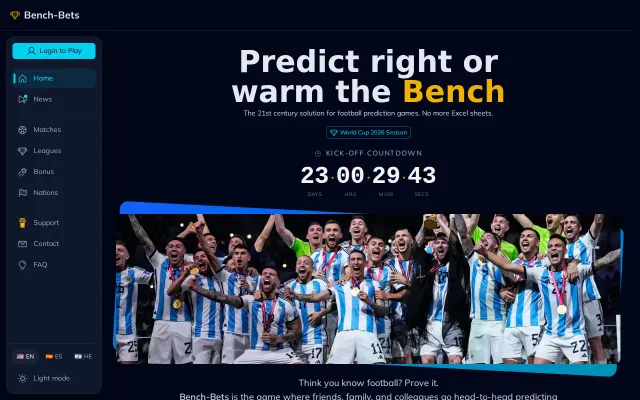
Clean prediction league app, but Excel sheets already do this for free.