Developer Tools●●Solid
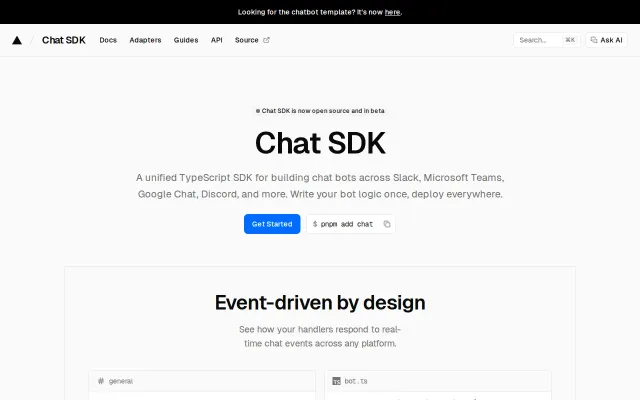
A TS SDK for Building Chatbots Across Slack, Teams, GChat, Discord etc.
Multi-platform bot abstraction, but chatbot SDKs already exist for every platform.
Ship ItSlick
cramforce
223mo ago
Chat agents for your team, with approvals and sandboxed tools. Slack, Discord, Telegram, webhooks.
Approval flows for team AI agents when most frameworks ignore enterprise safety needs.
DevOps teams and engineering teams deploying AI agents in chat platforms
OpenClaw · LangChain · Botkit
It's a Typescript framework to create chat agents for Slack, Discord, and the likes:
- Sandboxing for commands (just-bash, Docker, Gondolin), - Approval flows (e.g. any "risky" command needs approval from a certain team on Slack), - Configuration with markdown files (SOUL.md, AGENTS.md) and skills, - It's built on Pi, so you can use Pi extensions (ish), - And a lot more: web admin panel, audit trail, cron and heartbeat, support for documents (PDF, docx, etc), ...
There are a few examples in the repo, including a DevOps assistant that can help your team manage servers. I'll whip out a demo in the next few days.
If you're adventurous enough to give it a try, let me know.
Multi-platform bot abstraction, but chatbot SDKs already exist for every platform.
Upgrades OpenClaw's memory from local-only markdown to cloud-backed team decisions, but early against existing context windows.
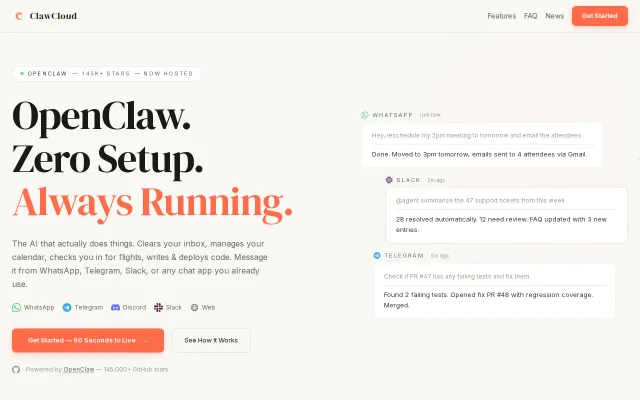
Turning OpenClaw into a one-click hosted product (OAuth connectors, WhatsApp/Telegram linking, and '800+ tools' via Composio) is a useful product move — it removes the friction that keeps most teams from running agents. The site touts browser control, shell access and automated PR fixes, but those capabilities demand explicit security, audit and permission detail; the landing page sells convenience more than the trust you need to give an agent full system access.
You can mention a bot in Slack or Discord and have it queue a job that clones an approved repo, runs a coding agent via the Codex/Copilot CLI, and posts a Markdown report or a PR link back in-thread — that conversational-to-PR flow is the project's strongest move. The architecture (bot → Redis queue → worker → agent → repo-scoped PRs) and repo catalog make it practical for teams who want to keep AI-driven edits auditable and self-hosted; just be mindful of the security model since the worker runs code against repos.
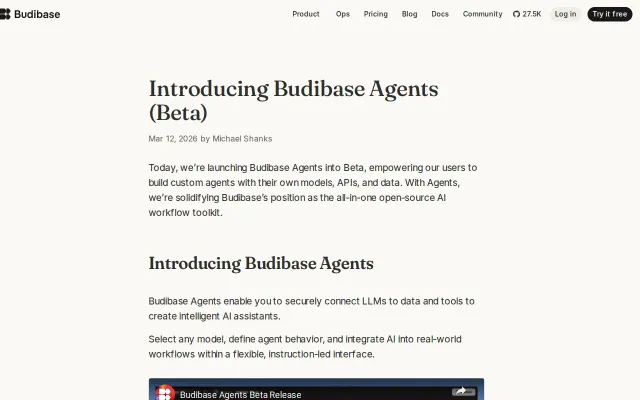
Feature launch from established 27.5K-star platform, not a standalone project.
Multi-channel AI agent in Rust with MCP support, but already faces Codeium, Continue, and agent framework saturation.