Infrastructure●●Solid
About Lightweight, S3-compatible object storage
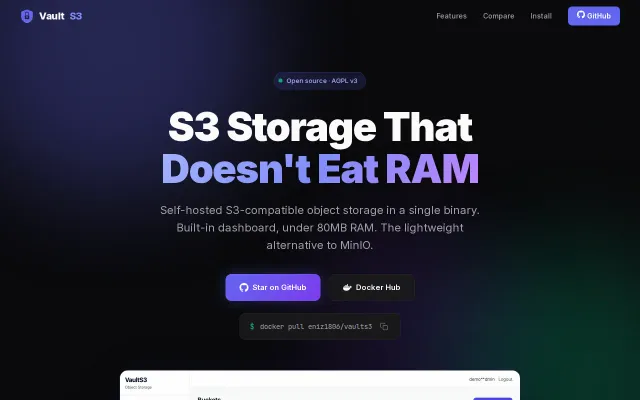
Under 80MB RAM beats MinIO's 512MB+, but S3 storage is a crowded, well-funded category.
Solve My ProblemSlick
open_source_new
201d ago
Distributed File Storage Service — A distributed file storage service (S3-compatible) with erasure coding, replication, chunking/dedup, metadata store (PostgreSQL), REST API, range requests, multipart upload, TTL/expiration, access control (IAM-style policies), Prometheus metrics, and Kubernetes CSI driver.
Yet another S3 clone when MinIO already dominates this space.
DevOps engineers, teams wanting self-hosted object storage
MinIO · Ceph · SeaweedFS
Under 80MB RAM beats MinIO's 512MB+, but S3 storage is a crowded, well-funded category.
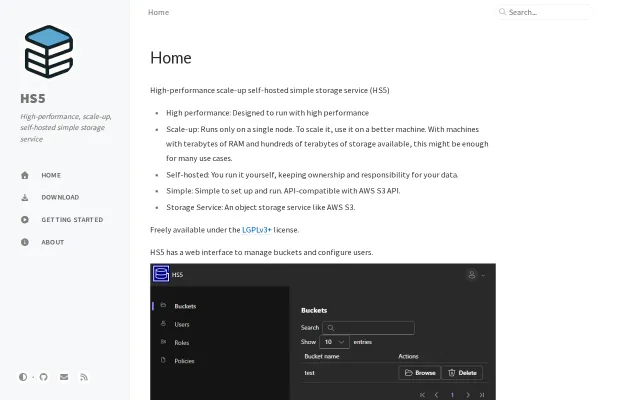
The project swaps the common 'one-file-per-object' approach for an LMDB-backed location index and a single-file storage layout, which is a pragmatic way to squeeze throughput out of one machine. It includes a small web UI and mentions manual-commit durability and DuckDB notes, signaling it's aimed at fast local or ephemeral workloads rather than multi-node durability. Clever technical choices, but it's a niche single-node tradeoff rather than a replacement for distributed S3 systems.
Yet another MinIO alternative with Rust crypto, but explicitly not production-ready.
MinIO for poor machines: 80MB RAM, single binary, built-in dashboard. But MinIO already dominates.
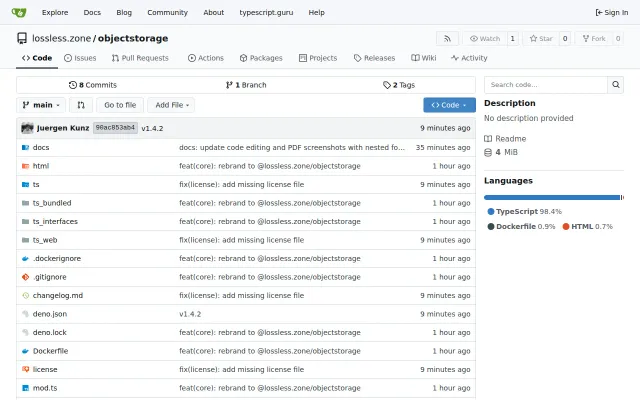
MinIO alternative, but Deno backend isn't enough differentiation in crowded storage space.
Reverse-engineered CloudShell API to build free global storage with erasure coding and hole-punching.