Developer Tools●●Solid
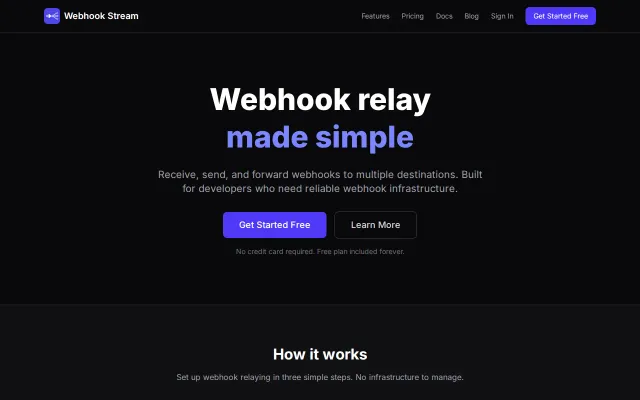
WebhookStream – Receive, relay, send and debug webhooks from 1 platform
Webhook relay with built-in debugging — Svix and ngrok already own this space though.
SlickSolve My Problem
fallenranger
224mo ago
webhook.site alternative with AES-256-GCM encryption and AI-friendly payload export.
Backend developers testing webhook integrations
webhook.site · RequestBin · ngrok
After completing a Shopify webhook project where I got tired of triggering events manually to test edge cases, I built https://FlurryPORT.io to help with integration testing and debugging of webhooks.
FlurryPORT is a cloud application that is always available to receive webhooks from a provider. Prevents you from only noticing payloads when you're listening and triggering only the happy path for your application. A lesson I learned the hard way with Shopify's orders/updated, not knowing the true cadence of updates from the client I was building the application for. Now you can setup a webhook and listen to relevant traffic before writing a single line of code.
All captured request bodies and headers are encrypted at rest using AES-256-GCM; query string variables are plain text.
To aid in application design webhook captures can be selected in batches to be grouped into collections and "Copy for AI". The "Copy for AI" allows you to send your captures to AI to help figure out the best set of captures for your application. There is a best effort to scrub/redact PII from the payloads using this feature (although, it would be good to spot check).
There is a CLI (npm install -g flurryport) that can be used as a bridge to localhost. The CLI connects via a Personal Access Token (PAT) obtained from the account you wish to connect. Registering of localhost can be done with a PAT to help with setup, but access to any other account function is restricted. Control of which webhooks arrive is controlled within the account issuing the PAT.
The routing model is "everything arrives" a bare target will receive everything sent to your webhook. But, you can create transformations and binding pairs using a JSONata predicate that scopes reshaped payloads to an endpoint target; not limited to localhost. If, nothing matches your predicate then it is forwarded as is.
A disconnected localhost will not receive webhooks sent while disconnected; this is to mimic a real world scenario where the server is offline.
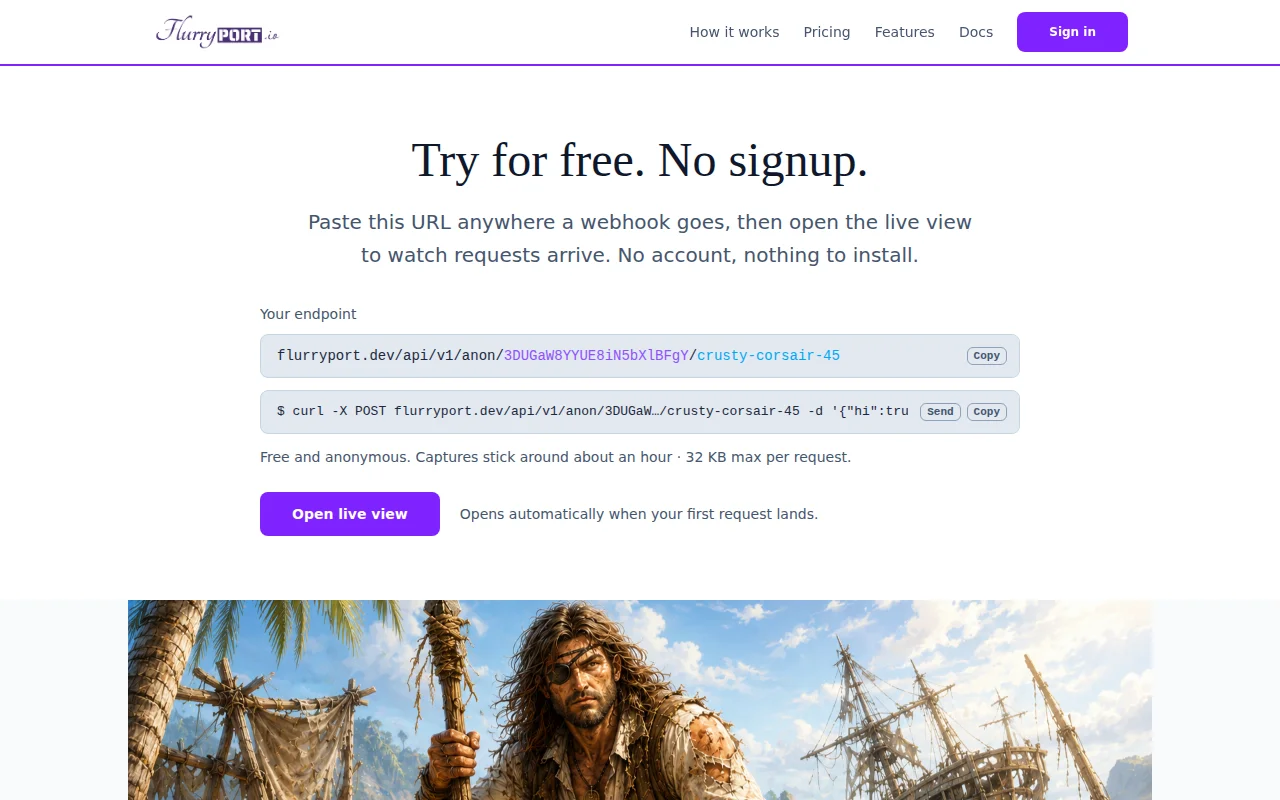
There is a live free demo found at https://flurryport.dev/try, captures live for ~1 hr, payloads are not encrypted. But, if you like your work there when signing up an account they will be imported and encrypted to give your account a good start.
Webhook relay with built-in debugging — Svix and ngrok already own this space though.
Simple webhook-to-command bridge, but Woodpecker and Drone already do this with more flexibility.
Single binary with replay and custom responses—webhook.site needs PHP and MySQL.
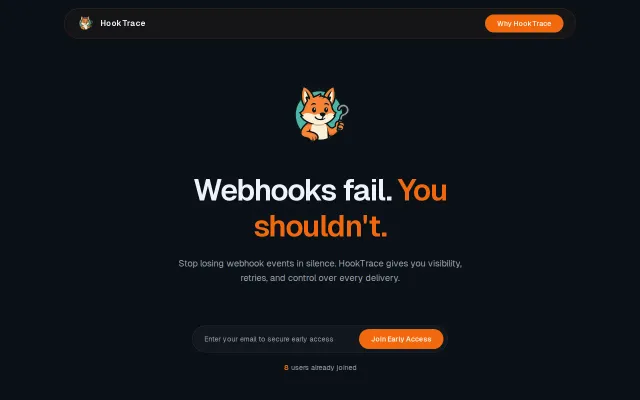
HookTrace zeroes in on a real nuisance: silent webhook failures. It promises per-delivery logs, full payload history and retry visibility so you can stop guessing which event died in transit. The landing page is tidy and focused, but the site doesn't yet show the integrations, dedupe/backoff controls or analytics that would make it stand out from existing players like Hookdeck or Pipedream.
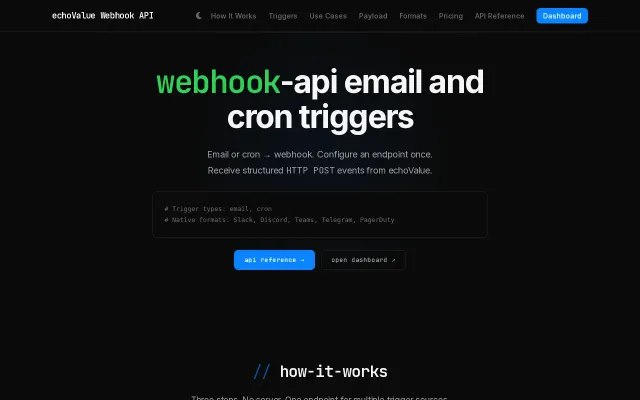
Email-to-JSON webhooks with built-in cron, simpler than configuring Mailgun inbound routes.
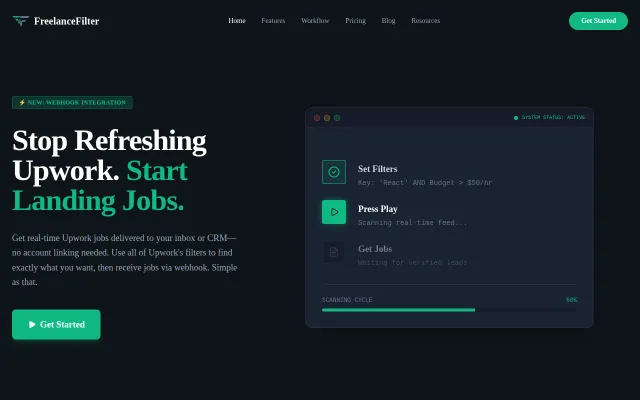
Sending filtered Upwork posts straight to a webhook is a very practical shortcut for anyone tired of constant refreshing. The product ships useful pieces — scheduled fetches, AI profile matching, spam filters and a clear webhook payload example — but the core idea is incremental in a crowded scraping/automation space; the pitch needs more on accuracy, rate limits and how 'verified leads' are validated before I'd bet my contract pipeline on it.