Developer Tools●●Solid
Mercury v3 – Convert Python Notebooks to Web Apps
Reactive notebook cells that fire on widget interaction beat static Streamlit callbacks.
Ship It
pplonski86
201mo ago
Generates custom support pylons based on terrain height instead of slicer defaults.
Pilots who own 3D printers
GPX2STL · Terrain2STL · Blender GIS
Reactive notebook cells that fire on widget interaction beat static Streamlit callbacks.
AI Python-to-C transpilation when Nuitka and Cython already exist.
Dynamic Pydantic models beat manual schemas for messy API responses.
Reactive cell execution is neat, but Streamlit and Gradio already own this space.
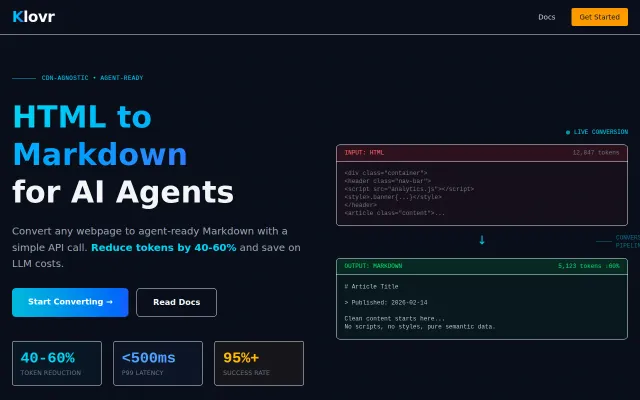
Nice, focused product: site-specific extraction rules (CSS selectors/metadata overrides), edge-first delivery (<500ms p99) and SDKs for Node/Python make it quick to drop into an LLM pipeline and claim 40–60% token savings. That said, HTML→Markdown is a crowded niche (Pandoc, Jina, Firecrawl and dozens of scrapers already exist), so Klovr needs clearer differentiation — e.g. demonstrable extraction accuracy, enterprise-grade rule sharing, or unique model-aware trimming — to move beyond 'handy utility'.
Open-source HueForge alternative using Beer-Lambert optics for layer stacking.