SaaS●Mid
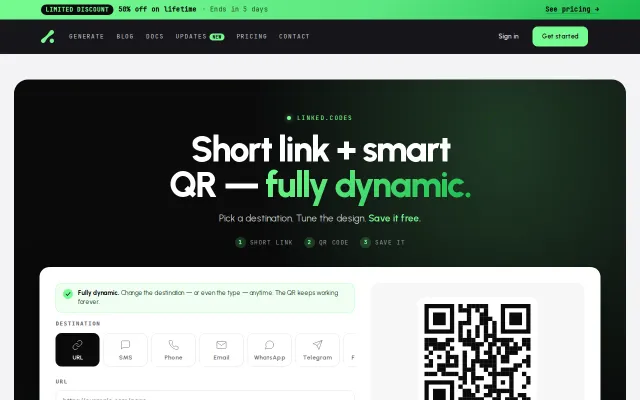
Short links and dynamic QR codes you can white-label as your own SaaS
Another dynamic QR generator competing directly with Bitly, Rebrandly, and QR Tiger.
SlickCrowd Pleaser
attendos
202mo ago
Open-source AI app builder — turn a prompt into a full-stack Next.js web app with built-in hosting, sandbox, database, auth, AI integration, github bidirectional, multitenant, custom domain & more. Self-hosted, no-code. A free v0 / Lovable / Bolt / Replit alternative. ⭐
White-label v0 clone that still locks you into a single proprietary backend API.
SaaS founders and agencies wanting to embed AI app building
v0.dev · Lovable · Bolt.new
Instead of using another hosted AI coding platform, you can fork this project and build your own AI app builder, fully customized and running under your own brand.
It includes:
Next.js + TypeScript AI chat with streaming Artifact generation File explorer Code editor Live preview Databases Sandboxes to be used by AI agents Versions Responsive production-ready UI And a lot more...
The only required dependency is the Totalum API, which exposes the AI generation engine through a simple REST API. You can replace or extend the backend however you want.
It's designed for developers, SaaS companies and agencies that want to:
Build their own AI app builder Add AI app generation to an existing product Create a white label AI builder Customize every part of the UI and workflow Self host the frontend
We use the same frontend in production, and decided to open source it so others don't have to start from scratch.
Repository: https://github.com/totalumlabs/ai-app-builder-open
I'd love feedback, feature requests, or ideas from the HN community.
Another dynamic QR generator competing directly with Bitly, Rebrandly, and QR Tiger.
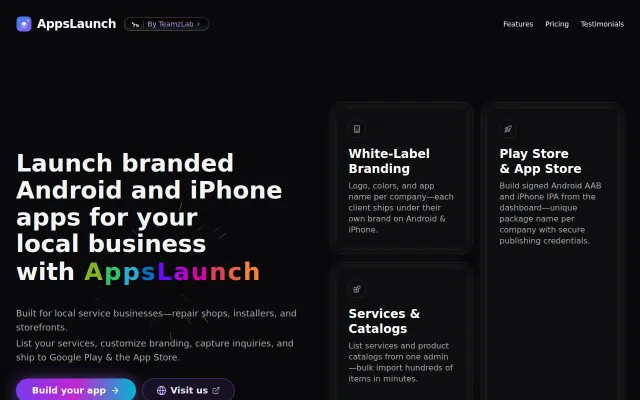
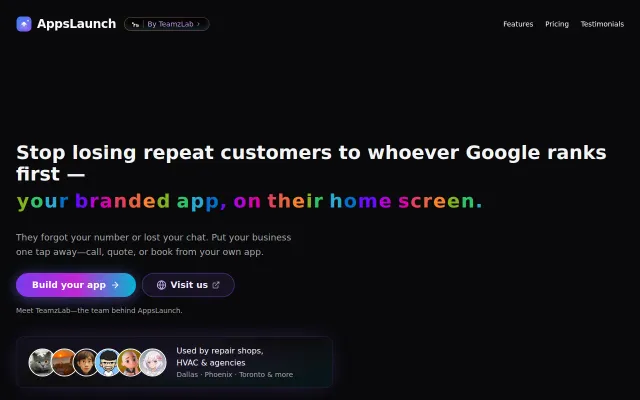
White-label app builder when GoodBarber, BuildFire, and Appy Pie already dominate.
Private-deployment VoIP stack exploiting UK telecom arbitrage, but licensing model limits adoption.
White-label app builder that handles App Store submission for agencies.
Workflow editor UX without Zapier lock-in—your backend handles execution.
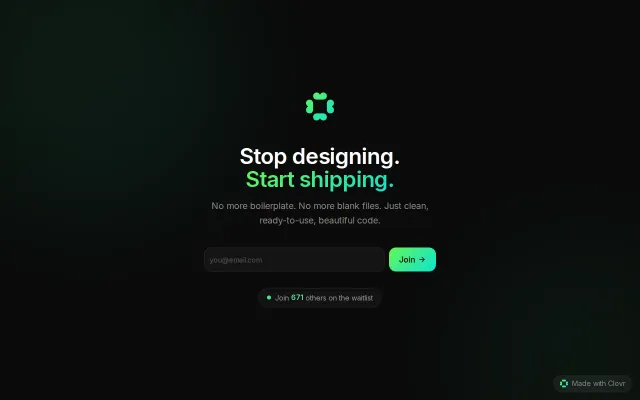
Clovr trades mockup screenshots for an actual file scaffold: it claims to output a Next.js repo with a consistent design system, routing, spacing scale and readable components you could commit. That focus on structure over pixels is the right call, but the space is crowded—I'd need to see TypeScript/test support, extensibility for existing repos, and examples of nontrivial apps before I'd swap it in for templates plus Copilot.