Developer Tools●●●Banger
Embeddable scripting language for Go
Scripting language with native Go interop, compiles to standalone binaries.
Big BrainZero to OneWizardry
funbitty
105mo ago
DRM for Shell Scripts with Obfuscation and Embedded Interpreter
Obfuscated shell binaries that hide source from auditd, but reverse engineers will still crack this.
DevOps engineers and consultants deploying proprietary scripts to client environments
shc · UPX · Themida
Existing tools like shc (a shell script compiler) wrap shell scripts in C code and convert them into binaries. Because of this, using kernel-level monitoring tools like auditd or bpftrace can easily expose the source code.
HimitsuShell embeds its own shell interpreter directly into the binary. It doesn't depend on the OS's /bin/sh or /bin/bash, so the source code isn't exposed as-is through kernel-level monitoring tools. It also applies obfuscation and anti-debugging techniques to raise the difficulty of reverse engineering.
It's up on GitHub, and you can also try it live at himitsushell.com I hope this helps other developers who are dealing with similar problems.
Scripting language with native Go interop, compiles to standalone binaries.
Better Bash alternative with proper error handling and compilation, but why not Go or Rust?
Embedding bytecode, a VM, and static assets into one binary — plus a switch to drop back into an interpreter — is a clever distribution pattern that removes runtime dependencies. The Go-package binding via funxy.yaml and BusyBox-style multi-script bundling show attention to real-world tooling needs; the main question is ecosystem maturity and whether the lib surface grows fast enough to matter.
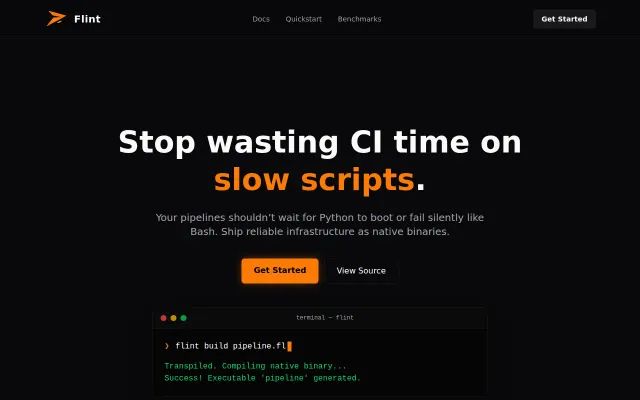
Native binaries for CI scripts beat Python startup time without Rust verbosity.
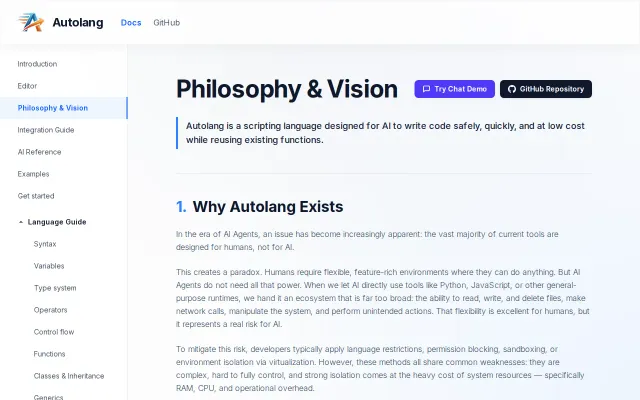
Restricted DSL for AI agents wraps existing functions instead of sandboxing entire runtimes.
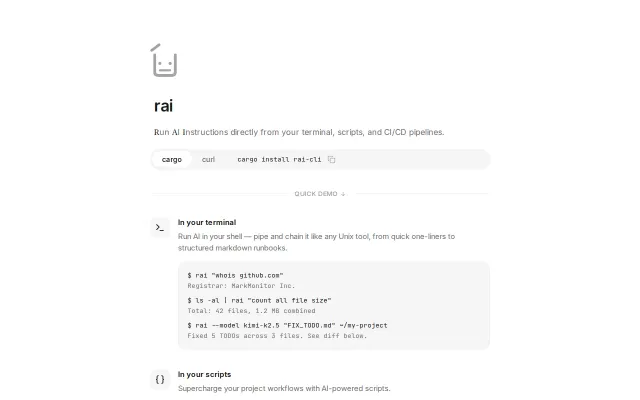
Unix-native AI for shell pipes and CI/CD; real guardrails, multi-provider, no lock-in.