Education●●Solid
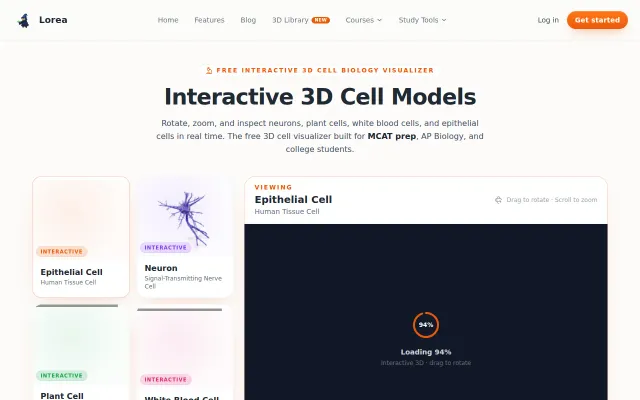
Open-source 3D Cell Models Pipeline
WebGL cell models with organelle depth visualization for MCAT prep.
CozyNiche Gem
herbstgewinn
301mo ago
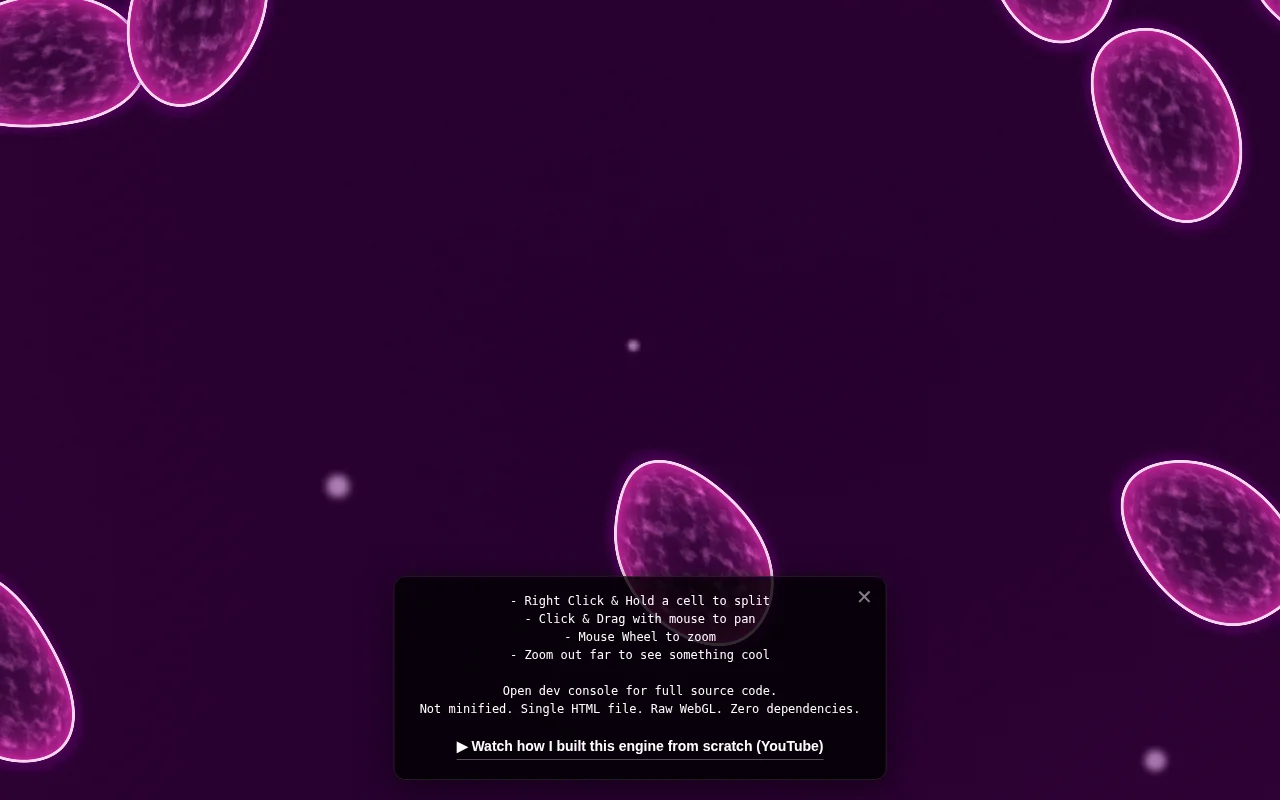
Infinite zoom into 100k procedural cells with zero dependencies in one HTML file.
Creative coders, graphics programmers, demoscene enthusiasts
ShaderToy · The Book of Shaders · WebGL Fluid Sim
It's a single HTML file, not minified, without dependencies, so you can just inspect the source code. It's just raw JS and WebGL shaders. No assets, everything is procedurally generated.
For each cell, I draw a single quad using instanced rendering. To create a nice organic wobble, I use SDF (Signed Distance Fields) to draw a circle (or another base shape), which is then distorted by adjusting the radius using multiple overlapping sine waves. I explain this visually here. [1]
To get the cells to stretch dynamically based on their velocity, I use a technique called Domain Warping. Basically in the fragment shader, the fragmentPosition is adjusted inwards/outwards depending on the current velocity, which squashes/stretches the entire coordinate system of the quad in either direction. Gives it a very organic look. I explain this in more detail here. [2]
Physics are also custom, on the CPU using position-based dynamics (PBD). This is currently the weak point of the engine, and with lots of cells, it's CPU constrained. I might move this to the GPU later or switch to a different approach. Not sure yet.
The infinite zoom mechanic works by dynamically rendering only the two currently visible layers. Physics are currently simulated all the time for all layers, although I could potentially also pause layers that are not currently visible.
All of this uses data-oriented design (DOD) techniques to keep most of the data structures in flat typed arrays for fast iteration and to minimize allocations in the main game loop.
I'm planning to build this engine out into a full incremental game with some light automation elements (think a microscopic Factorio, but much shorter). If you're interested in following the dev process, I post highly technical deep-dives on YouTube [3], or you can enter your email here [4] to get source code updates (super low volume).
Let me know what you think! Happy to answer any questions.
[1] https://youtu.be/VChlSt6gVSo?t=380 [2] https://youtu.be/VChlSt6gVSo?t=516 [3] https://youtube.com/@philomatics [4] https://philomatics.com/cell-game
WebGL cell models with organelle depth visualization for MCAT prep.
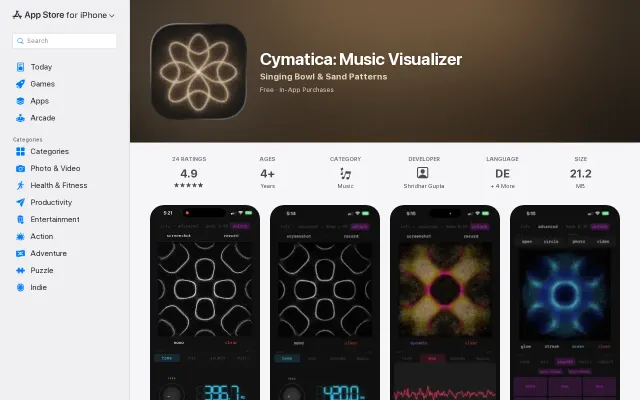
Renders 100k particles in real-time on iPhone with synced haptic feedback.
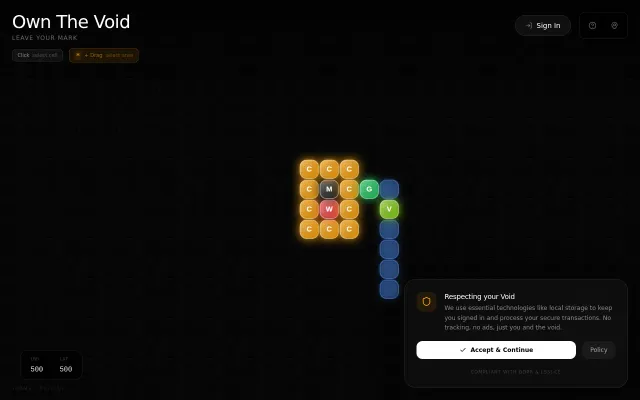
This is an engineering-first take on the million-pixel idea: a 1,000,000×1,000,000 logical grid where only claimed cells hit storage and the client pulls tile-based viewport queries while a DPR-aware Canvas draws without full redraws. The clever parts are the sparse-storage model and edge serving via Cloudflare Workers+D1, but the product hinges on hard questions — D1 query scaling, cheap moderation for free text, and whether a €1-per-cell economy actually funds permanent storage.
Skyline flying demo that's mostly novelty; real product (founder networking) still vapor.
Custom physics engine for marble collisions feels surprisingly tactile in a browser tab.
Clones your formula graph to run 100k sims locally when @RISK costs thousands.