Gaming●●Solid
Peak Finder 2 game – Feel the AI training computer with friend
Feel reinforcement learning by playing it—unusual pedagogical framing, but narrow audience.
Rabbit HoleBig Brain
npc0
103mo ago
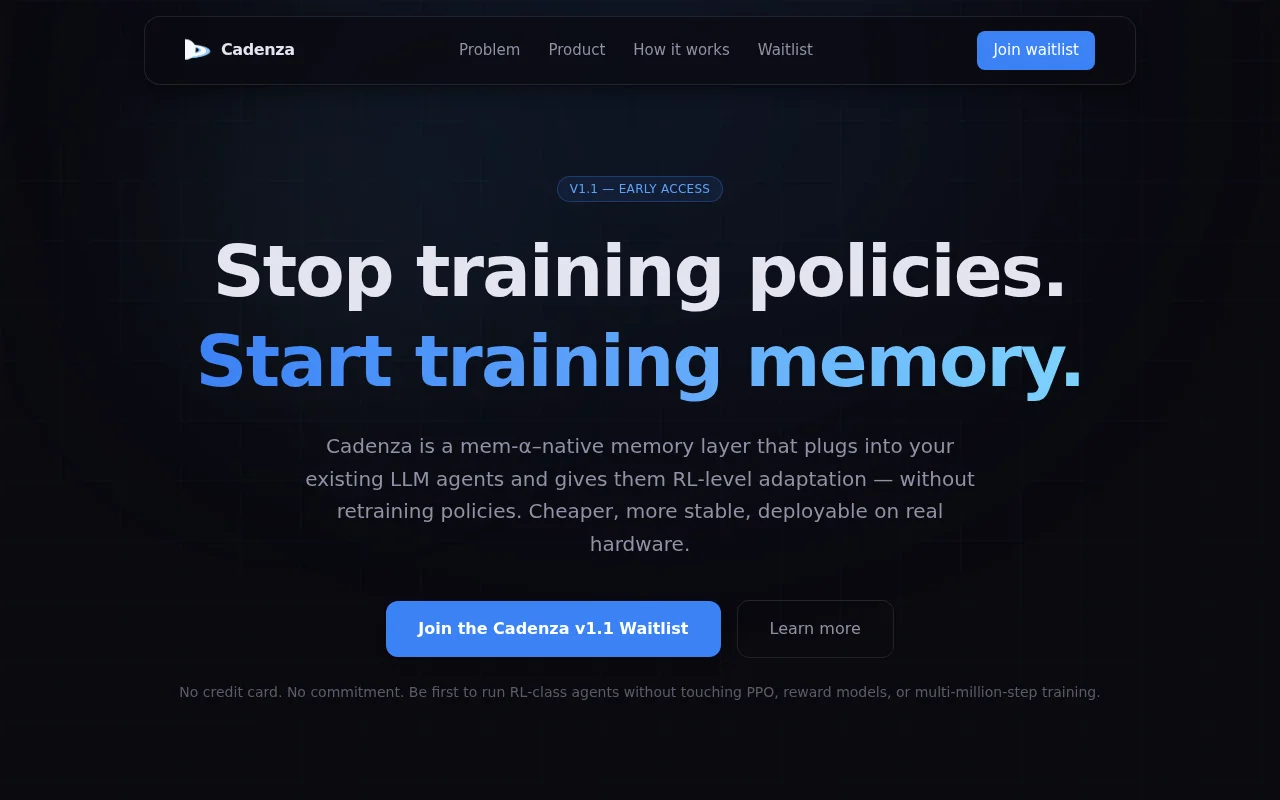
The pitch is smart: train one tiny controller to manage a three-tier structured memory (core, episodic, semantic) and let downstream behavior emerge from reads/writes rather than expensive policy retraining. Claiming ARM/CPU inference and offline training on logs is practical and appealing, but the page offers bold cost/compute claims without benchmarks, demos, or integration examples — interesting idea, but I want hard numbers and a working demo before I’d trust it in production.
ML/AI engineers, teams building LLM agents or autonomous systems, startups and enterprises looking to reduce RL training cost
From robotics with Tesla's Autopilot to DeepMind's AlphaFold 2 for predicting protein structures with 90%+ accuracy to even hedge funds deploying RL for algorithmic trading, there is a need for reinforcement learning.
And the market proves this demand further: RL grew from $1.5B (2020) → $12B (2024) with projections hitting $79B by 2030.
BUT THERE IS A BRUTAL REALITY!!!
Just to get one production line or train one model, the companies spend $100 million+ EVERY YEAR, many of which goes to computational engineering and RL engineers. Moreover, only after days or even weeks of training will you know the RL algorithm didn't work, and those days of costs and time need to just be ABSORBED into production costs.
This makes only tech giants and heavily-funded startups play this game, and that too with hard scalability.
With firsthand experience over a 3 day period training a CV line on a NVIDIA DGX Spark and months of experience with multi-agent frameworks, I know this problem as a developer just trying to work on projects. THIS IS WHY I BUILT CADENZA -> the RL-alternative, mem-native memory layer for agent specialization.
I am still developing and building the idea, but I know this problem is real so any support or guidance would be EXTREMELY valuable. Thanks!
Feel reinforcement learning by playing it—unusual pedagogical framing, but narrow audience.
PPO beats classical elevator dispatch 6x on wait times; niche but rigorous.
Revives deprecated OpenAI gym-http-api with Docker images and built-in browser monitoring views.
Rust swarm vs LLM agents is clever positioning, but benchmarks are self-designed and lack third-party validation.
Runs PPO training entirely in-browser via TinyJit WebGPU kernels.
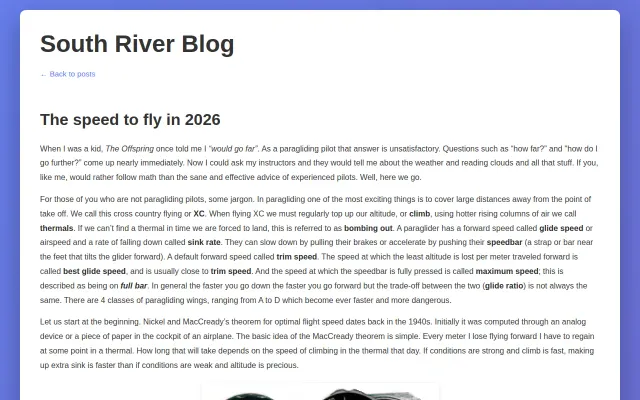
The post ties classic MacCready speed-to-fly theory to an RL framing and carefully walks through sink-vs-speed modeling instead of handwaving the physics. It's a thoughtful niche read, but the landing page is just an article — no simulator, no training curves, no agent demo or downloadable artifacts — so it's hard to judge any technical execution beyond the math.