Data●Mid
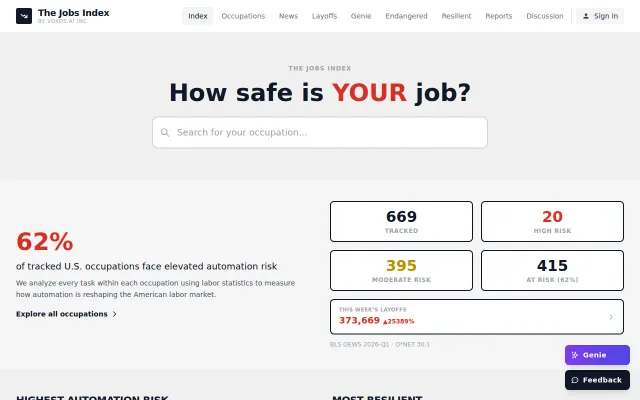
The Jobs Index
Clean labor data dashboard when O*NET already publishes automation metrics.
Crowd Pleaser
Falimonda
212mo ago
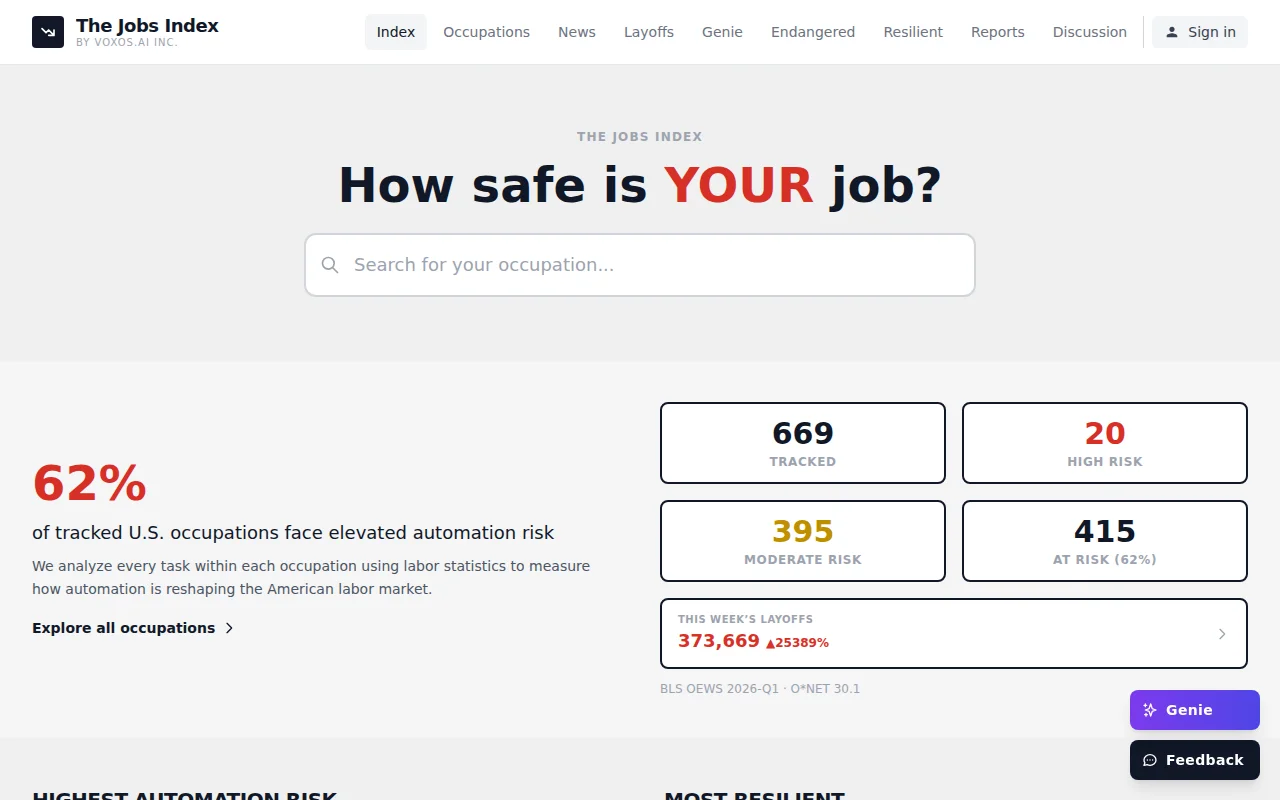
Task-level automation risk scores for every U.S. job, grounded in BLS and O*NET.
Career planners, policy researchers, job seekers, economists
Burning Glass (labor market intelligence) · Lightcast (O*NET analytics)
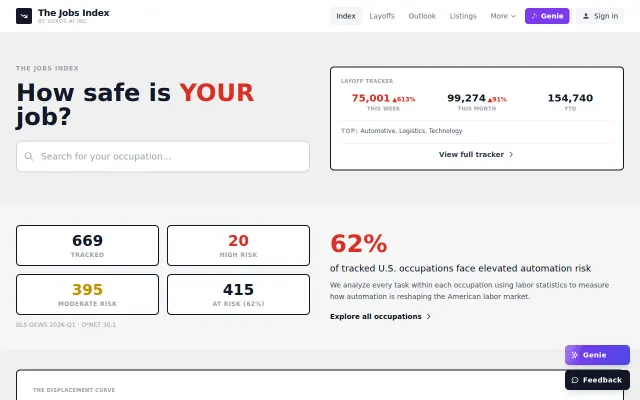
Job Extinction Index (https://jobs.voxos.ai) breaks down ~700 U.S. occupations using BLS employment data and O*NET task data. Each occupation gets a risk score based on analysis of its individual tasks. You can drill into any occupation and see which specific tasks are automatable, by what method (AI, robotics, software), and at what confidence level.
There's also a news aggregator that links AI/automation developments to specific occupations, monthly trend reports, and a play-money prediction market if you want to put your intuitions to the test.
If this kind of granular data is useful to you — whether you're thinking about a career change, working in workforce policy, or just curious — I'd like to hear about it. There's no way to stop automation, but understanding it at the task level is how people and governments can stay ahead of it.
Clean labor data dashboard when O*NET already publishes automation metrics.
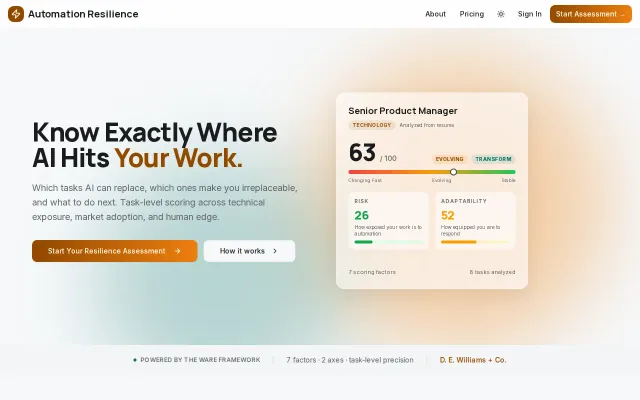
Yet another AI career scorer, but the task-level breakdown beats generic role-based assessments.
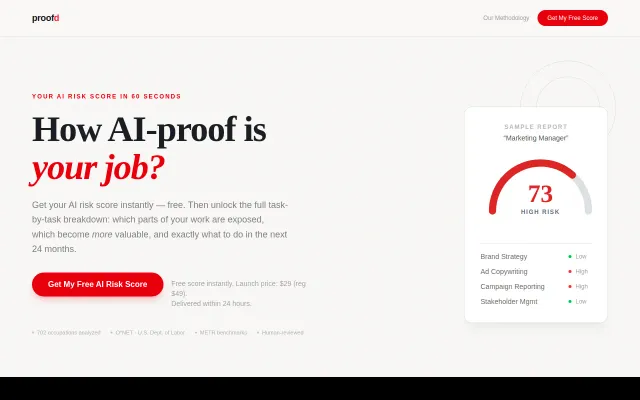
Job risk quiz using BLS data when similar calculators already exist.
Task-level automation scoring; Career GPS navigation; real-time layoff pipeline tied to specific roles.
Task-level AI risk beats job-title predictions, but methodology isn't transparent.
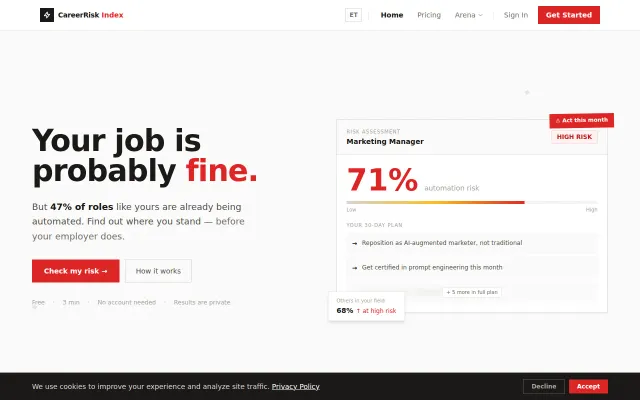
Fear-based career audit that gates the action plan behind $9/mo.