Developer Tools●●●Banger
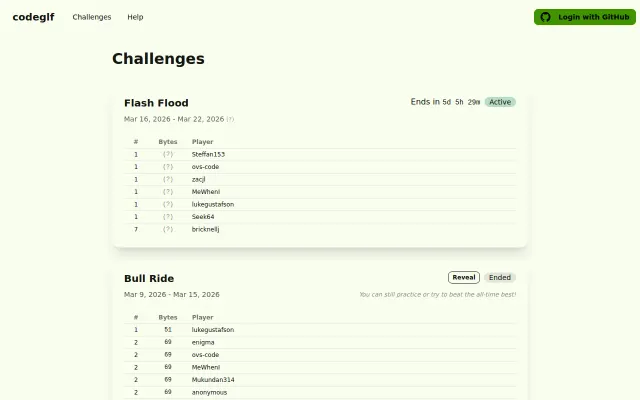
Codeglf – a local-first Python golf site
Pyodide runs code locally—zero server costs, open to cheating but fun.
Big BrainRabbit Hole
ndr
202mo ago
Polymcp provides a simple and efficient way to interact with MCP servers using custom agents
PolyMCP turns Python functions into a single Pyodide WASM bundle so agents can call tools directly in the browser or at the edge — neat and practical. It keeps MCP niceties like input validation, error handling, and orchestration inside the bundle and ships runnable demo HTML to prove the flow. Be realistic about Pyodide trade-offs: bundle size and no native-extension support make this best for lightweight, interactive tools and demos rather than heavy backend workloads.
Backend and frontend developers building AI agents, edge/worker developers, and teams wanting sandboxed client-side Python tooling
This means any Python function exposed as an MCP tool can now run directly in the browser, Node.js, or edge workers, fully sandboxed, without a Python server.
Compile your tools, serve the bundle, and AI agents can call them instantly in WASM environments. Existing MCP features like input validation, error handling, and tool orchestration work seamlessly.
example:
from polymcp.polymcp_toolkit import expose_tools_wasm
def add(a: int, b: int) -> int: """Add two numbers""" return a + b
compiler = expose_tools_wasm([add]) bundle = compiler.compile(output_dir="./dist")
Open dist/demo.html in your browser — the add tool runs entirely in WASM.
Why it matters • No Python server required: runs client-side or on edge • Secure: sandboxed execution • Plug-and-play: multiple tools in one WASM bundle • Ideal for interactive demos, edge AI apps, or browser-based automation
Pyodide runs code locally—zero server costs, open to cheating but fun.
MCP agent orchestration framework, but MCP itself is still early and fractured.
Zero-decorator function wrapping into MCP tools solves real integration friction.
Yet another AWS SDK when boto3 v2 is already async-native and typed.
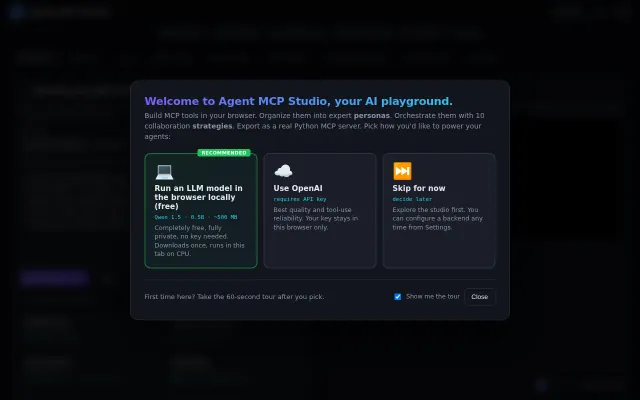
Full MCP agent studio running entirely in-browser via Pyodide and DuckDB-WASM.
It makes a smart, practical bet: let existing Python functions become agent-ready tools by turning type hints into structured tool schemas with validation and HTTP endpoints, so you don't rewrite logic to expose it to agents. The included PolyClaw agent and discovery/orchestration features sound useful for multi-service workflows, but the space is crowded (LangChain/AutoGPT/etc.), so what matters next is demos showing robust orchestration, failure handling, and provider integrations.