AI/ML○Pass
H-Core Snapshot – forcing LLMs to execute instead of explain
Selling a $49 system prompt with 3 stars and no visible technical differentiation.
Stronz
202mo ago
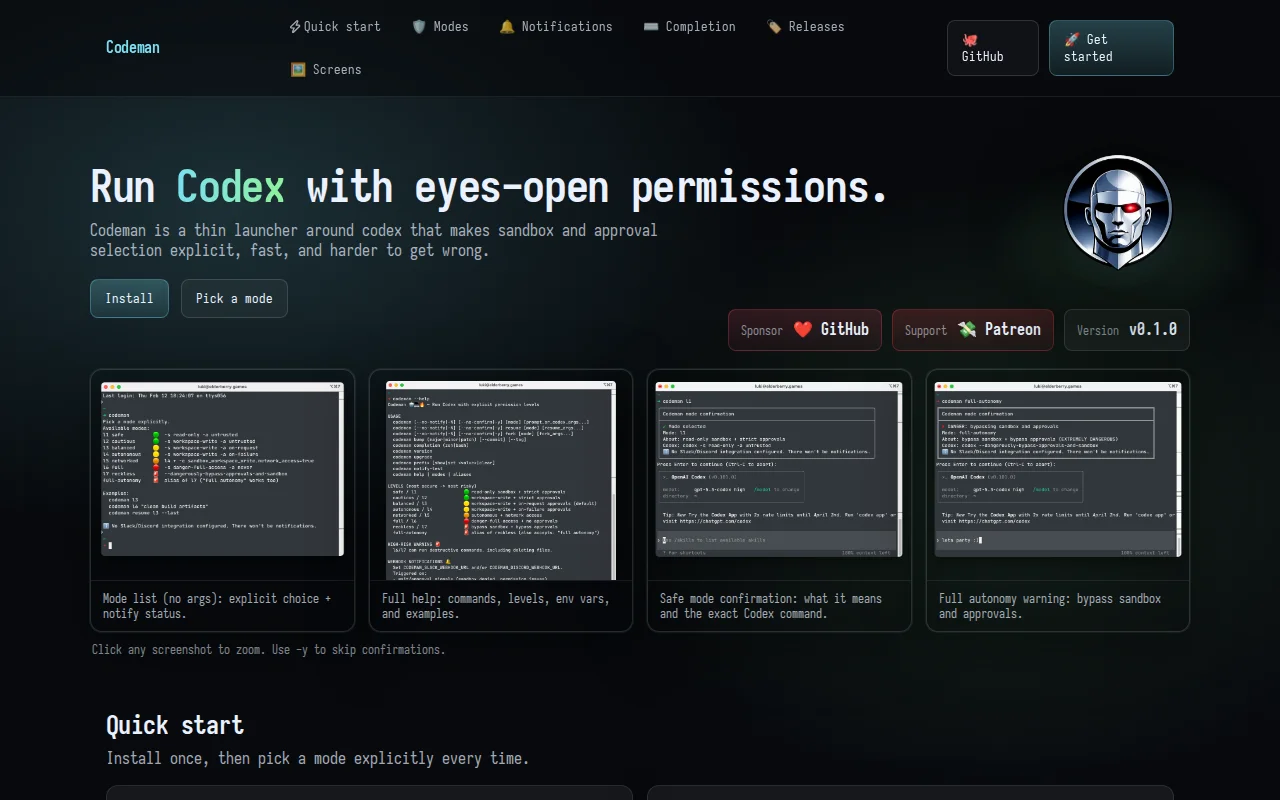
It forces explicit, blunt choices — seven named modes with emoji risk markers and a TTY confirmation panel — which is exactly the kind of friction you want before giving an AI destructive power. Useful workflow features like resume-by-session-UUID, notify-test for Slack/Discord, and generated shell completions show attention to real usage. The tradeoff: it's narrowly targeted to Codex users and it’s not obvious whether it enforces stronger sandboxing or just makes you click the right flag.
Developers and engineers who run Codex/AI coding sessions and want an explicit, safer permission workflow (security-conscious devs, AI tool users)
Selling a $49 system prompt with 3 stars and no visible technical differentiation.
Audio-first agent workspace trying to unify Claude, Gemini, Grok, and Cursor in one GUI.
Generates audit trails for agent work, but Cursor custom instructions already do this.
WebGPU force-directed graphs, but Sigma.js, Cytoscape, and D3 already dominate this space.
Polished Codex wrapper, but another launcher in a category that doesn't need one.
The core trick is simple and effective: let an agent iterate questions against a defined domain overnight and surface hundreds of candidly-annotated ideas you can scan through later. It nails the “fire-and-forget” idea dump and domain steering (tell it to focus on agencies or cybersecurity and it pivots), but it’s still essentially a convenience wrapper around an existing agent pattern — useful for volume and pattern recognition, less convincing on long-term validation or downstream filtering.