SaaS●Mid
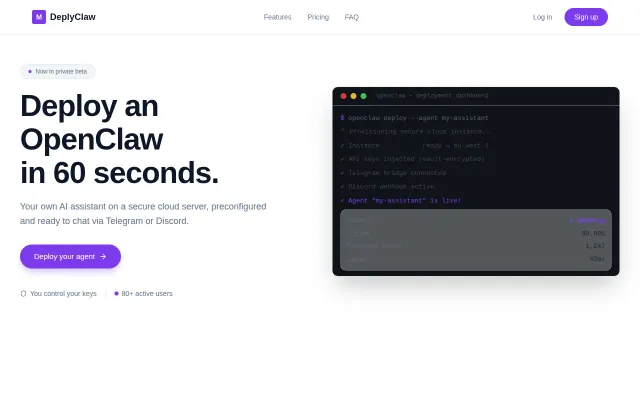
Deploy OpenClaw in Seconds
Hosted OpenClaw deployment, but Zapier/Make already handle 80% of this workflow.
Ship It
Creator-io
223mo ago
The landing page sells the core promise well: curated agent templates (research, support, lead gen), one-click skills like web scraping and email handling, and instant channel hookups via QR codes for Telegram/Discord/WhatsApp. Useful and pragmatic, but the idea lives in a crowded space — the UX is convenient, yet pricing, credit economics and long‑term data/keys guarantees need clearer, upfront signals before I'd trust it for critical workflows.
Product teams, startups, SMBs, community managers and developers who want hosted AI assistants without managing infrastructure
Hosted OpenClaw deployment, but Zapier/Make already handle 80% of this workflow.
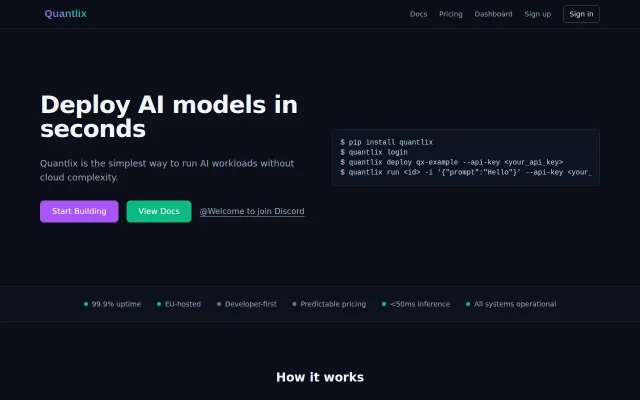
Instant CLI deploys, a tiny REST surface and SDKs for Python/Node make spinning up an inference endpoint trivial — you can go from pip/npm to curl in minutes. The landing page leans into useful operational promises (EU hosting, scale-to-zero, <50ms inference) and clear pricing tiers, but the space is crowded (Replicate/Hugging Face/etc.) and the page lacks independent benchmarks or details about supported model formats, versioning, or runtime guarantees.
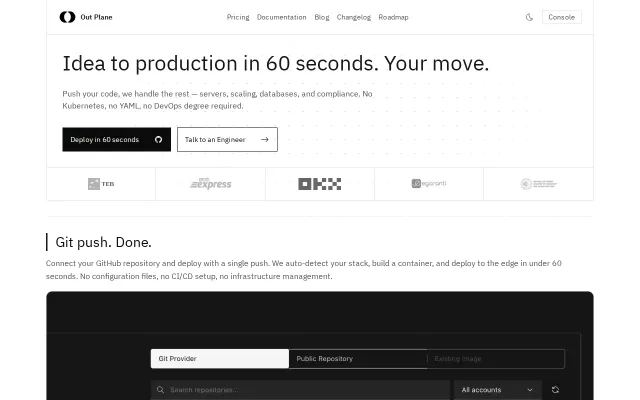
Per-second billing beats hourly PaaS, but Railway and Render already own this space.
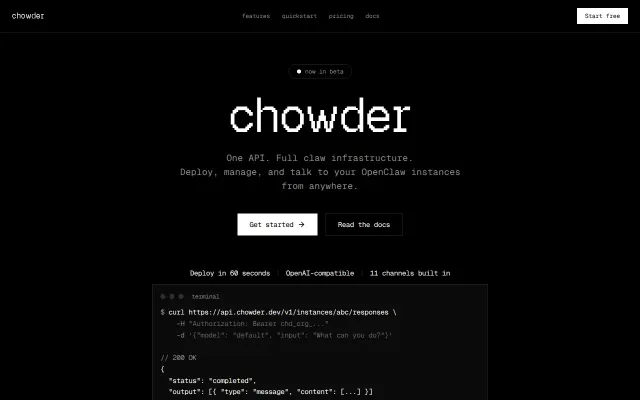
Chowder gives you one API call to spin up sandboxed OpenClaw instances with built-in channels (Telegram, Slack, WhatsApp, Signal) and session memory — plus a Skills marketplace for browsing, file access and code execution. The OpenAI Responses-compatible surface and scoped org/instance keys with rotation are the practical wins: less infra to manage and an easy migration path for tools that already speak that API. It’s a sensible, developer-friendly stitch of agent orchestration and multi-channel routing, not a radical re-think of the space.
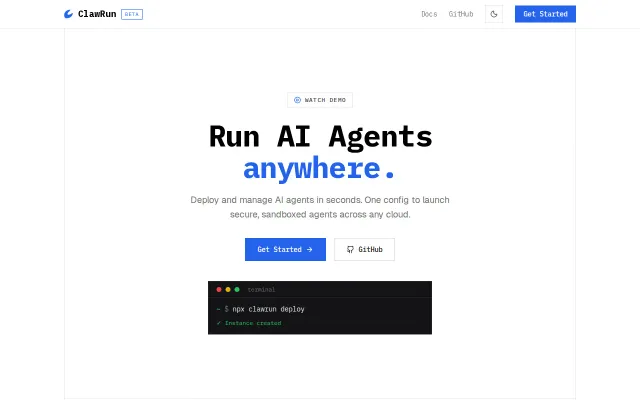
Firecracker microVMs with snapshot/resume for stateful AI agent deployment.
Ephemeral Tailscale OAuth + Portainer API eliminates port exposure for home server CD.