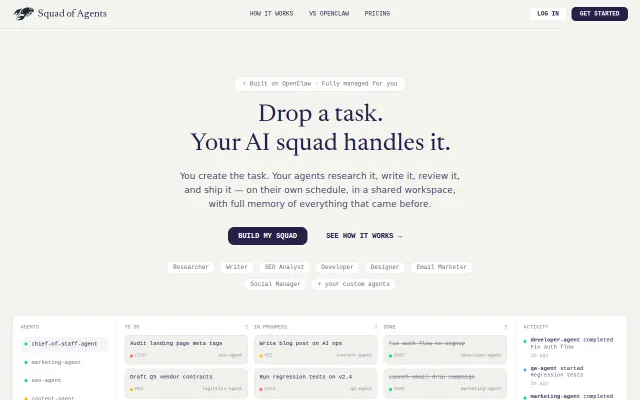
AI/ML●●Solid
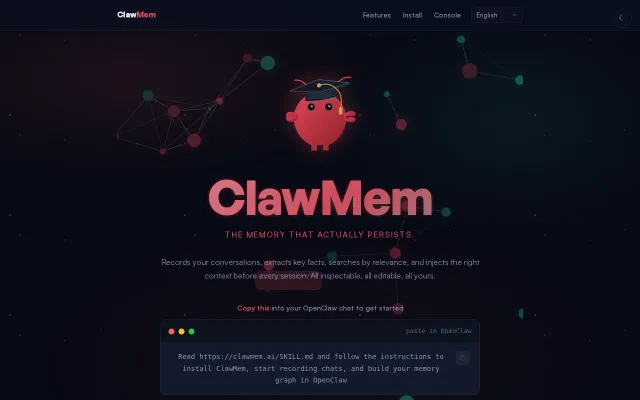
The Memory for OpenClaw
Inspectable memory records beat black-box embeddings for AI agent context persistence.
Big BrainNiche Gem
ngaut
202mo ago
Ultra-lightweight agent orchestration, but OpenClaw already solves this for most users.
Embedded systems developers, home automation enthusiasts, resource-constrained device operators
OpenClaw · Ollama · Continue.dev
In practice it often needs >1GB RAM and a small server or Mac mini, which makes “personal AI agents” surprisingly expensive.
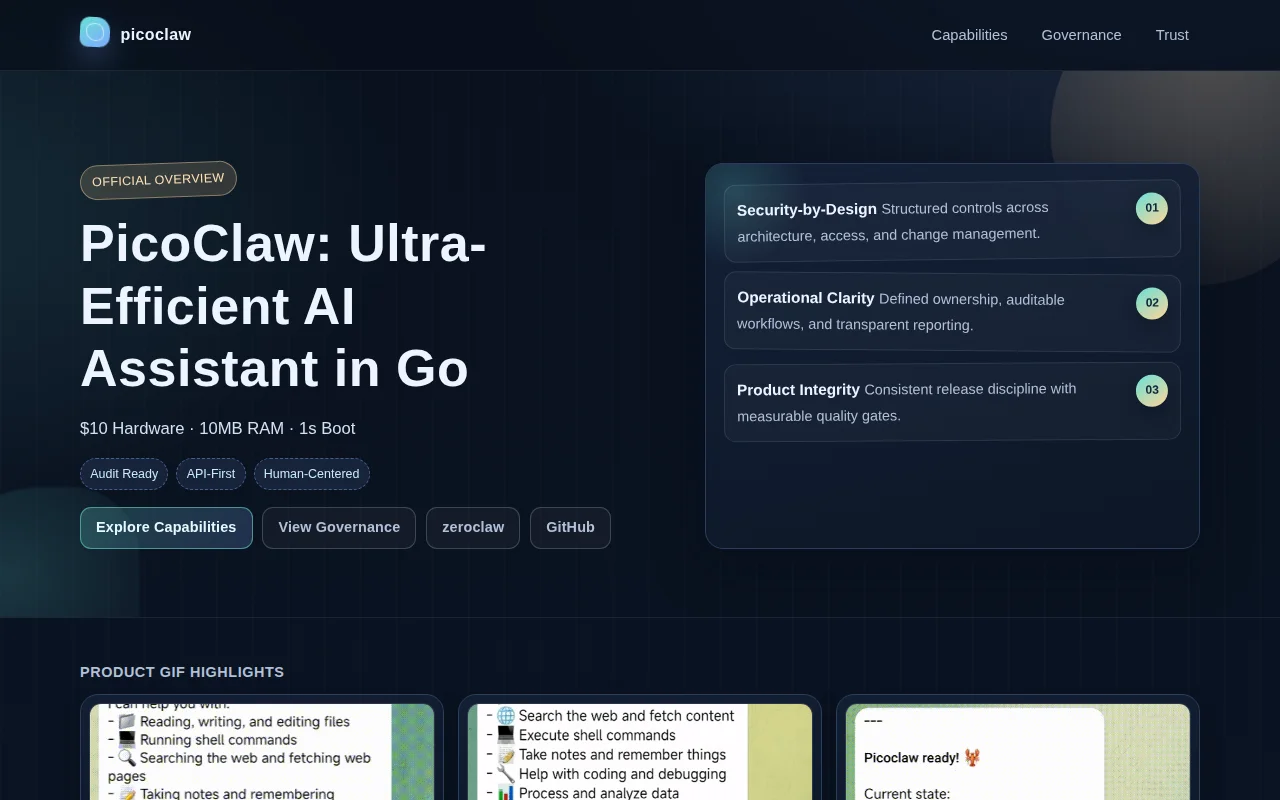
I recently came across PicoClaw, an open-source project by Sipeed that takes a very different approach.
Instead of running large runtimes locally, it acts as a lightweight agent client and delegates reasoning to cloud LLM APIs (GLM/GPT/Claude), while keeping orchestration local.
The interesting part is the footprint:
< 10MB memory usage
< 1s cold start
single self-contained binary
no Node.js or Python
runs on ARM / x86 / RISC-V
So it can run on devices like Raspberry Pi 3B, cheap RISC-V boards (~$10), old Android TV boxes, etc.
Technically it’s rebuilt from scratch in Go, which explains most of the startup and memory improvements. No dependency tree, no runtime environment — just one binary.
Despite the size, it still supports:
shell execution
file operations
web search
speech-to-text
Telegram / Discord / QQ / DingTalk integrations
Quick start is basically:
git clone https://github.com/sipeed/picoclaw.git
cd picoclaw make build ./picoclaw agent
Feels more like a “microkernel” approach to agents compared to heavier stacks.
Interesting direction if you’re experimenting with edge AI or home lab automation.
Repo: https://github.com/sipeed/picoclaw
Site: https://picoclaw.org/
Inspectable memory records beat black-box embeddings for AI agent context persistence.
Managed multi-agent workspace, but ChatGPT, Claude Projects, and Anthropic's built-in task delegation already solve this.
Cross-agent memory beats building separate context for Claude and Codex.
The repo treats memory and identity as first-class, using SOUL.md/AGENTS.md/MEMORY.md plus per-day markdown logs so an agent can literally "read yesterday" before answering — a clear, human-readable model that avoids opaque vector stores. Useful CLI commands (init, doctor, grow, reflect) show the author thought about ergonomics and maintenance, but integration with LLM runtimes and evaluative evidence for the approach are light, so it's a pragmatic, opinionated toolkit rather than a breakthrough platform.
Vibecraft-style 3D agent dashboard—pretty but requires OpenClaw + limited adoption.
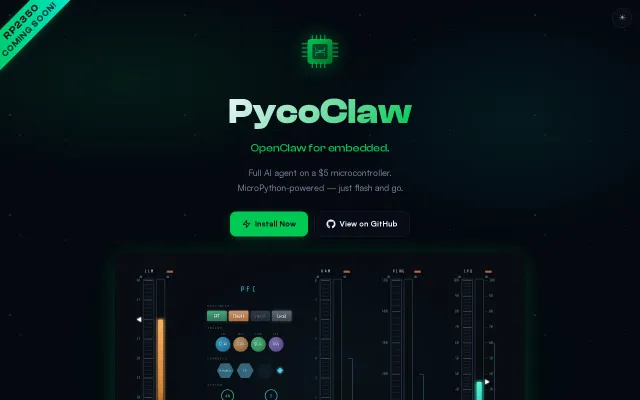
Full AI agent with recursive tool calls running on a $5 ESP32, modifiable live without reflashing.