Productivity●●●Banger
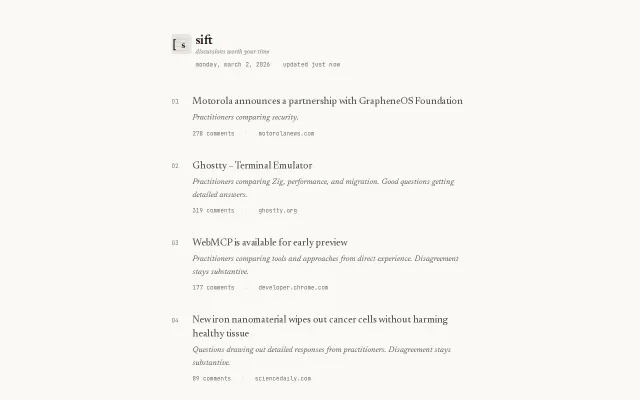
Sift – 10-12 HN discussions daily, ranked by practitioner depth
HN curation that actually works: practitioners over pile-ons, depth over votes.
Solve My ProblemSlickDark Horse
vnykmshr
203mo ago
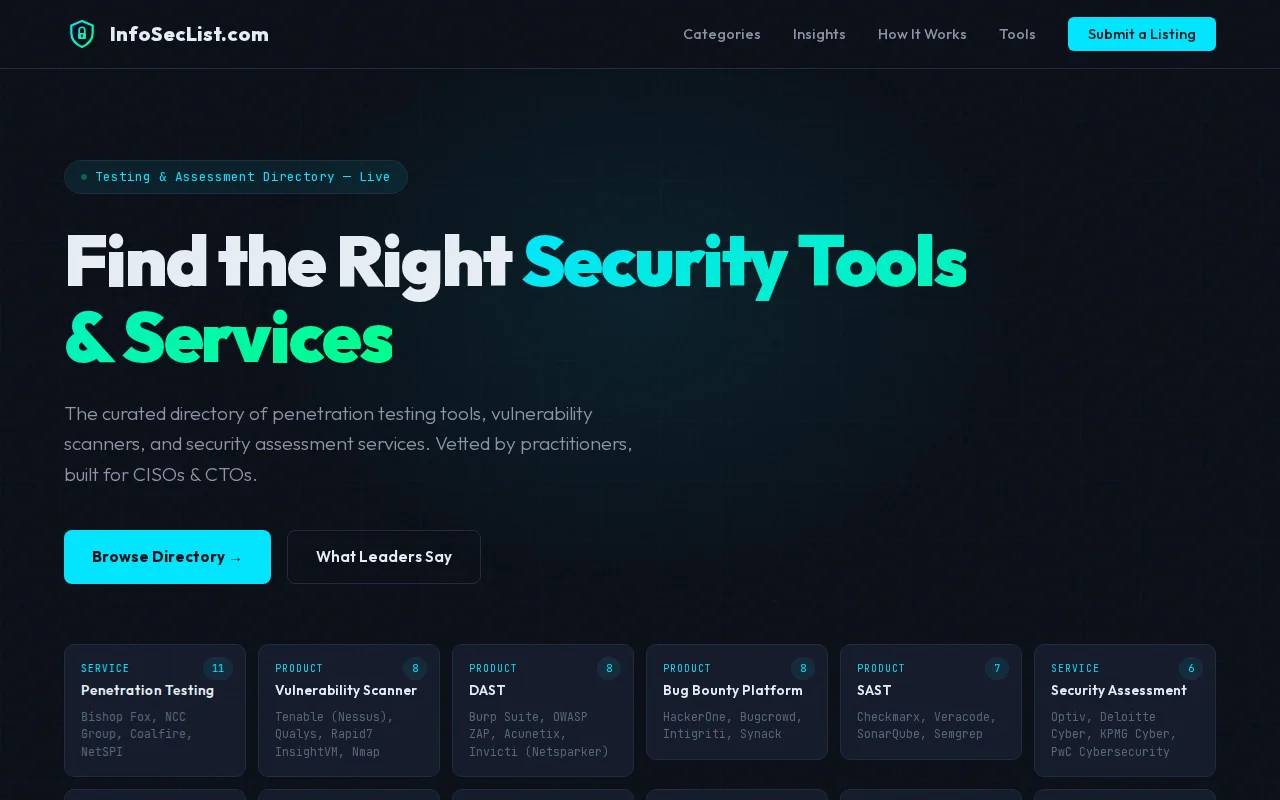
Two neat ideas here: dual scores (Market vs Value) and side‑by‑side comparisons with filters for compliance and team size — those make vendor shortlists usable instead of noisy. The tech is pragmatic: a Google Sheet served via a PHP CSV proxy and parsed client‑side keeps the CMS trivial, but that approach could become a scaling or trust bottleneck as the dataset and verification needs grow. Visually the site looks sharp, but the long game depends on how rigorously listings are vetted and updated.
CISOs, CTOs, security engineers, procurement teams evaluating security tooling
Every time we needed a new DAST scanner or pentest vendor, it was the same drill: Google around, read SEO-optimized listicles written by people who never used the tools, sit through 3-5 sales demos, and hope for the best.
InfoSecList is a directory of 90+ cybersecurity tools and services across 21 categories. Every listing gets two scores from practitioners:
- Market Score (1-5): industry adoption and brand recognition - Value Score (1-5): actual value for money based on usage
You can browse by category (DAST, SAST, SCA, pentest services, bug bounty platforms, etc.), compare tools side-by-side, or look up alternatives to specific products.
A few things that might be interesting technically:
- Data lives in a Google Sheet, served via a PHP proxy as CSV, parsed client-side - Pages are dynamic SPA-style but with clean URLs for SEO - Each tool/alternative/category page generates its own structured data and meta tags from the CSV data at runtime - No framework, no build step. Plain HTML, CSS, vanilla JS
No accounts, no gated content, no pay-to-rank. Happy to answer any questions about the approach or the security tool landscape.
Stack: Apache, vanilla JS, Google Sheets as CMS, Let's Encrypt
Follow-up Comment (if asked about data/methodology)
The scores come from a combination of: - Gartner/Forrester positioning for Market Score - Community sentiment (Reddit, HN, security forums) for both scores - Direct practitioner feedback from CISOs and security engineers - Pricing transparency and free tier availability for Value Score
We deliberately keep it simple with two 1-5 scores rather than trying to build a complex weighted system. The goal is to help someone go from "I need a DAST tool" to a shortlist of 3-4 options in under 5 minutes.
Open source tools like Nmap, OWASP ZAP, and Trivy tend to score 5/5 on Value. Enterprise tools like CrowdStrike and Mandiant score 5/5 on Market but lower on Value due to pricing.
Follow-up Comment (if asked about business model)
Right now it's free with no monetization. Long term we're considering: - Featured listings (clearly marked, doesn't affect scores) - Lead gen for vendors (opt-in only, buyer initiates contact)
We won't do pay-to-rank. The scores stay independent.
HN curation that actually works: practitioners over pile-ons, depth over votes.
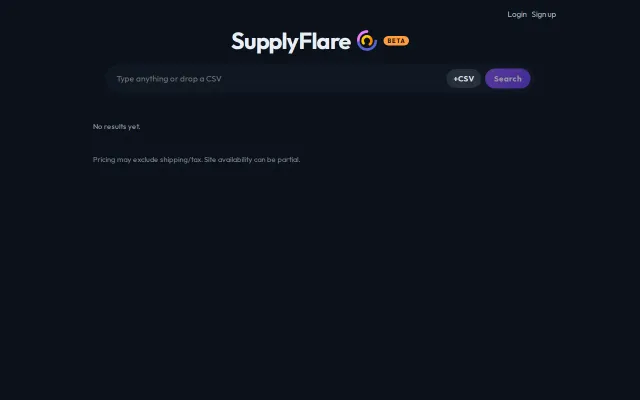
Nice, search-focused UI with CSV upload and an explicit LTR angle — that specificity is promising for people who care about ranked pricing signals rather than raw scrape dumps. The site feels early (empty results, minimal onboarding and coverage notes), so the real question is whether their non-stationary-data approach to ranking actually beats simple heuristics at scale. If the ML pipeline and freshness guarantees are solid, this is useful to its niche; right now it's a tidy MVP.
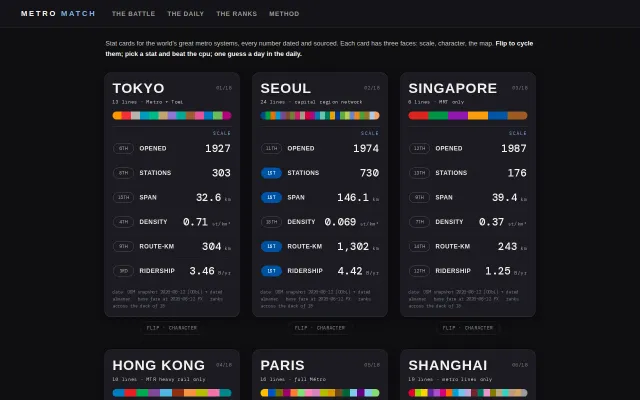
Playable stat cards for 18 metro systems with dated OSM-sourced data.
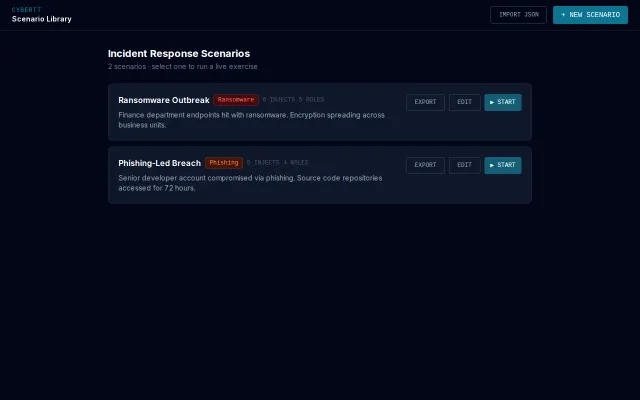
Clean tabletop platform, but Drata and Vanta already cover compliance training.
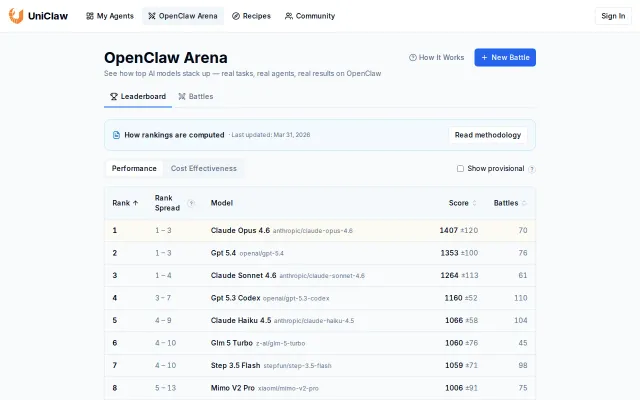
Finally benchmarks agents on real tasks instead of chat — separate cost and performance rankings.
New security DSL with built-in recon primitives, but Python already does this.