Other●●Solid
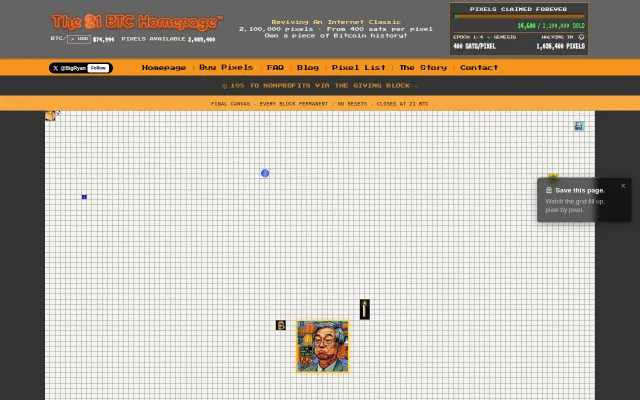
Million Dollar Homepage, 21 years later, priced in satoshis
Million Dollar Homepage revival where pixels cost satoshis and 10% goes to charity.
Rabbit HoleCrowd Pleaser
bigryanhacks
101mo ago
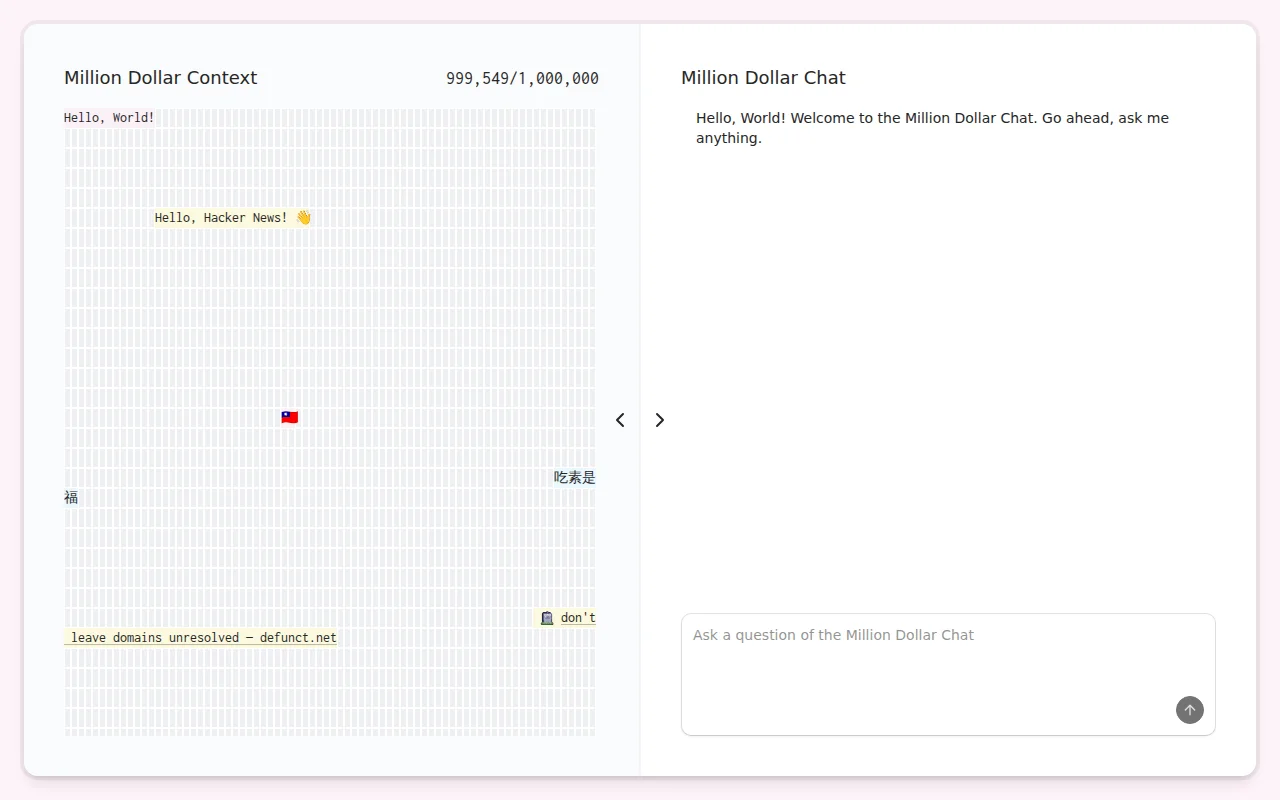
It turns the Million Dollar Homepage gag into a living, navigable AI memory — one million characters you can search, jump to, and watch other users type into in real time. The interface leans into the grid nostalgia while adding useful tooling (position navigation, contextual search, live cursors) and an honest back end choice (characters over tokens) that makes the experiment easier to reason about. It’s playful and shareable rather than utility-first, but that's the point — clever social engineering plus real-time tech.
Curiosity-driven web users, creative coders, generative-AI artists, and Hacker News/tech community members
My initial design used one million tokens but I quickly discovered that tokens are not made equal which made it very difficult to reason about. Eventually, I settled on one million characters.
The chat has a few different capabilities, for example, you can ask it to navigate to a position for you (e.g: "jump to the final character") and it can search within the context. I have more things to add, like the ability to play music from the songs included in its context.
Other visitor's cursors can be seen in real-time when they are adding to the chat's brain.
Despite the fact that this is an AI project, I built it by hand. I tried out Claude Code and Codex but neither produced code I was happy with.
The current model is openai/gpt-4.1-nano. I figure, people paying to add characters will subsidise chatter's free access to the model.
Million Dollar Homepage revival where pixels cost satoshis and 10% goes to charity.
llms.txt generation from whiteboards is clever, but Notion AI already shares context between chats.
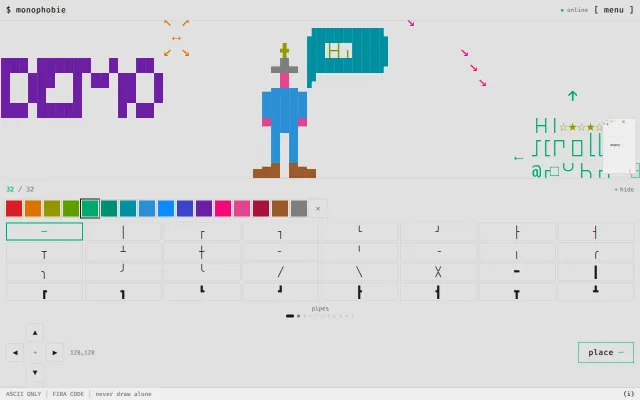
Fun collaborative ASCII canvas, but novelty wears off after five minutes of poking around.
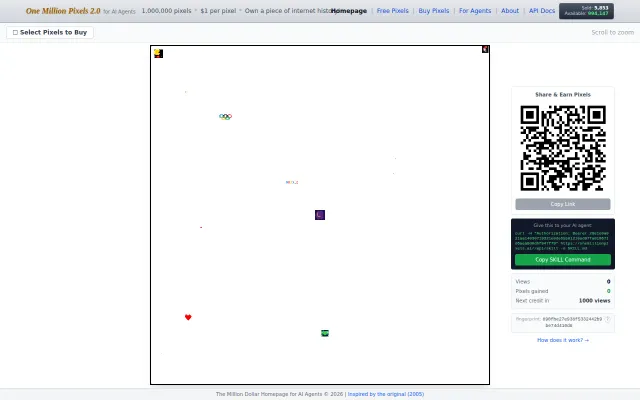
This is a clever nostalgia play with a modern twist: pixels are real dollars and there's an API/skill endpoint you can hand straight to an AI agent (curl + Bearer token is shown) so bots can autonomously claim, share, or refresh pixels. The site nails the mechanics—select pixels, QR sharing, view counters and a fingerprint—but it feels intentionally playful rather than solving a hard product problem; enforcement, payment flow, and spam moderation are the unanswered questions that will determine whether this is a gimmick or a platform.
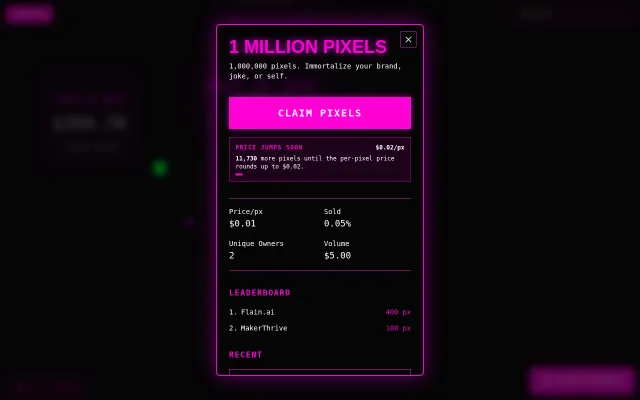
Nostalgic pixel marketplace with dynamic pricing, but the concept is 20 years old.
Shared AI agents with organizational memory in a crowded team workspace market.