AI/ML●●●Banger
Open-Source Harness for Claude Code, Codex and Cursor
Fresh context per phase stops AI agents from reviewing their own work.
Big BrainZero to One
Nicole9
211mo ago
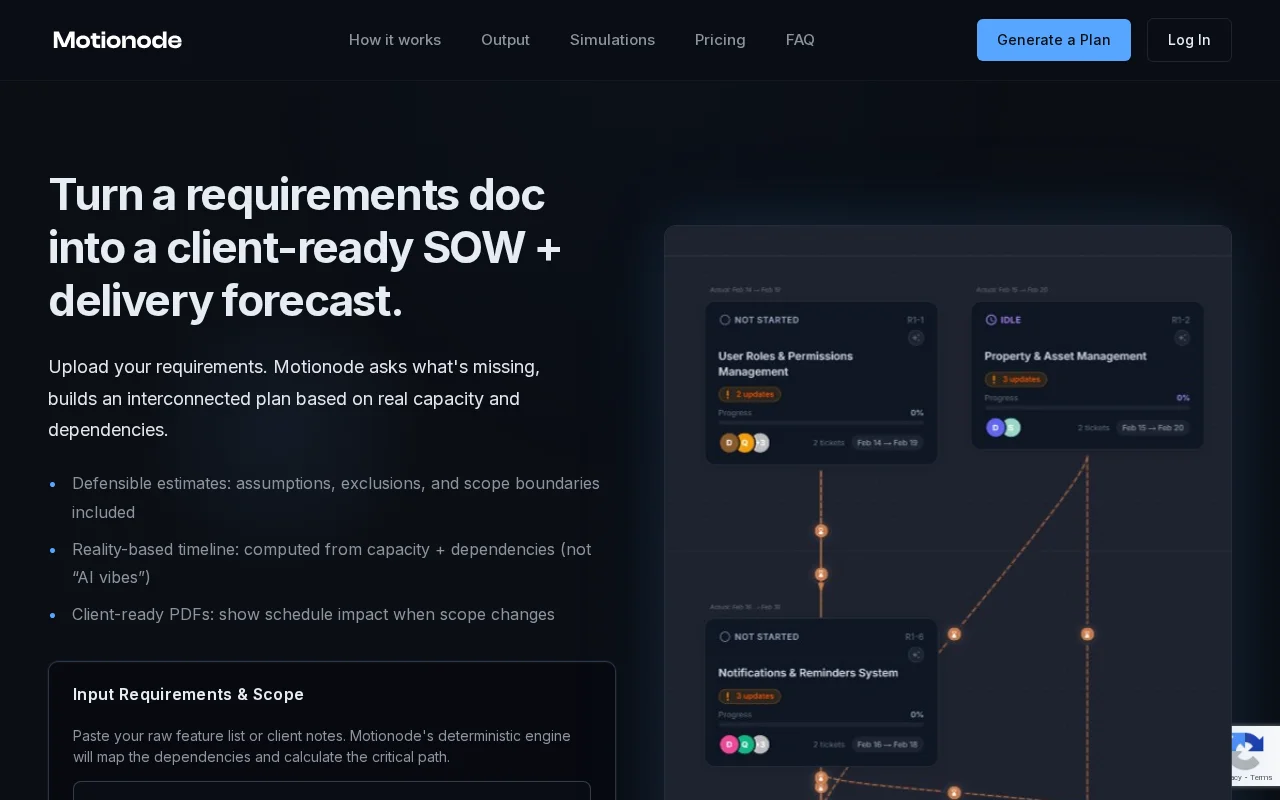
They split the work smartly: an LLM extracts deliverables from messy docs, then a deterministic 'physics' engine computes dependencies, capacity-based timelines, and a defendable critical path. Client-ready SOW PDFs, a scope-change ledger, and on-the-fly what-if scenarios feel immediately useful; I'd want to see proof it integrates cleanly with existing PM tooling and handles truly noisy inputs.
Product/engineering managers, agency leads, technical PMs, and small dev shops who need repeatable, defensible estimates
I built Motionode. Think of it as "Cursor for technical planning."
How it works: 1. Paste a raw, unstructured requirements doc. 2. An LLM extracts the core deliverables. 3. A deterministic physics engine takes over—mapping the actual task dependencies and calculating the critical path based on your specific team capacity (e.g., 2 frontend, 1 backend).
The V0 Vision: AI coding agents fail today because they lack a strict architectural blueprint. By capturing the project as a deterministic graph from day one, we are building the unified layer where an LLM can eventually generate a V0 codebase without hallucinating.
I'd love for you to throw a messy requirements doc at it and tell me where my scheduling math breaks.
Fresh context per phase stops AI agents from reviewing their own work.
Splitting thinking and typing by having Claude plan and judge while Cursor 'types' is a neat, pragmatic trade-off — you keep expensive reasoning where it matters and push bulk work to cheap, fast agents. The repo actually enforces safety: destructive command gates, scoped file access, install and preflight scripts, and a PLAN→BUILD→JUDGE contract rather than a toy demo. The downside is obvious: it's niche (requires Claude + Cursor CLIs and accounts) and adds orchestration complexity compared with single-model flows.
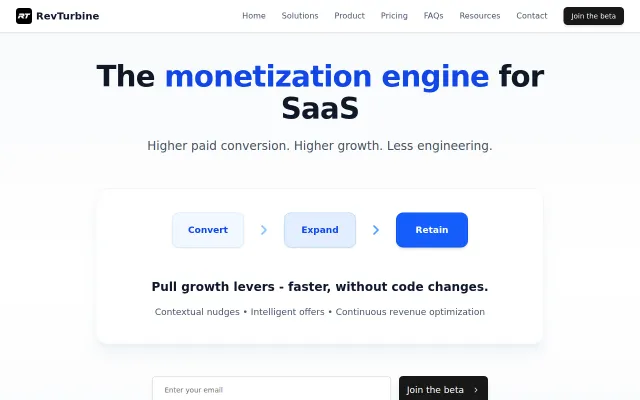
Landing page promises revenue growth without code changes, but beta access only.
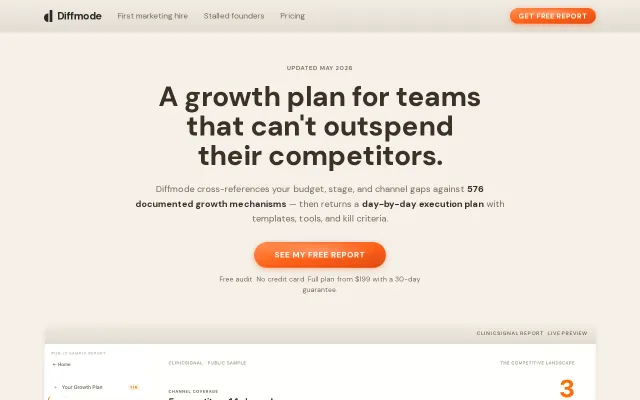
AI-generated growth plans competing with agencies and generic strategy consultants.
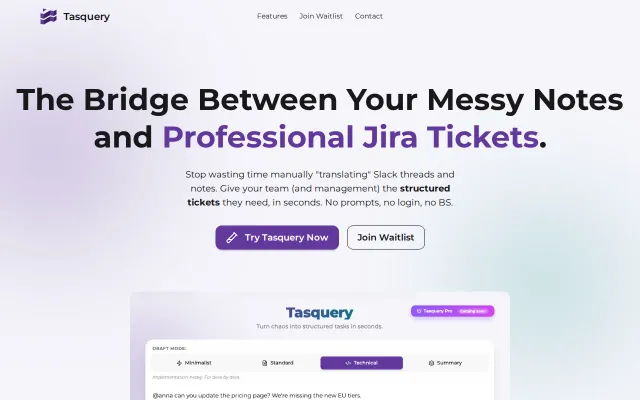
No-login AI that turns Slack rants into Jira tickets better than ChatGPT.
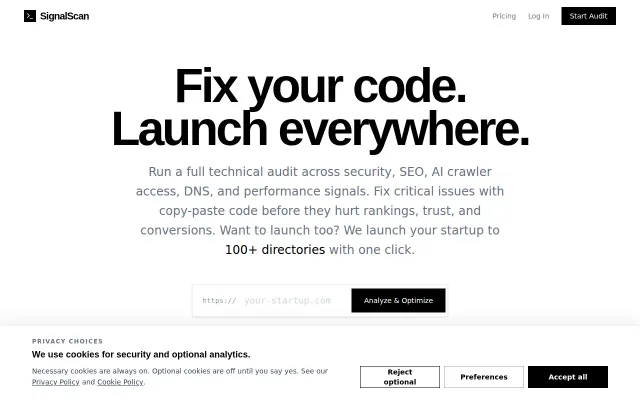
Headless bot submits to 100+ directories in one click, but launch spam is already solved.