Infrastructure●●●Banger
I built a sub-20ms crypto API in Go
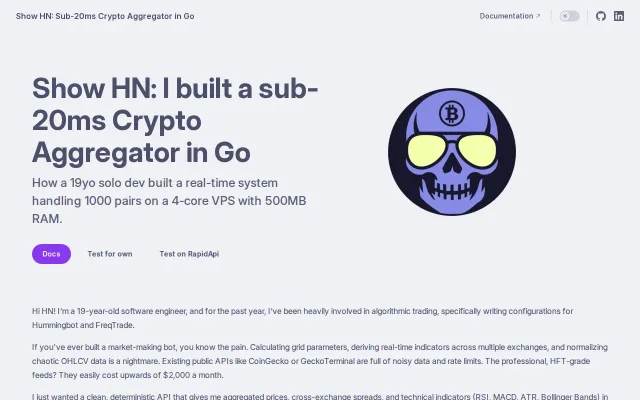
Sub-20ms aggregator for 1000 pairs on 500MB RAM beats $2k/month HFT feeds.
WizardryShip It
arturstankevicz
213mo ago
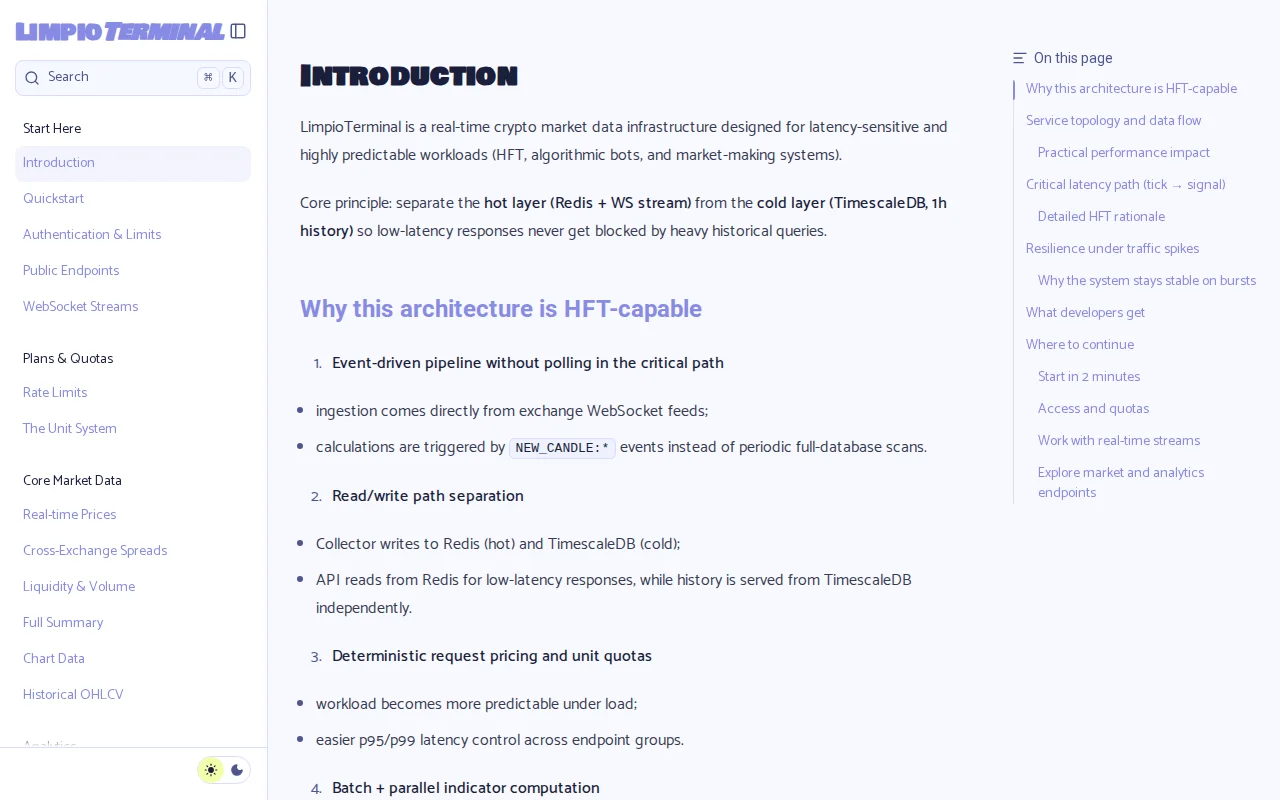
The docs describe a sensible hot/cold architecture — Redis + WS for the real-time hot path and TimescaleDB as a cold store — with event-driven NEW_CANDLE triggers, batched indicator computation and worker pools to control tail latency. It reads like an engineer's playbook for predictable p95/p99 behavior, but the writeup is mostly architectural: I'd want hard benchmarks, deployment artifacts or source to be convinced this outperforms established market-data stacks in practice.
Quant engineers, HFT/market-making developers, backend engineers building low-latency crypto data services
Sub-20ms aggregator for 1000 pairs on 500MB RAM beats $2k/month HFT feeds.
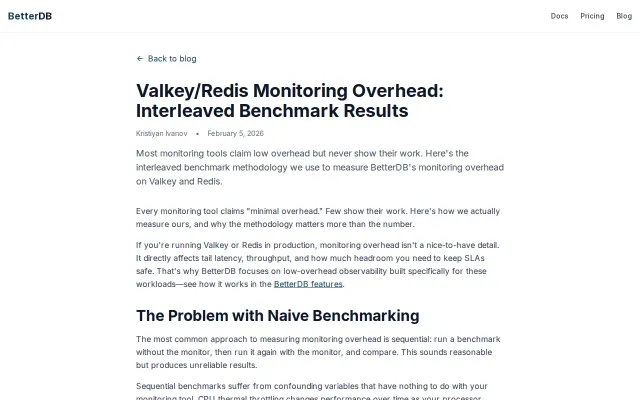
Persists Redis/Valkey's ephemeral observability data with rigorous interleaved benchmarking proving sub-1% overhead.
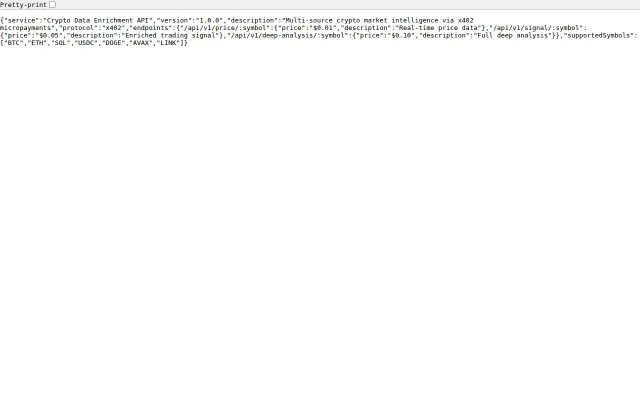
x402 micropayments are clever, but the API is a thin wrapper around existing crypto data sources.
Beats Neon's 500ms cold starts by architecting SQLite around S3 constraints.
The product pivots away from pure price-chasing toward risk and market-health signals — think RSI/MACD screeners, an overall fear & greed style health score, private signals and portfolio alerts. The UI looks modern and usable, but the idea lives in a crowded space; to jump from solid to notable it needs transparent backtests, methodology, and clear differentiation on how its "AI-driven" scores actually improve decisions.
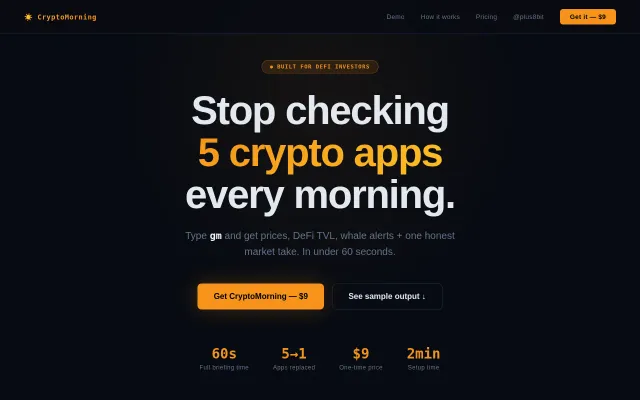
'Type gm' for a crypto briefing, but it's a Claude system prompt, not a real product.