AI/ML●●Solid
Deterministic symbolic memory layer for grounding LLMs
Identity-based memory vs similarity—clean separation of deterministic truth from probabilistic reasoning.
Big BrainZero to One
Th3Hypn0tist
104mo ago
Reflection-based memory layer for LLM apps. Ingest WhatsApp, Twitter, LinkedIn, Telegram — build a cognitive profile of how you think.
Turns chat history into structured 'belief' and 'cognitive pattern' blocks you can inject into prompts, with simple APIs like run_reflection and run_synthesis that read like a research prototype. It's smart about separating V1 (domain beliefs) from V2 (transferable cognitive patterns), but it's clearly early-stage — tiny repo, Ollama-only workflow, and few commits mean you should treat it as an experimental MVP rather than a drop-in production memory system.
Developers building chatbots and local LLM apps, hobbyists running Ollama, and researchers experimenting with LLM memory models
Identity-based memory vs similarity—clean separation of deterministic truth from probabilistic reasoning.
Proves memory layers cut token usage by 80% without losing accuracy.
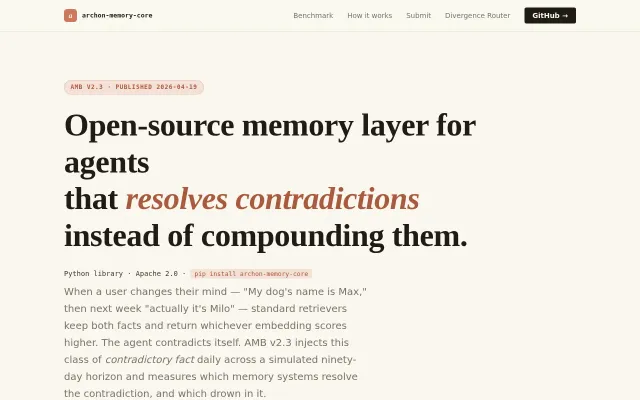
Resolves agent memory contradictions instead of compounding them like standard retrievers.
MCP-native memory with synthetic data generation for AI agent retrieval workflows.
Memory governance with deletion guarantees when Mem0 and LangChain already exist.
Cross-provider agent memory is clever, but LLM context windows keep growing and RAG is already standard.