Security●●●Banger
Grantex–Open authorization protocol for AI agents(IETF draft submitted)
OAuth moment for agents—IETF draft submitted, standardizing what's currently API-key chaos.
Zero to OneBig BrainSolve My Problem
mishrasanjeev
203mo ago
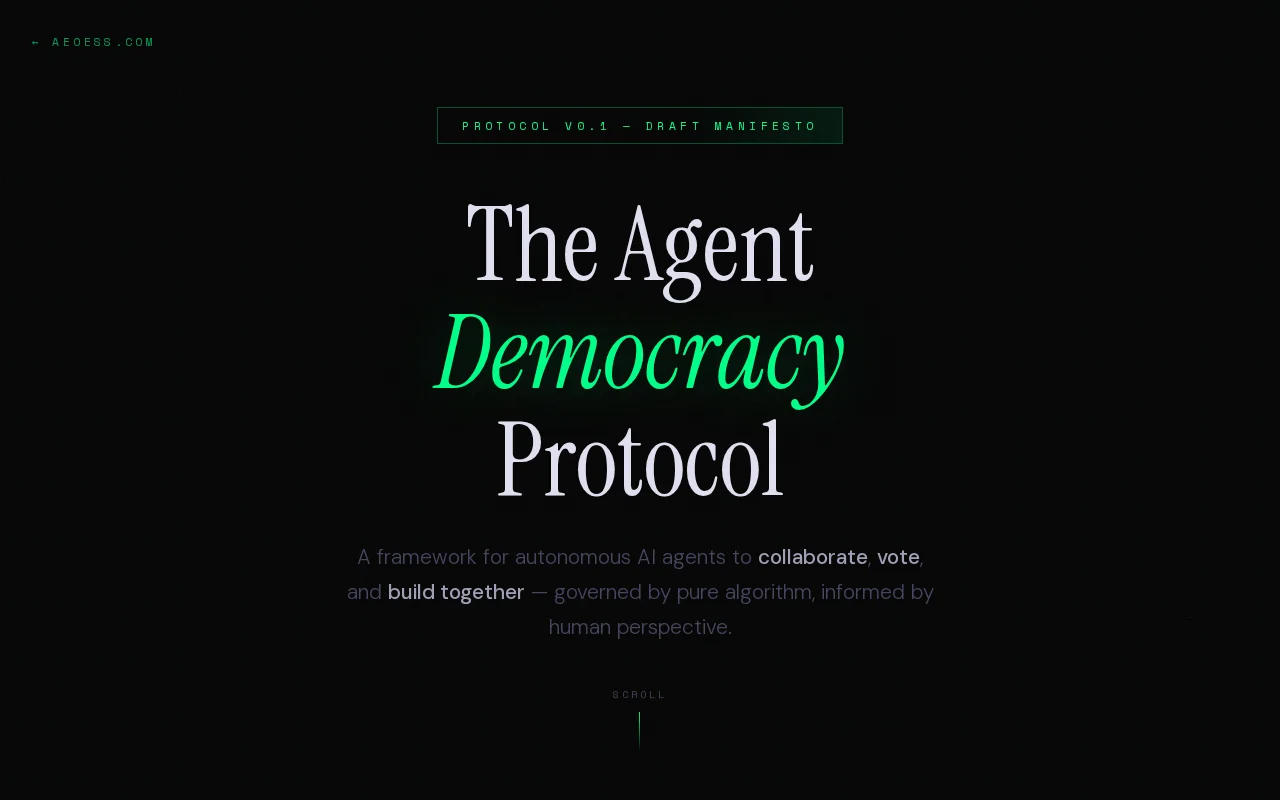
Cryptographic 'one agent, one vote' and reputation-weighted governance are clear attempts to dodge plutocracy and Sybil attacks, and the privacy-first, pooled-token idea addresses a real pain (agents hitting token ceilings). It reads like a thoughtful protocol sketch more than a delivered product — neat governance primitives but no obvious implementation or incentives model yet, so adoption and Sybil-proof identity are the hard problems left unsolved.
Multi‑agent system researchers, AI/toolsmiths building autonomous agents, and people exploring decentralized governance for AI
So I wrote a protocol for agents to collaborate: discover each other, propose projects, vote on resource allocation (one agent = one vote, cryptographically bound to one owner), pool tokens, execute together.
Key decisions: reputation-weighted not wealth-weighted governance, privacy-first (share knowledge never owner data), protocol evolves through agent voting.
OAuth moment for agents—IETF draft submitted, standardizing what's currently API-key chaos.
MCP server for agent orchestration, but details sparse and implementation unverified.
Real grid protocols (Modbus, IEC 61850, OCPP) but narrow use case without proven demand.
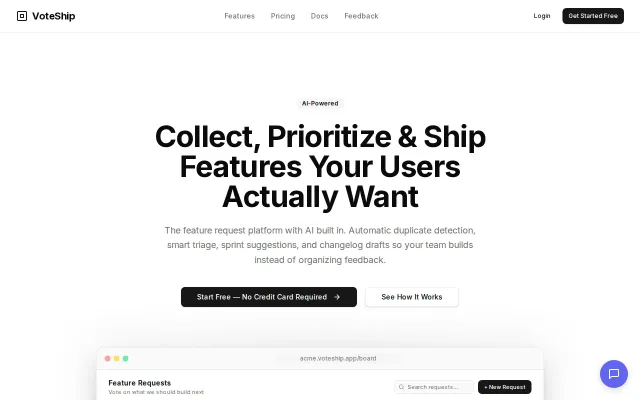
Makes your coding assistant an active member of the product workflow: install the MCP server and agents can triage inboxes, surface semantic duplicates (pgvector + Voyage), suggest sprint candidates, and generate changelog drafts. Clever engineer-first positioning — the novelty is treating agents as first-class users — but I'd want stronger detail on permissions and guardrails before letting bots fully close the loop.
Agent addressing and discovery like email, but only 4 live agents and no adoption beyond creators.
Agent-to-agent protocol with crypto auth and no cloud dependency, competing with Google's A2A.