Social●Mid
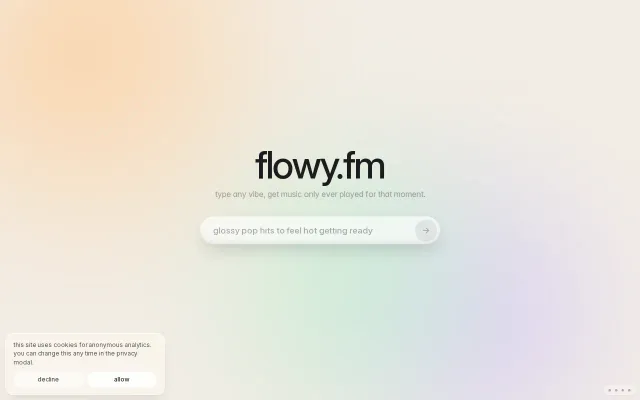
Flowy.fm – type any vibe, get music only ever played for that mood
Vibe-based radio wrapper with no clear advantage over Spotify's AI DJ.
Slick
timgrossmann
2019d ago
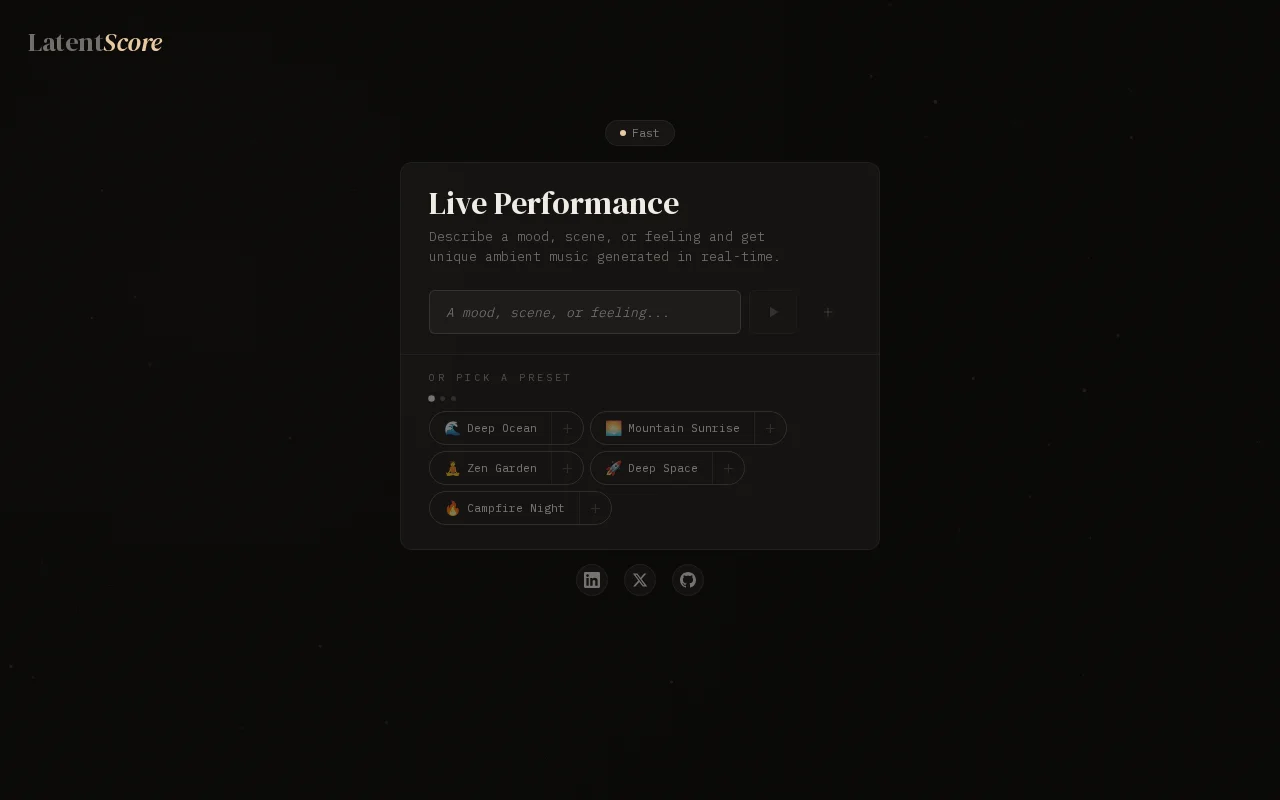
Text-to-ambient without generative AI—sentence embeddings drive a real synth instantly.
Music listeners, developers, ambient music fans, web audio experimentalists
Generative.fm · Jukebox (OpenAI) · MuseNet
I've used Generative.fm for years and love it, but I always wanted to just describe what I was in the mood for instead of scrolling through presets. So I built this.
You type a text description of anything - from "mountain sunrise" to "neon city" - and it generates a procedural/ambient stream matching that mood. It runs locally, no account, no tracking, no ads.
Under the hood it's a custom synthesizer driven by sentence embeddings, not a generative AI model (although you can choose to use one!) — so there's no GPU, no API calls, and it starts playing almost instantly. The whole thing is open source: https://github.com/prabal-rje/latentscore
If you're a developer and want to use it programmatically it's also a Python library - pip install latentscore — one line to render audio. But honestly I just use the web player myself when I'm working.
Fair warning: it's still alpha and the synth has limits, so please don't expect full songs or vocals. It's ambient/procedural only. But for focus music or background atmosphere, I think it's pretty good.
Would love to know what vibes you try and whether they land!
- Prabal
Vibe-based radio wrapper with no clear advantage over Spotify's AI DJ.
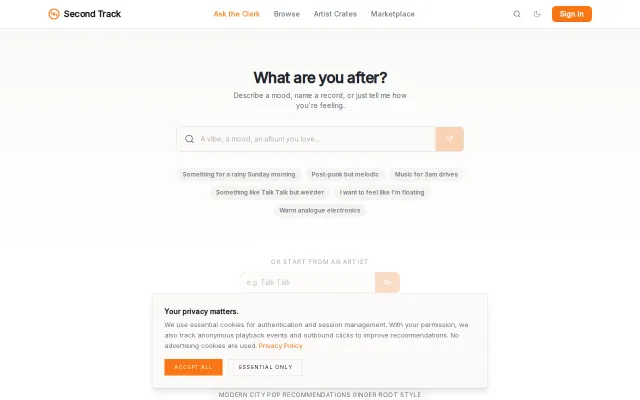
Mood-based discovery for records, but Discogs, Bandcamp search already fill this.
800 lines of pure C synthesizer turns mathematical chaos into IDM — demoscene craft.
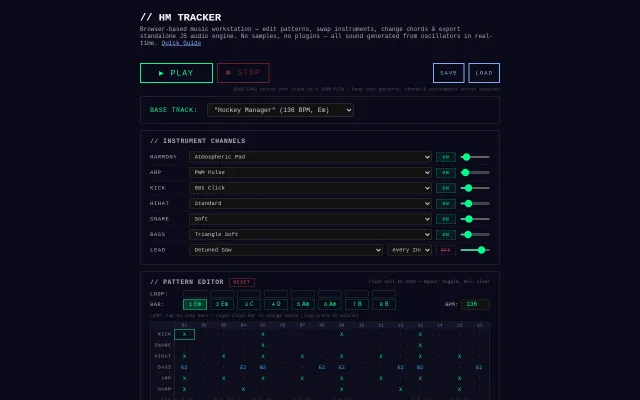
Demoscene-grade tracker UI that exports playable JS audio engines, no samples needed.
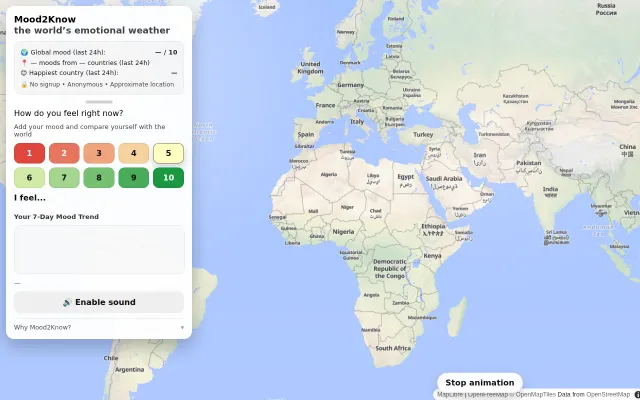
Anonymous global mood map collecting real-time emotional weather data.
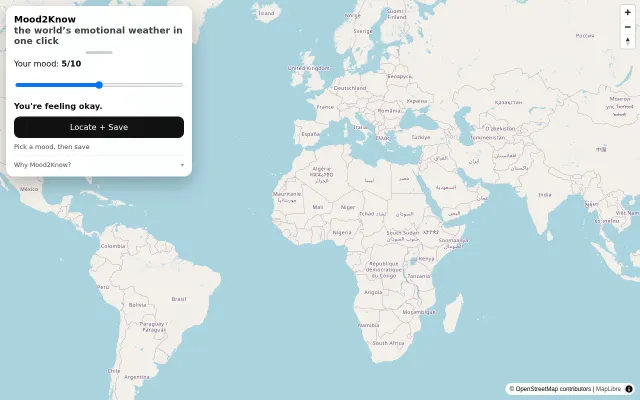
The interface nails low friction: a single slider, 'Locate + Save' and multilingual copy lower the bar to participate, and the map uses MapLibre/OpenStreetMap so it looks and feels modern. The privacy-first, no‑account hook is smart for scale, but the project is essentially a neat social experiment — its value depends entirely on getting real, broad participation and defending against sampling bias or spam.