Other●●Solid
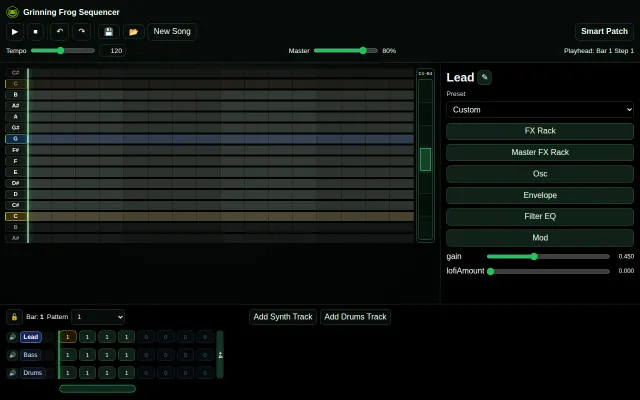
A browser based sequencer for rapid music prototyping
BeepBox + Strudel hybrid with local AI pattern generation—niche but thoughtful.
Eye CandyCrowd Pleaser
sesquieu
104mo ago
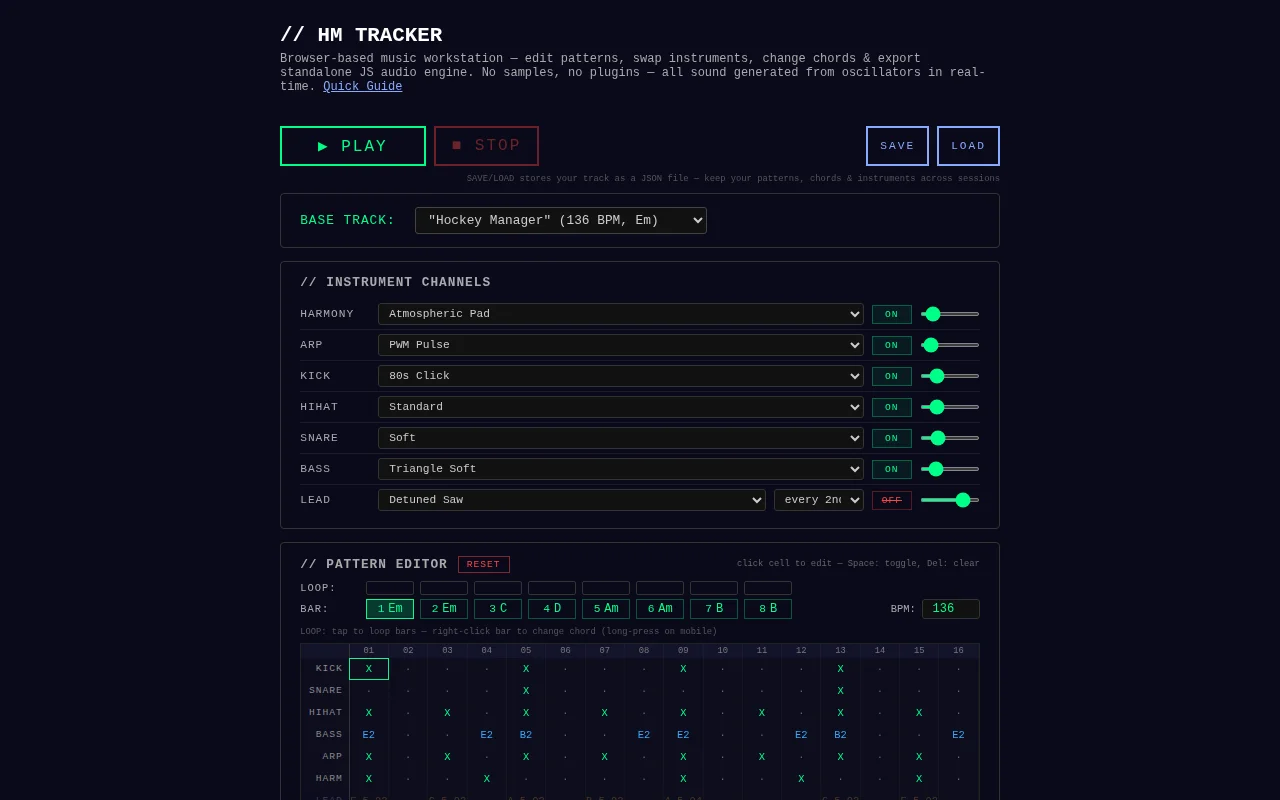
Demoscene-grade tracker UI that exports playable JS audio engines, no samples needed.
Musicians, game developers, demoscene enthusiasts, indie developers needing chiptune-style audio
FamiTracker · Pico-8 tracker · Jummbox
It is a browser-based tracker-style music workstation. All sound is procedurally generated from oscillators - no samples, no plugins.
The UI lets you edit patterns on a step grid, pick instruments and chords, then export as a standalone JS music engine or WAV file. Built with vanilla JS and the Web Audio API (best experienced on a desktop browser).
Made in the '90s demoscene spirit (at least the looks, anyway).
Would love any feedback!
BeepBox + Strudel hybrid with local AI pattern generation—niche but thoughtful.
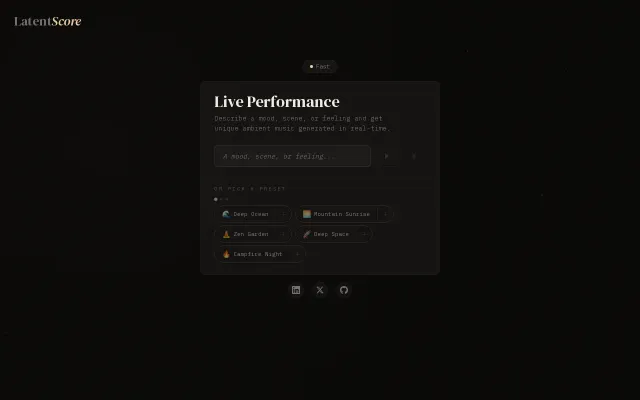
Text-to-ambient without generative AI—sentence embeddings drive a real synth instantly.
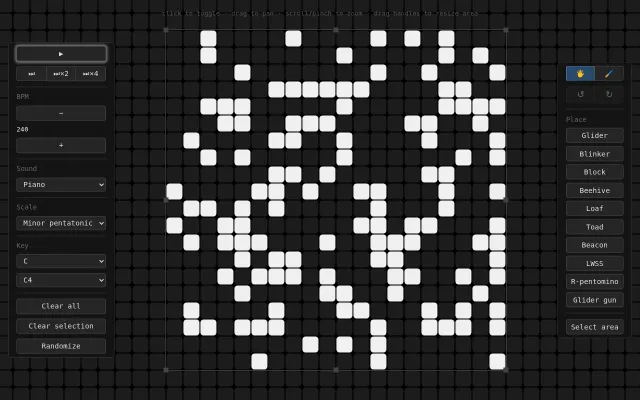
Hearing Game of Life patterns as music is unexpectedly mesmerizing—pure creative coding joy.
800 lines of pure C synthesizer turns mathematical chaos into IDM — demoscene craft.
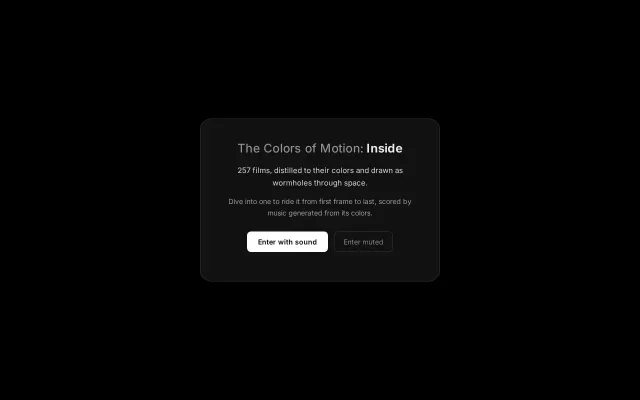
257 films distilled to color wormholes with music generated from palettes.
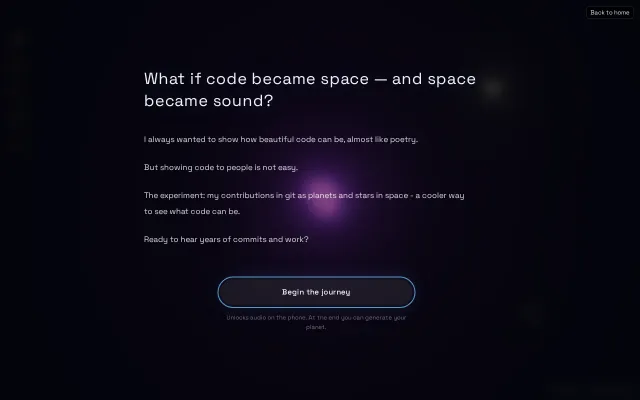
Turns your commit history into a 3D planet with generative audio soundtrack.