AI/ML●Mid
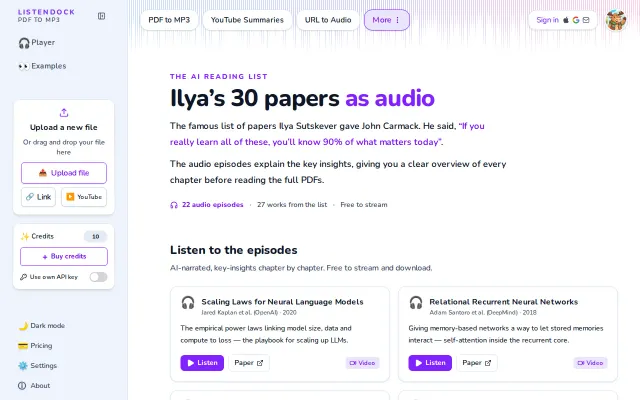
Ilya's 30 papers, explained in audio
AI-narrated paper summaries when ElevenLabs and NotebookLM already do this.
Cozy
janpmz
429d ago
Local-first CLI that turns Markdown scripts into multi-speaker podcast-style audio using Coqui XTTS v2.
Local multi-speaker TTS CLI with zero cloud dependencies beats ElevenLabs for podcast scripts.
Content creators, developers, and podcast producers who want offline TTS workflows.
ElevenLabs API · Google Cloud TTS · Eleven Mono/Multilingual
I built Podvoice because I wanted a simple way to turn Markdown podcast-style scripts into audio without relying on cloud TTS APIs.
It runs fully locally using Coqui XTTS v2. No API keys. No accounts. Just a CLI workflow.
You write something like:
[Host | calm] Hello and welcome.
[Guest | excited] Let’s talk about AI.
And it generates a single stitched audio file.
Would love feedback on the idea, UX, or use cases I might be missing.
AI-narrated paper summaries when ElevenLabs and NotebookLM already do this.
Outputs ready-to-use Markdown with speaker diarization and timestamps, accepts Apple Podcasts/YouTube/RSS links, and can run fully locally or use ElevenLabs for higher-quality diarization. Not groundbreaking — speech-to-text pipelines already exist — but the one-command UX, RSS browsing/search flags, and explicit local-mode make it genuinely useful for folks who want tidy transcripts without wiring together multiple tools.
Podcast app for newsletters, not a reader app with a listen button.
Multi-voice podcast generation in one command without ElevenLabs API costs or rate limits.
Self-hosted article-to-podcast with local TTS when Speechify already exists.
Pure Pillow subtitle rendering beats ffmpeg libass complexity for this use case.