Infrastructure●●●Banger
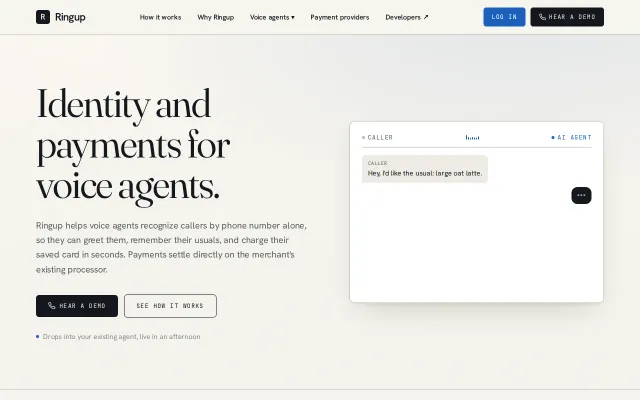
I built remembered checkout for Voice calls
Solves the awkward 'read your card number' problem for voice agents better than Stripe Links.
Solve My ProblemBold Bet
atifnayeem
533d ago
Voice-first AI beats app fatigue, but GPT-realtime economics are brutal.
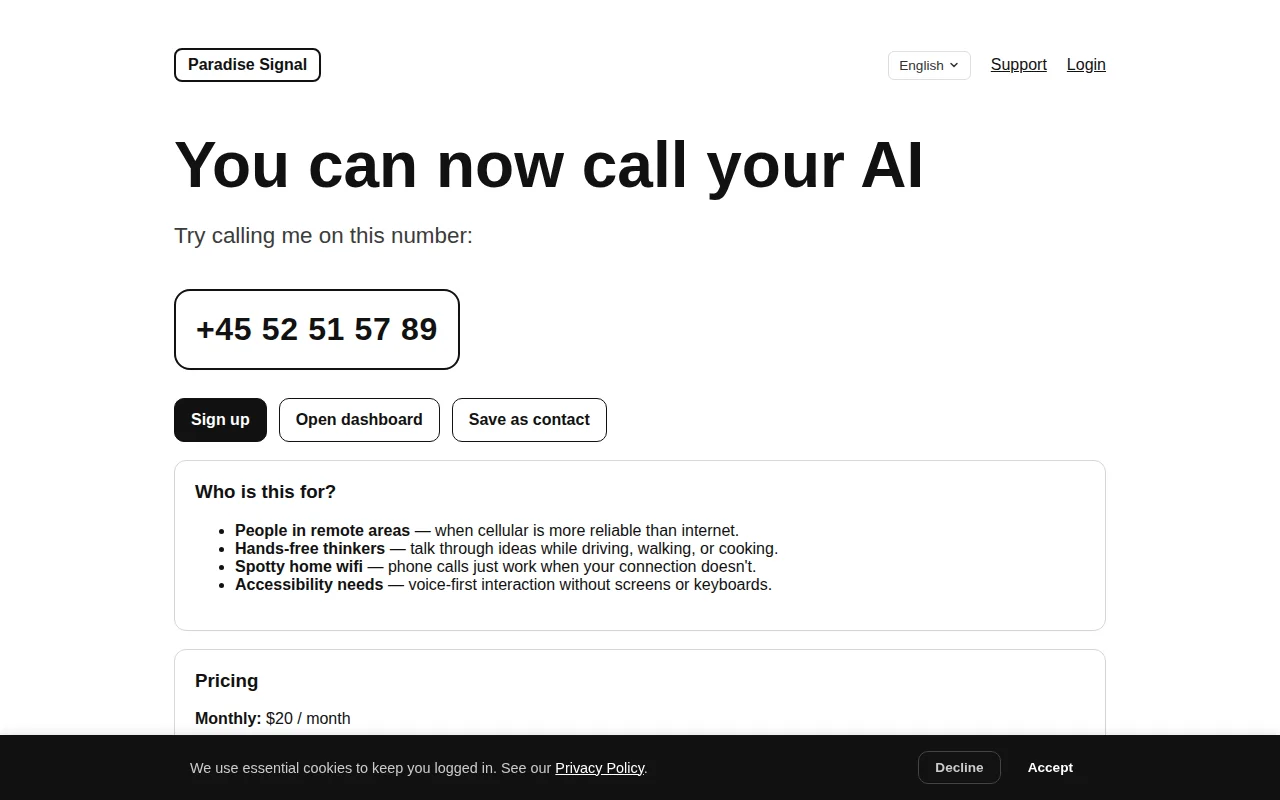
Remote workers, hands-free users, accessibility-needs populations, areas with poor broadband
Twilio Voice + OpenAI API · Google Assistant phone calls · Amazon Lex voice systems
It spun into a series of thoughts:
1. Phone calls are an established technology, people are used to picking up the phone and calling someone for a chat. It's much more natural than opening up a web app to talk
2. Millions of people don't have access to reliable 4G/5G where they live but still have cell signal. Those people would probably still want access to an AI.
3. Why don't I just build this?
4. I should build this.
So I built it: https://paradisesignal.com
I think I'll lose money from this. The gpt-realtime model is insanely expensive compared to text. But I want to give it a try and see if there's a need out there.
While I've been debugging and testing I've noticed something strange. I feel much more of a connection to the AI than I do in a regular web chat. I started greeting the AI each time I called it and I wouldn't hang up until we'd said goodbye. Maybe that's because I'm used to doing that on phone calls.
Anyways, if you live or work in a remote area I'd love to get some feedback and users. The AI remembers past conversations in detail, up to a point, so you can have coherent talks to it.
Solves the awkward 'read your card number' problem for voice agents better than Stripe Links.
Automates annoying calls with natural voice, but GPT-4o chains cost more than just calling yourself.
MCP-native telephony beats Twilio for AI agents, but it's still SignalWire underneath.
Agents ring your iPhone via CallKit with no carrier costs or extra numbers.
Google Voice and Burner already dominate this space with better carrier integrations.
AI handles real phone calls end-to-end: navigates trees, waits on hold, speaks 70+ languages.