Infrastructure●●Solid
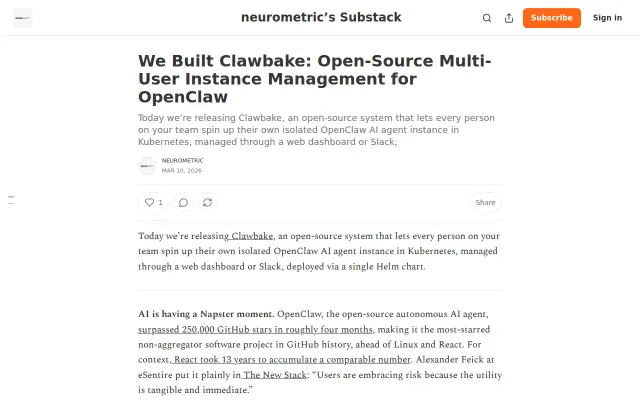
Clawbake: Multi-User Instance Management for OpenClaw
Kubernetes CRD+Operator pattern for AI agent isolation is genuinely clever infra work.
Big BrainNiche Gem
robmay
403mo ago
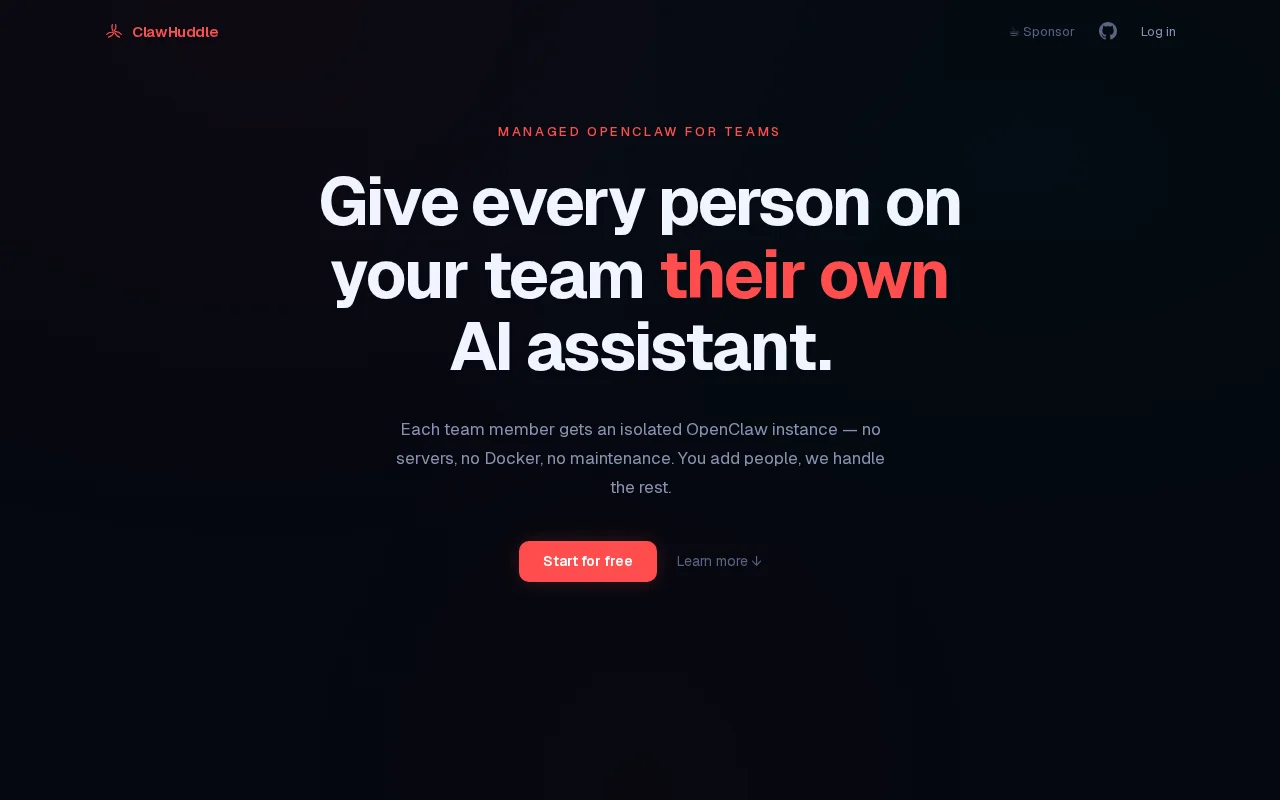
Turns 60-minute-per-person OpenClaw setup into a 2-minute invite, but only solves for one framework.
Teams wanting to deploy OpenClaw AI assistants without infrastructure overhead; small to mid-size companies with non-engineer users
Vercel (deployment automation) · Railway (multi-user container management) · Supabase (managed backend for open-source projects)
Kubernetes CRD+Operator pattern for AI agent isolation is genuinely clever infra work.
Per-agent container isolation with separate networks beats shared-instance chaos.
OpenClaw orchestration with MCP support, but agent management is crowded.
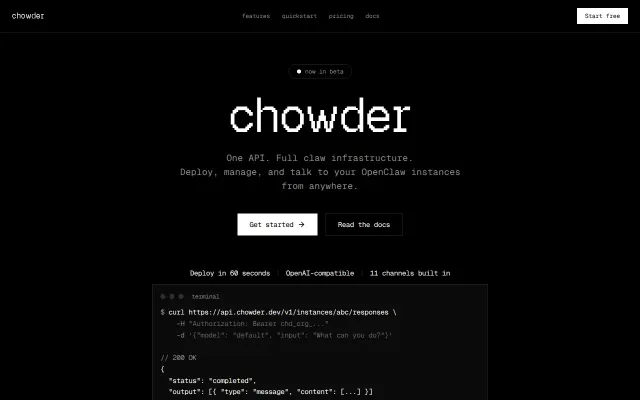
Chowder gives you one API call to spin up sandboxed OpenClaw instances with built-in channels (Telegram, Slack, WhatsApp, Signal) and session memory — plus a Skills marketplace for browsing, file access and code execution. The OpenAI Responses-compatible surface and scoped org/instance keys with rotation are the practical wins: less infra to manage and an easy migration path for tools that already speak that API. It’s a sensible, developer-friendly stitch of agent orchestration and multi-channel routing, not a radical re-think of the space.
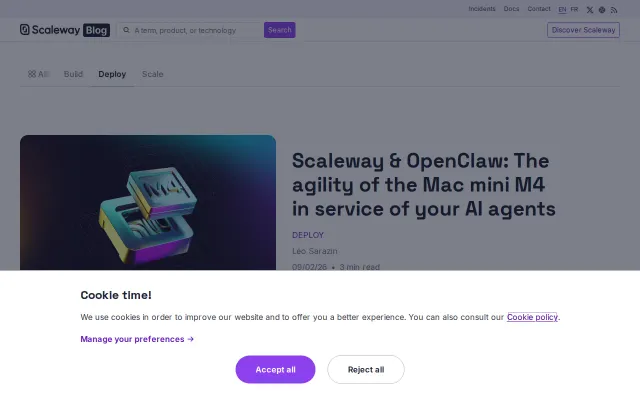
Shows how to run OpenClaw agents on a rented Mac mini M4 and use the 38 TOPS Neural Engine for low-latency local inference while offloading heavy work to Scaleway's Generative APIs. Practical details — hourly billing, remote desktop access, and step-by-step tutorials — make it useful for PoCs, but it's essentially a cloud-provider integration rather than a new agent platform.
Layered security (LUKS+Debian+Docker+token auth) for self-hosted AI; one-command setup.