Finance●●Solid
Ledgr – Offline finance tracker with local LLM categorization
Chase CSV → local SQLite → llama.cpp categorization, no Plaid, shows reasoning per transaction.
Niche GemShip It
humanji
103mo ago

Spreadsheet control minus tedious formulas, AI auto-tagging for CSV imports.
Excel refugees, families managing household budgets, small business owners avoiding complex accounting software
YNAB · Monarch Money · Tiller
The real problem: The spreadsheet was a barrier, not a bridge. It didn’t help me have better money conversations at home. Telling my wife “Dining is high” wasn't helpful; we needed to see where we were overspending (e.g., that one specific cafe vs. grocery runs) without me having to act as a "human pivot table" every Sunday night.
I didn't want an app that required our bank passwords, but I needed more automation than a manual sheet. I built OpBoard to bridge that gap.
How it changes the conversation:
Shared Visibility: Instead of navigating a complex file on my monitor, my wife can log in and see a clear, merchant-level breakdown of our cash flow instantly.
Intentional Review: We still do the CSV import—it's a deliberate "touchpoint" with our data that keeps us aware of our spending without the friction of manual entry.
Automatic Normalization: It handles the "CSV surgery" (Date formats, +/- signs) across different banks automatically, so the data is always clean.
Auto-Tagging Engine: You teach the app your own keyword rules (e.g., "Starbucks" = Food). It also uses AI to suggest rules for recurring merchants based on your history.
Duplicate Protection: It automatically skips transactions already in the system, so you don't have to be paranoid about the date ranges of your bank exports.
It’s currently in beta and has finally turned our budgeting from a technical chore into a productive family discussion. If you’re an "Excel refugee" looking for a better way to track cash flow with a partner, I’d love your feedback.
I’m especially looking for thoughts on:
What specific views or charts would help you and a partner make better spending decisions?
Are there any bank CSV formats that my normalization logic fails to handle?
Chase CSV → local SQLite → llama.cpp categorization, no Plaid, shows reasoning per transaction.
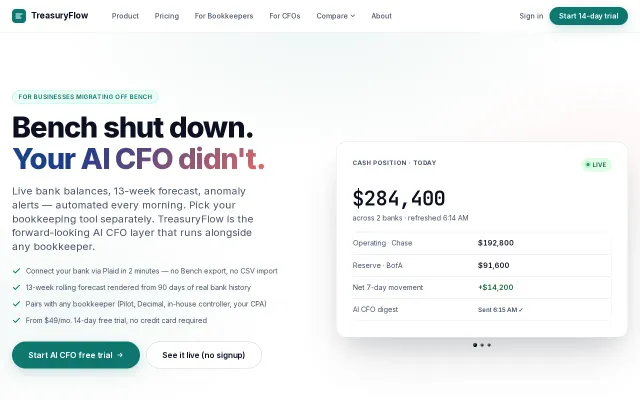
Fills Bench's fatal gap: forward-looking cash visibility, not backward bookkeeping.
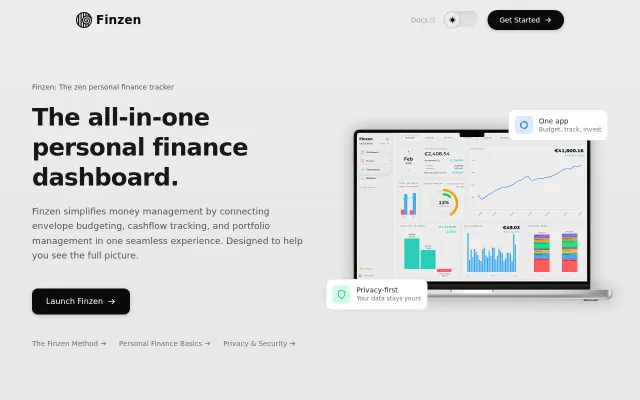
YNAB meets portfolio tracker in one dashboard, beautiful visuals, but early beta and unfamiliar brand.
The landing page promises a focused tool for runway and cash-flow visibility and the UX leans into that single use case — clean hero copy, an email-first signup and clear value proposition. What I want to see next: concrete differentiators (auto-consolidation demos, live integrations, scenario modeling UI) and examples of how it avoids the usual spreadsheet edge cases. Right now it looks like a competent, thoughtfully designed MVP rather than a category changer.
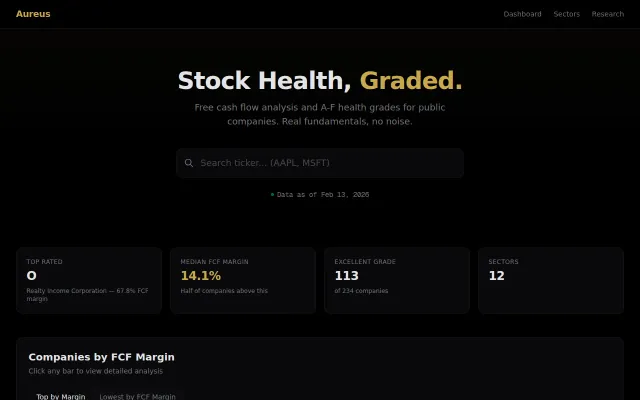
FCF grading is sound, but stock screeners already exist everywhere (Yahoo Finance, TradingView).
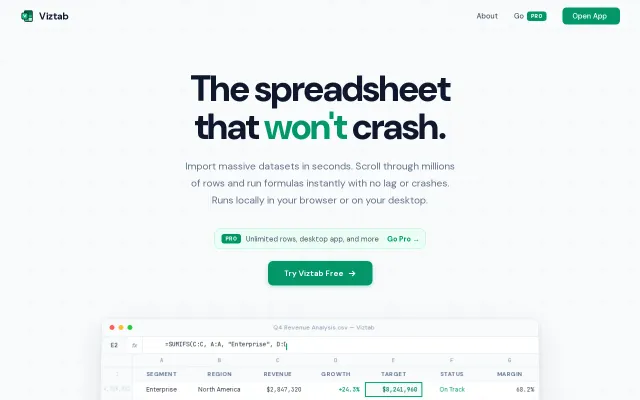
WASM engine handles millions of rows when Excel chokes on large files.